



PHOENIX — Even as enrollment in Arizona’s federal food assistance program continues to tick up, St. Mary’s Food Bank is seeing increased demand.
St. Mary’s provided Thanksgiving meals to 18,882 families across Arizona, including 10,432 families in Phoenix and Surprise this week.
“We've seen about a 10 to 15 percent increase over this time last year,” spokesman Jerry Brown told ABC15. “But as you go up into rural Arizona ... it’s more like a 20% increase.”

Do you have a concern in your community or a news tip? We want to hear from you!
Connect with us: share@abc15.com
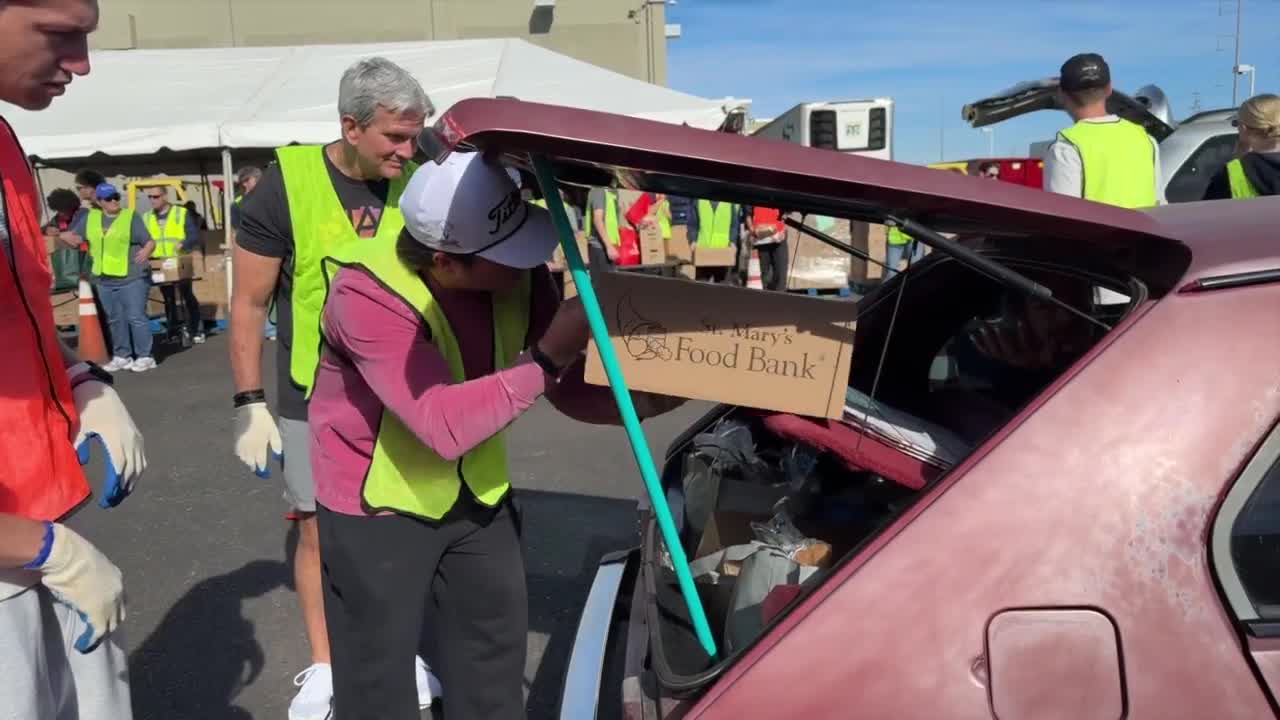
A long line of cars pulled through the parking lot at St. Mary’s on Wednesday. Volunteers loaded up trunks with turkeys, pies and everything else a family needs for a Thanksgiving meal.
“I always say, ‘Thank God that we have St. Mary, or else I can’t make it,’” said one woman in line on Wednesday. “I mean, you go to the store and you bring like two things, and it’s already $200.”
The increased demand at St. Mary’s comes as the number of Arizonans receiving benefits from the federal Supplemental Nutrition Assistance Program is the highest since January, according to the latest figures from the state agency that administers the program in Arizona.
But enrollment is still down by 389,760 people since July 2025, a whopping 43% decline.
The SNAP population in Arizona was fair steady until President Donald Trump signed into law the One Big Beautiful Bill Act on July 4, 2025. The tax law expanded work requirements and requires states to dramatically lower their rate of overpayments, underpayments and errors.
Brown said St. Mary’s is seeing more first-time clients who come to the food bank because of the SNAP reduction or who are on fixed incomes and are looking for help amid high prices for food and fuel.
The food bank is also seeing cuts of its own from the federal government.
“While more people are coming, the amount of food that the government provides to St. Mary's has dropped from about 25% of our food to about 15%,” Brown said. “That's forcing us to go out and buy more food, and just like everybody else, that food costs more than it ever has before.”
He pointed to green beans, which used to cost 50 cents but are now running 87 cents per can.
“We put two cans of green beans in100,000 emergency food boxes every month,” he said. “We're out buying those types of foods because they're not available to us through the farm program and some of the other USDA programs that we've had before.”
St. Mary’s is also paying higher gas prices for its trucks — money that used to go to purchase food.
“We're dipping into a rainy-day fund right now,” Brown said. “This is not sustainable over the long term.”
But the food bank, which turns 60 next year, won’t turn away people who need help, he said.
“We'll be here to help them,” he said. “We'll just have to come up with more innovative ways to feed people.”

