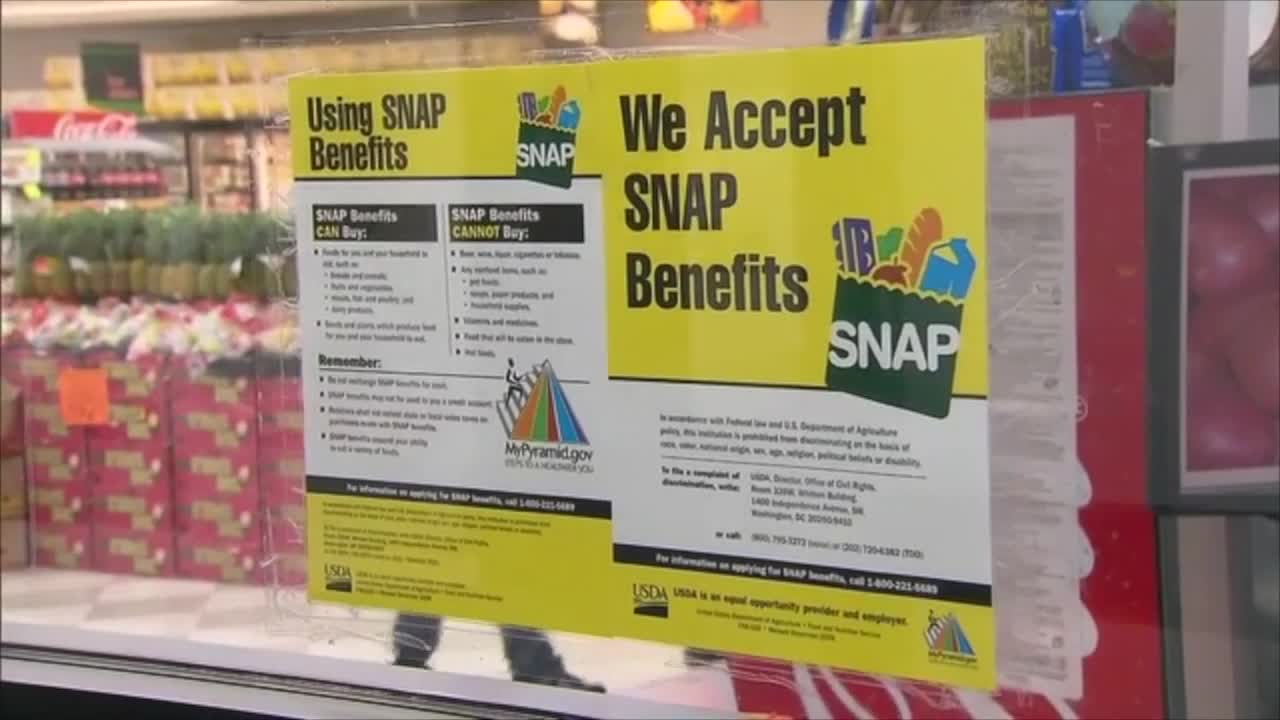


PHOENIX — A Benson mother whose SNAP benefits were canceled months ago after she lost her child support income has received all of her benefits the day after ABC15 reported on her case.
Kimberly Skolkin says she was just following the rules when she reported a change in income: She told the state in January she was no longer getting child support because her ex-husband had lost his job.
In response, the Arizona agency that administers SNAP canceled benefits for her and her five children.
“Now I have nothing, because their answer was, ‘OK, you're required by law to tell us when you have a dramatic change in your income.’ My dramatic change was to lose my income,” Kimberly Skolkin told ABC15. “They took everything away.”
Until ABC15's story on Wednesday, Skolkin and her children were without benefits — assistance they qualified for when she was receiving child support.
"I kind of feel like maybe I shouldn't have reported it, because we were OK with what we were getting and where we were at," she said. "And instead of it being the same amount, pending an increase, they discontinued my benefits."
On Thursday, the Department of Economic Security contacted Skolkin and deposited her funds onto her card.
Skolkin and her family were some of the 424,000 Arizonans who have lost their federal food assistance benefits since Congress overhauled the Supplemental Nutrition Assistance Program last year.
“This number is dishonest,” she said. “This is not what you voted for. This isn't what I voted for.”
A massive drop in SNAP cases
Enrollment in SNAP was fairly steady until Congress passed the One Big Beautiful Bill Act, a review of data from Arizona’s Department of Economic Security shows.
Enrollment began to slide in August, and the decline soon accelerated. Between September 2025 and February 2026, the number of people receiving benefits dropped by 43%.
Since January 2025, when nearly 1 million Arizonans were on SNAP, enrollment has fallen 47.5%.
The One Big Beautiful Bill Act, which President Donald Trump signed July 4, 2025, expands work requirements for SNAP and the tax law also requires states to dramatically lower their error rate, the amount of overpayments, underpayments and errors.

Do you have a concern in your community or a news tip? We want to hear from you!
Connect with us: share@abc15.com
DES said it was required to immediately implement several of the changes mandated in the One Big Beautiful Bill Act, which President Donald Trump signed into law July 4, 2025.
The tax law, also known as H.R. 1, expanded work requirements for SNAP and required states to dramatically lower their error rate, the amount of overpayments, underpayments and miscalculations.
In early September, DES notified people who no longer qualified for an exemption from SNAP’s work requirements. The expanded requirements for able-bodied adults without dependents is responsible for about one-third of the spike in case closures, the agency told ABC15 in a statement.
Arizona’s drop is the largest in the nation, according to a recent report from the nonpartisan Center on Budget and Policy Priorities.
“It is complex,” Gov. Katie Hobbs told reporters April 9. “I don’t think we have one reason that we’re seeing the drop. It’s all of the things.”
DES said it expects the state’s SNAP caseload to level off in the months ahead. And the agency also says other states will see similar drops in cases as they fully implement the federal changes.
Staffing shortages lead to long waits
Skolkin, the mother in Benson, said she supports SNAP reforms but says what she and other families are going through is not reform.
“I was not about single mothers waiting for months to get approvals when they've provided everything that they've been asked to provide,” she said. “I was not about firing workers while you're trying to redo everything.”
DES, which administers SNAP, has been hard hit by federal funding cuts. The agency laid off employees last year, leading to long wait times for SNAP.
Hobbs allocated $7.5 million in temporary funding to DES in December to address long wait times.
“We are trying to do a lot more with a lot less,” she told reporters April 9.
Skolkin had been waiting since January for her benefits to resume after three interviews and submitting 30 documents.
“It's almost become a part-time job to convince DES that they have everything that they need and to please just make a decision,” she said.
Lowering SNAP’s error rate
It’s not clear why Skolkin’s change in income led DES to cancel her family’s benefits.
DES is taking steps to lower SNAP’s error rate, but the agency said an overpayment or underpayment alone would not be grounds to close a case.
The agency has said changes related to its efforts to lower the error rate also contributed to the drop in cases, along with normal attrition.
“SNAP is a complex program, requiring extensive information and verification to ensure a family is eligible for assistance,” DES said in a statement. “There are nearly 50 different kinds of errors, which is a testament to the level of expertise we require of our teams and the amount of information that’s required of applicants.”
Arizona’s error rate in fiscal year 2024 was 8.84%. Beginning in fiscal year 2028, states with an error rate of above 6% will hit by penalties that could add up to hundreds of millions of dollars.
“While navigating the complexities of H.R. 1 and evolving federal requirements, our priority continues to be the accurate and timely delivery of benefits to eligible Arizonans,” DES said. “We will continue to refine our processes and leverage resources to reduce errors while maintaining a reliable system for the families we serve.”
Skolkin was getting by when her benefits were stopped thanks to groceries dropped off by her adult children and food she had made and stored. Before her benefits resumed, she said she was worried about what would happen when the storage ran out, adding her family also still needed fresh items like produce, butter and milk.
“I'm not too concerned about food right now. I am concerned about food in two months,” she had said. “I have five children still at home.”
Want more news in your community? Add ABC15 as a preferred source on Google below: