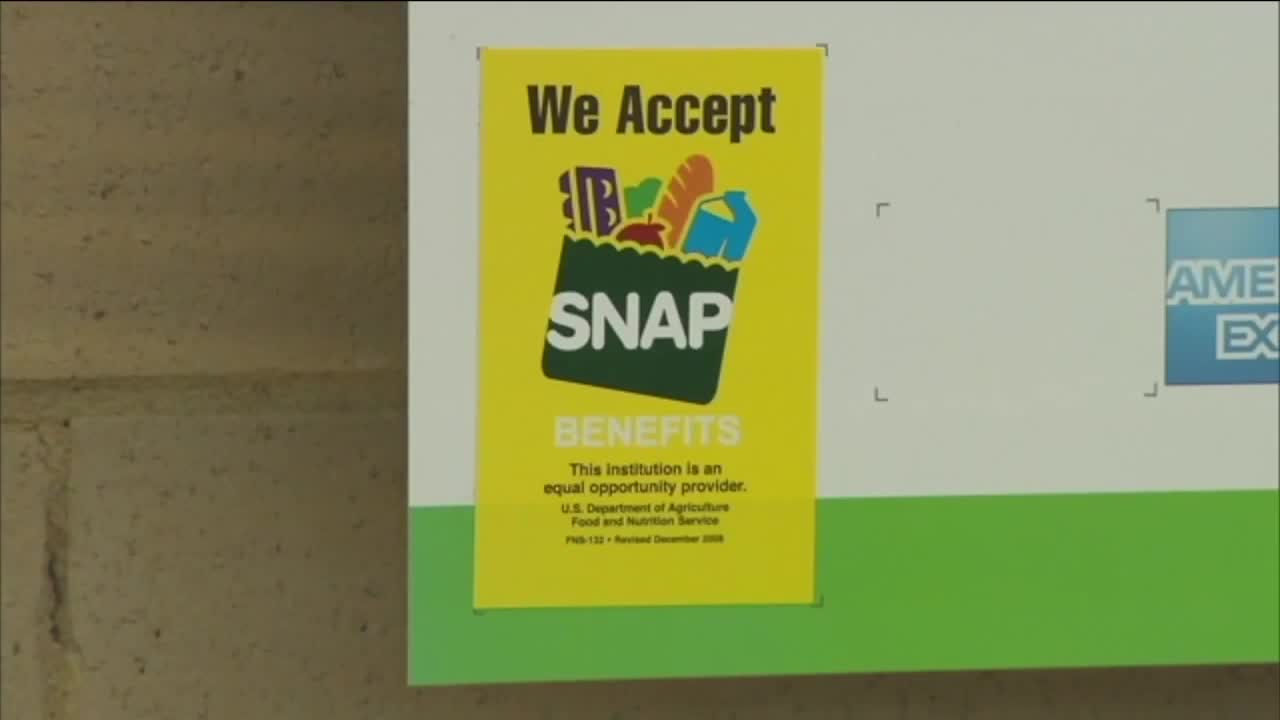


PHOENIX — A new report reveals that Arizona has had the biggest drop in people receiving SNAP benefits across the country.
The decline in recipients in Arizona is more than 33 percent, according to the Center on Budget and Policy Priorities.
The research center released a SNAP tracker to show the number of people losing food assistance across the country.
Arizona data shows that more than 400,000 Arizonans have had benefits removed since July of 2025.
Cookie Love Thompson tells ABC15 she has been removed from her benefits and can’t get a reason for why she has not been renewed.
Thompson is on a fixed income and has been trying to get answers from the Arizona Department of Economic Security for months.
“The gentleman I was trying to talk to over my interview, he said, Ms. Thompson, I don't know why they cut you off,” she said.
On Thursday, Arizona Governor Katie Hobbs was asked by reporters why her administration has removed so many people from SNAP benefits, “It is not a push from my administration to push people off of SNAP,” she said, “It is a push to comply with new federal regulations that put a whole bunch more hurdles in front of people to make sure that we don't lose the federal funding that we have.”
The Department of Economic Security has been under scrutiny since the end of 2025 after long wait times and lack of staffing for processing SNAP and unemployment benefits.
In December, the governor directed millions of dollars to go towards adding temporary staffing and enhancing technology.
The department has been working to remove Arizona’s SNAP error rate.
According to DES, the SNAP error rate represents underpayments or overpayments made in the program from miscalculations, typically because of a recipient’s income.

Do you have a concern in your community or a news tip? We want to hear from you!
Connect with us: share@abc15.com
DES released a full statement on the recent decrease:
The recent decrease in the SNAP caseload in Arizona, which is reported in our online statistical bulletin [des.az.gov], is a direct reflection of a rapidly evolving federal landscape and a proactive, statewide commitment to long-term program sustainability (additional statistical bulletins can be found on our website [des.az.gov]). DES is currently navigating one of the most significant structural changes to federal nutrition assistance in decades. The passage of H.R. 1 in July 2025 introduced immediate and permanent changes to SNAP eligibility and imposed new quality review measures on states. Arizona, like many states, saw a swift impact due to several key provisions that became effective upon the bill's passage. The "drop" in cases reflects Arizona’s diligent and immediate implementation of H.R. 1 requirements.
Specifically, federal changes to able-bodied adults without dependents (ABAWD) exemptions have been a significant driver in case closures since the implementation of H.R. 1. The remaining case closures are attributed to other H.R.1 changes, including efforts aimed at addressing the payment error rate (PER) and attrition under long-standing SNAP eligibility criteria. By focusing on administrative accuracy and reducing the PER now, we are safeguarding the long-term viability of SNAP for those who qualify, ensuring the program remains a stable resource for vulnerable Arizonans. Last month, we published a blog entry [des.az.gov] that details the impact of H.R. 1 on the Department and how we are implementing these changes.
It is important to note that we believe most of the impact of the changes from H.R. 1 has been realized, and we will begin to see consistency in the SNAP caseload in the months ahead. As other states fully implement the provisions of H.R. 1 and Arizona stabilizes, we expect differences in caseload decline between other states to more closely align.
While DES is committed to improving the SNAP PER and maintaining access to services for eligible Arizonans, significant structural barriers remain, including reliance on outdated 1980s technology to administer SNAP. Also, Arizona has one of the lowest administrative costs per SNAP caseload. Governor Hobbs’ FY27 Executive Budget proposal [azgovernor.gov] includes an increase of $48.4 million in funding to address increased costs due to H.R. 1 provisions impacting the Department’s administration of SNAP. This includes funding the administrative cost shift to states, system improvements, as well as 146 FTE necessary to continue efforts to meet the quality standards set forth in the federal legislation.
Want more news in your community? Add ABC15 as a preferred source on Google below: