

PHOENIX — Arizona’s 2026 primary election is here, and voters will choose nominees for big statewide races for governor and secretary of state and two open congressional seats.
The primary used to be in August, but state lawmakers moved it to the second-to-last Tuesday in July, so election officials will have enough time to meet federal deadlines for election results if a race needs a recount.
Polls are now closed across Arizona. Track the latest results information here.
ELECTION 2026: Full coverage, key primary debates, latest developments in Arizona election races
Here’s what you need to know about the 2026 primary election:
Polling locations & How to track your ballot
Voters in Maricopa County voters can find a list of vote centers and estimated wait times online.
Maricopa County voters can keep track of their ballot with notifications for when it's prepared, mailed, received, verified, and counted. People who cast votes in person can also get alerts for when they cast their ballot. Text “JOIN” to 628-683 or sign up on BeBallotReady.Vote.
How early voting works
Arizona voters can vote early by mail or in person starting June 24.
Independent voters — those not registered with a political party — can participate in one party's primary. But they need to request that party's ballot. They can ask the Recorder's Office for a mail ballot or visit a vote center to vote in person.
People on the Active Early Voting List who are registered with a party or who have requested a mail ballot will receive their ballot in the mail.
Maricopa County voters who aren't on the AEVL can request a ballot online until July 10, and so can independents.
Ballots can't be forwarded, so you can also request a ballot if you need one sent to a temporary address.
You can return your ballot by mail or drop it off at a drop box or early voting location.
If you send it, be sure to drop your ballot in the mail by July 10.

Do you have a concern in your community or a news tip? We want to hear from you!
Connect with us: share@abc15.com
Be sure to sign your green affidavit envelope and include your phone number so election officials can contact you if needed.
Your signature will be compared to the signatures in your voter file. If your signature doesn't match, you’ll have five business days to verify your signature.
That's when the phone number comes in handy. Election officials will reach out to you to “cure” your ballot.
New in 2026, early voters who drop off their mail ballot at a voting location can skip the time-consuming signature verification process by checking in and showing a valid ID. There are certain IDs you can use.
If you forget to sign your mail ballot, you will need to add your signature no later than 7 p.m. on Election Day.
How Election Day voting works
Election Day is July 21. Polls open at 6 a.m. and close at 7 p.m. If you are in line when the polls close, you will still be able to cast your ballot.
But the vast majority of voters in Maricopa County – 87.6% in 2024 – cast early ballots.
Arizona voters who choose to vote in person can vote at any voting location in their county of residence. Independent voters can ask to vote in one party's primary by requesting a ballot when they check in. Maricopa County voters can find a list of vote centers and estimated wait times online.
Voters with mail ballots can also choose to drop off their ballots in their signed green envelopes on Election Day at a voting location. These ballots are called “late earlies.”
These ballots, like other mail ballots, need to be signature-verified, meaning it could take several days for them to be counted.
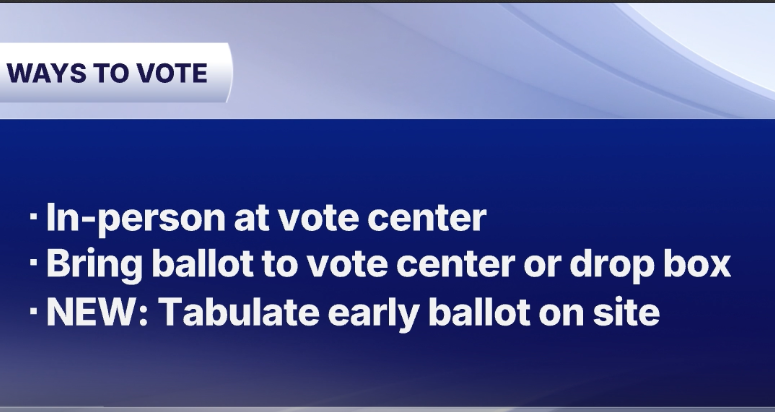
Starting this year, mail voters who take their ballot to a voting center on Election Day can choose to tabulate their ballot like an in-person voter.
You will need to check in and show a valid ID to use a special early-ballot tabulator. These ballots won’t need signature verification and will be included in the election night results.
See how the process works in the player below:
Races to watch
Arizona voters will decide on the nominees for statewide offices and congressional races in the July 21 primary. Take a look at some of the key races to watch below:
Democratic races to watch
Superintendent of Public Instruction: Two educators are running for the Democratic nomination for state superintendent.
Brett Newby is a behavioral analyst in special education who lists his top issues as stopping the expansion of Arizona’s ESA school voucher program, fully funding K-12 education and retaining teachers.
Terry Leyba Ruiz is an educator and former Glendale Community College president who says some of her top issues are reforming the ESA school voucher program, outreach to parents and increased funding for public schools.
WATCH: Superintendent of Public Instruction 2026 primary debates
Congressional District 1: Four Democrats are running for the open congressional seat.
Marlene Galán-Woods is a former broadcast journalist who says some of her top issues are lowering costs for consumers, investing in infrastructure and job creation, and immigration reform.
Rick McCartney is a small-business owner who lists some of his top issues as affordability, protecting Social Security and Medicare, and creating jobs.
Amish Shah is an emergency medicine doctor and former Arizona state representative who also ran for the congressional seat in 2024. Some of his top issues are protecting America’s democracy from attacks, lowering costs for Arizonans, and protecting Social Security and Medicare.
Jonathan Treble is a small-business founder who says some of his top issues are standing up to Trump’s “abuses of power and schemes to enrich himself and his allies,” Medicare for All, and universal childcare.
Congressional District 5: Three Democrats are running for the empty seat.
Brian Hualde is a former Army medic and nurse who lives in East Mesa and lists some of his top issues as protecting the border while revamping the immigration system, funding public schools and solutions to keep housing affordable without overregulation.
Chris James lives in Gilbert and has worked as an executive in the U.S. Department of Treasury and Small Business Administration. He says some of his top issues are investing in education, smart and cost-effective infrastructure, and growing jobs and the economy.
Elizabeth Lee is a nurse in reproductive healthcare who says some of her top issues are treating healthcare as a human right, fully funding public education and affordable housing.
Republican races to watch
Governor: Two sitting congressmen, U.S. Rep. Andy Biggs and U.S. Rep. David Schweikert, are vying to run against Gov. Katie Hobbs.
Biggs, who chaired the House Freedom Caucus for two years, is endorsed by President Donald Trump and the late Charlie Kirk. He says he wants to bring costs down for Arizonans by growing the state’s economy, lowering taxes and reducing government interference.
Schweikert says he aims to make Arizona the best state for businesses by cutting regulations, keeping taxes low and recruiting businesses.
Secretary of State: State Rep. Alex Kolodin and former Arizona Republican Party chair Gina Swoboda are running for the GOP nomination for secretary of state, the top election official in Arizona.
Kolodin is an election lawyer, critic of the incumbent Secretary of State Adrian Fontes (D) and a member of the Arizona Freedom Caucus, who has advocated for mandating precinct voting instead of countywide polling places, restricting, or ending mail voting. He is backed by Turning Point Action.
Swoboda, a former election official in the secretary of state’s office under both a Republican and a Democrat, says she is the only candidate who can beat Fontes. She says she aims to make sure Arizona’s elections are secure and transparent and wants to modernize the system’s outdated technology.
Attorney General: Former Air Force prosecutor Rodney Glassman and Senate President Warren Petersen are running in the Republican primary for attorney general.
Glassman says he will work with Trump to secure the border, prosecute cartel members and prosecute election fraud.
Petersen says he will enforce the state’s laws as written, fight federal government overreach, and continue to defend state laws banning trans athletes.
WATCH: (R) Attorney General 2026 primary debate
Superintendent of Public Instruction: Incumbent Superintendent Tom Horne is being challenged in the Republican primary by Arizona Treasurer Kimberly Yee.
Yee, a former Senate Majority Leader and the first Asian American woman elected to the Arizona Legislature, has criticized Horne’s administration of Empowerment Scholarship Accounts, the state’s school voucher program.
Horne, who was previously superintendent from 2003-2011 and served one term as the state’s attorney general, says he is committed to fighting “wokeness” in schools, including DEI, and supporting bans on trans athletes.
Both candidates oppose a proposed ballot measure that would cap ESAs for families that make more than $150,000 a year.
WATCH: Superintendent of Public Instruction 2026 primary debates
Congressional District 1: Three Republicans are running in the primary for the seat in Congress being vacated by U.S. Rep. David Schweikert.
Joseph Chaplik is a Scottsdale businessman and former state representative. A founding member of the Arizona Freedom Caucus, some of Chaplik’s top issues are eliminating fraud in federal programs, deporting people in the country illegally, and supporting school choice.
Jay Feely is a former NFL kicker endorsed by Trump who lists some of his top issues as border security, bringing the cost of living down, and preventing trans athletes from competing in girls' sports.
John Trobough is a Scottsdale businessman who says he is a Ronald Reagan conservative whose top issues are growing the American economy, balancing the budget, and lowering taxes.
Congressional District 5: Two Republicans are running for the seat currently held by U.S. Rep. Andy Biggs.
Daniel Keenan is a homebuilder who says some of his top issues are border security, growing the economy with America First trade policies, and lowering the cost of living.
Mark Lamb is a former Pinal County sheriff who is endorsed by Trump. He lists some of his top issues as border security, defending the Constitution, and stopping fentanyl trafficking.
Key dates to know
- June 6: Military and overseas ballots mailed
- June 22: Last day to register to vote
- June 24: First day of early voting and ballots are mailed to voters
- July 10: Last day to request a replacement ballot by mail
- July 10: Last day for independent voters to request a mail ballot
- July 14: Last day to mail back your ballot
- July 21: Primary Election Day
- July 27: First day to canvass election returns
- August 3: Deadline for the Board of Supervisors to canvass returns
Want more news in your community? Add ABC15 as a preferred source on Google below: