



ARIZONA — Heavy fall rains brought some relief to the Lower Colorado River Basin, pushing water levels higher at several key reservoirs — but drought conditions are far from over.

Do you have a concern in your community or a news tip? We want to hear from you!
Connect with us: share@abc15.com
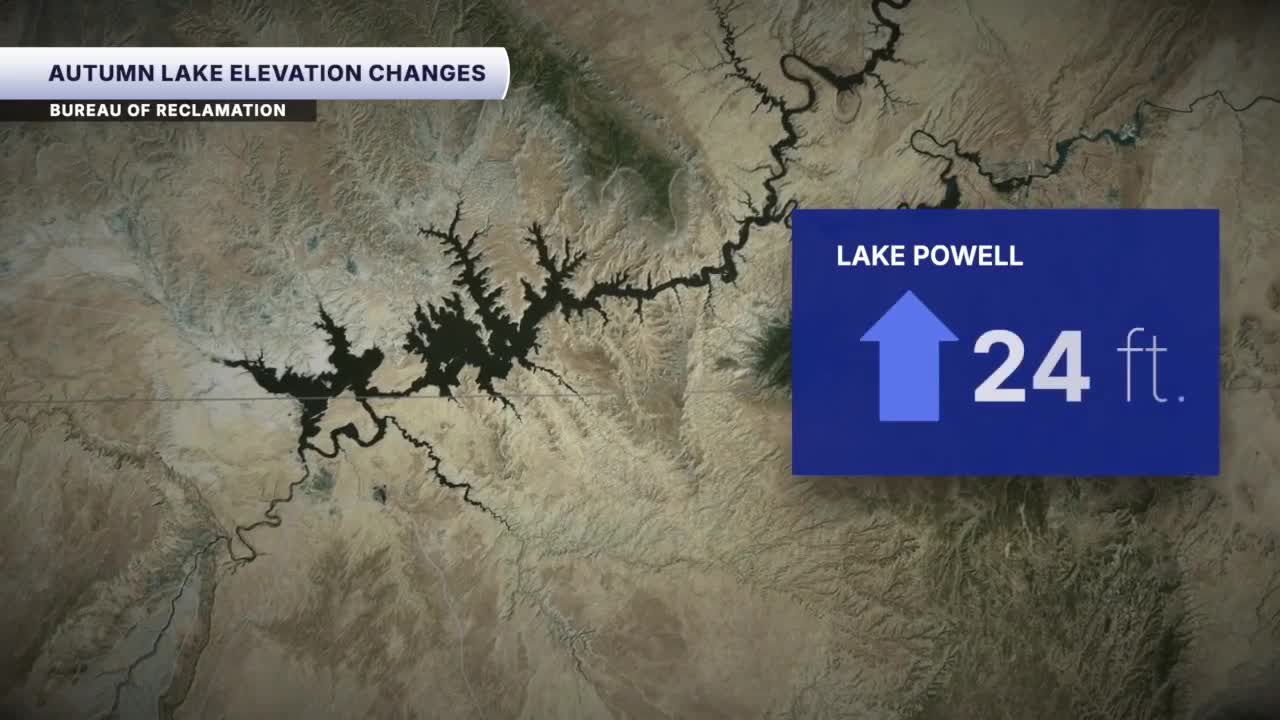
Lake Powell, located on the border of Arizona and Utah, rose 24 feet in elevation to 3,541 feet following the fall rains. Before the rains arrived, the reservoir had dropped dangerously close to a level that would have required the use of damaged bypass pipes to push water through Glen Canyon Dam.
Lake Mead, the nation's largest reservoir, saw a more modest gain. Elevations rose 4 feet as a result of the autumn rains.
Despite those gains, there is still significant ground to make up. From Jan. 1 through the end of the year, Lake Mead is down 21 feet — the second largest annual decline since 2018. Lake Powell finished the year up less than a foot overall.
Early snowpack data offers some cautious optimism. So far, snowpack in the areas that feed Lakes Mead and Powell is expected to generate 2.4 inches of elevation for Mead. That is slightly higher than levels recorded at the same point in 2023 — a year that went on to peak at 26 snow water inches.
The Salt River system also saw improvement. Roosevelt Lake, the largest reservoir in the Gila River Basin, is up 23 feet in 2026. Bartlett Lake is up 13 feet. Apache, Saguaro and Horseshoe lakes each rose less than 10 feet. Canyon Lake is down 52 feet, but that decline is attributed to a planned drainage for dam maintenance.
Arizona is still facing a water shortage. A wet winter could provide meaningful additional relief to both river systems.
This story was reported on-air by a journalist and has been converted to this platform with the assistance of AI. Our editorial team verifies all reporting on all platforms for fairness and accuracy.

