

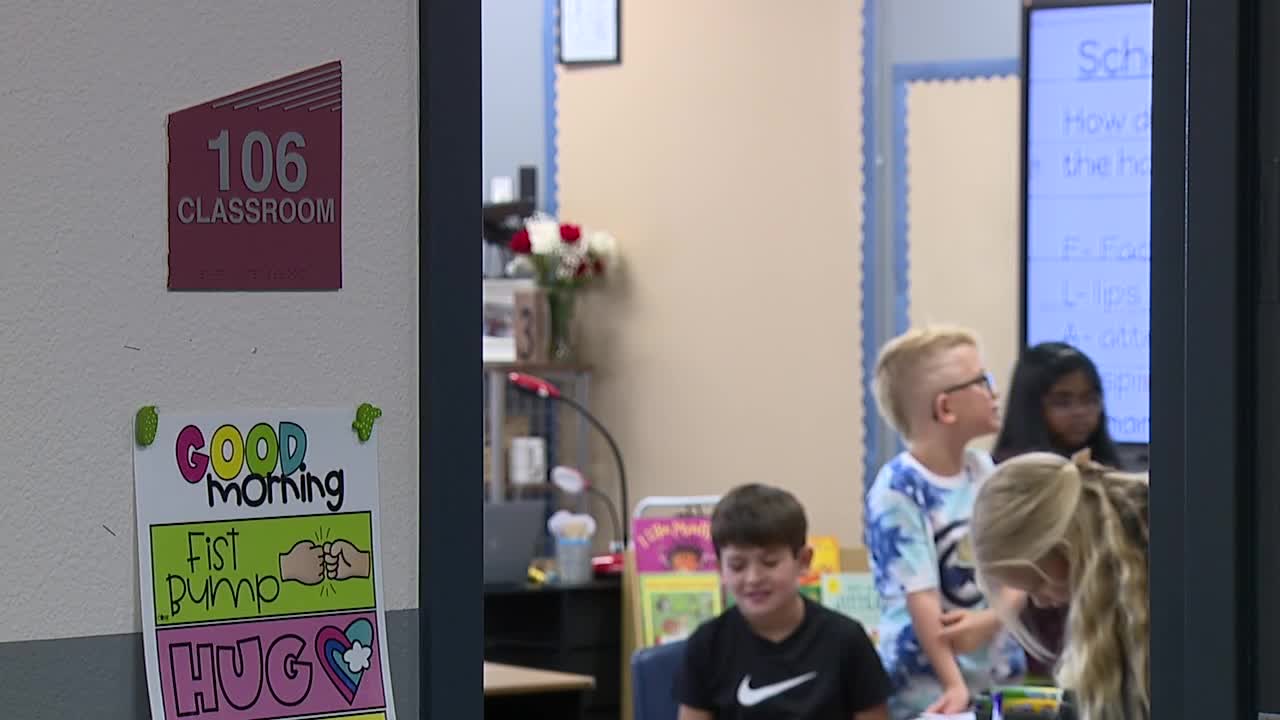


When a teacher calls out, a substitute — or guest teacher — gets called in. But those are also in short supply across Arizona.
As the state's teacher shortage continues, fewer people are available to fill in. According to the most recent numbers from the Arizona Department of Education, in September of last year, more than 4,000 unfilled teaching positions were filled through alternative methods, including long-term substitutes, contracted personnel, classified staff and student teachers.
Marisol Garcia, president of the Arizona Education Association, said the problem has been an issue for years.
"There has always been a shortage, but I think it is amplified now because a lot of the substitutes are filling in the positions that they're taking long-term positions because we've been unable to fill, you know, to have consistent teachers," Garcia said.
According to data from the US Bureau of Labor Statistics, since COVID, 20% of fill-in requests went unfilled.
Some districts are responding by raising substitute pay rates to attract more guest teachers. Gilbert Public Schools recently raised rates by $25 a day.
"What you see school districts do is up salaries to like $150 a day, $170 a day to try to grab them from different school districts so a teacher could choose to go to this school district if they got paid more," Garcia said.
Other districts are going a step further. The Balsz Elementary School District recently approved a contract with PRG Educational, also known as the Professional Recruiters Group, a staffing agency that places educators, including substitutes, in schools.
Griffin Howell, Arizona operations manager for PRG Educational, said demand has been growing.
"We've definitely seen that need for subs increase," Howell said.
Howell said PRG typically works with charter and private schools, but more public school districts have been reaching out.
"This year is the first year that we've seen a little bit more of a positive response from those school districts, allowing outside partnerships with a company like ours," Howell said.
For educators, the hope remains that lasting change and increased funding will eventually reduce the need for stopgap solutions.
This story was reported on-air by a journalist and has been converted to this platform with the assistance of AI. Our editorial team verifies all reporting on all platforms for fairness and accuracy.
