

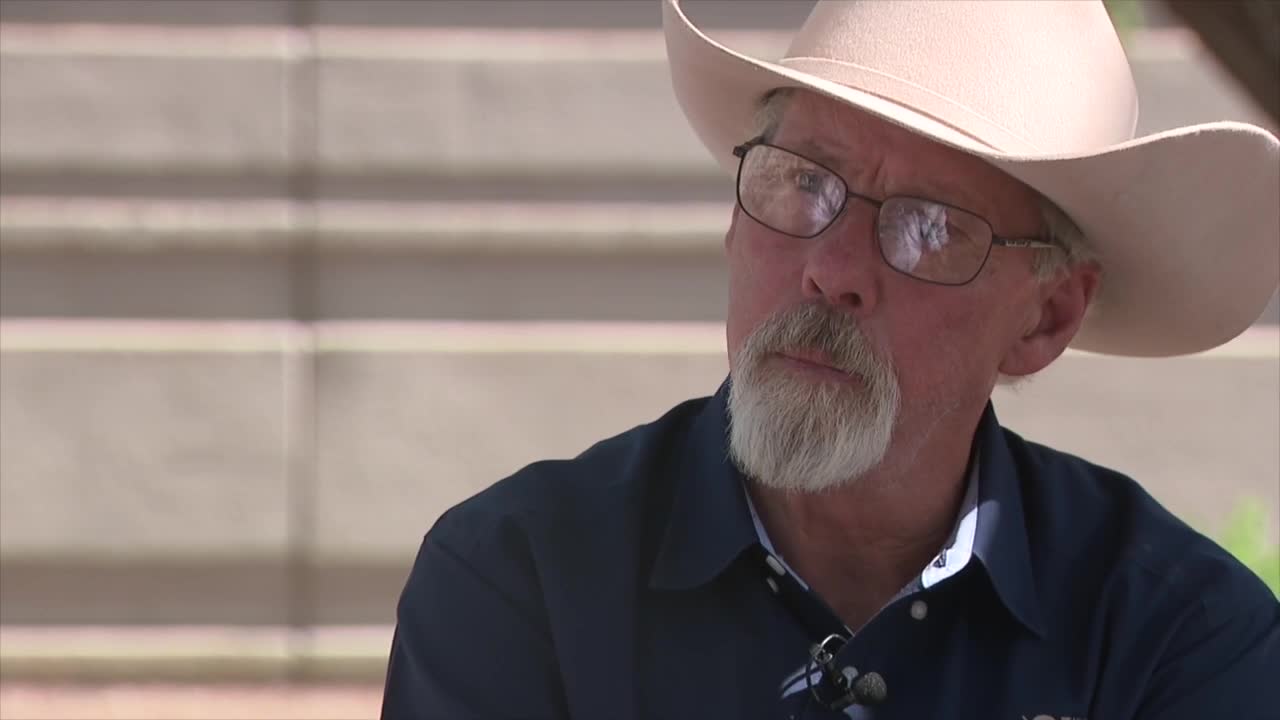


For decades, George “Joby” Walters searched for a place to belong. He found stretches of it in the Army, on the road and in outlaw motorcycle clubs. But he says it took faith to find the peace he had been looking for.
“I was running from myself,” Walters said. “I always ran.”
Walters, whose book “Cut Free” recounts his life, said he enlisted in the Army on his 17th birthday, hoping to leave behind a difficult childhood and find a new identity.
“Running, looking for identity,” he said when asked why he joined.
His father shook his hand at the station before he left, Walters recalled, and told him: “Be a man.”
In the Army, Walters served as a training non-commissioned officer, mechanic and infantryman. He said he found camaraderie for a time, but struggled with drugs, including methamphetamine and LSD, while stationed in Europe.
“It wasn’t the right place,” he said of his drug use. “They knew it. I was a training NCO … and they knew I was doing some drugs to keep up with things.”
After leaving the Army, Walters returned to Ohio but said he had no clear direction. Motorcycles offered a way forward.
“I didn’t know where I was going to land,” he said. “I like that identity.”
While living in Ohio, Walters encountered the Avengers motorcycle club and joined for a short time. He said the club gave him a sense of belonging, but his life around motorcycles also included fights with rival groups and a serious injury when a pickup truck struck him.
That incident that he insists was an attack from a rival group led him to another long road.
“I was trying to prove myself all the time,” Walters said. “I was running wherever I went.”
On the road searching for himself, he took jobs around the country, including construction work and ranch labor, while riding and searching for what he called a new home.
He continued working across the West as a hunting guide and packer, developing expertise in elk hunting and backcountry outfitting. After eventually settling in Arizona, Walters became connected with members of the Hells Angels’ Cave Creek charter through a friend and a motorcycle project. He later traveled to Oakland with a club member, where he met Sonny Barger.
Walters said Barger spoke candidly about the commitment required to join. As Walters recalled it, Barger told him: “Be ready to lose your woman, your home, your car, your truck, your bike. Go to prison, fight, or die for this club.”
Walters said he joined the Hells Angels and spent about 10 years with the club, serving as sergeant-at-arms. He described loyalty and brotherhood, but also violence, prison time and conflicts within the club. Eventually, he said, he became weary of the fighting.
One of those large fights took place at the Harrah’s Casino in Laughlin, Nevada in 2002. Members of the Mongols motorcycle club collided with members of the Hells Angels, to include Walters.
“I was dead in the middle of that. I was trying to revive a dead brother, man,” Walters said.
The other fighting he recalled was within the motorcycle club itself.
“I got tired of the fighting,” Walters said. “I just didn’t want to do it no more.”
Leaving meant giving up more than a club, he said. It meant letting go of an identity — “Joby of Arizona” — that had shaped how people knew him. But Walters said he was not simply leaving the club; he was trying to stop fleeing from himself.
A turning point came in Mexico, where Walters said he had gone while wanted by U.S. authorities. His longtime friend and mentor, Tom Dishon, sent him a box containing a Bible and religious materials. Walters said he opened it at a ranch and felt his life could still change.
“That box saved my life,” he said.
Walters also recounted being arrested after returning to the United States. On a Greyhound bus, he said, he was armed and considered resisting as officers surrounded the vehicle. He recalled pausing to pray and hearing the words, “Trust me.” He said he put down the gun and surrendered.
Walters said his faith helped him find the love, respect and forgiveness he had been seeking through other parts of his life.
“I didn’t need to be Joby Walters out of Arizona,” he said. “I’m a saved Joby Walters.”
The book, he said, is intended for people dealing with addiction, incarceration, trauma or other struggles.
“All you’re looking for is love, respect, and forgiveness,” Walters said. “That’s what my book will give you.”
At the end of the interview, he returned to the theme that runs through his account: “Look what happens when you stop running.”
You can find more information about George Walters book on his website

