

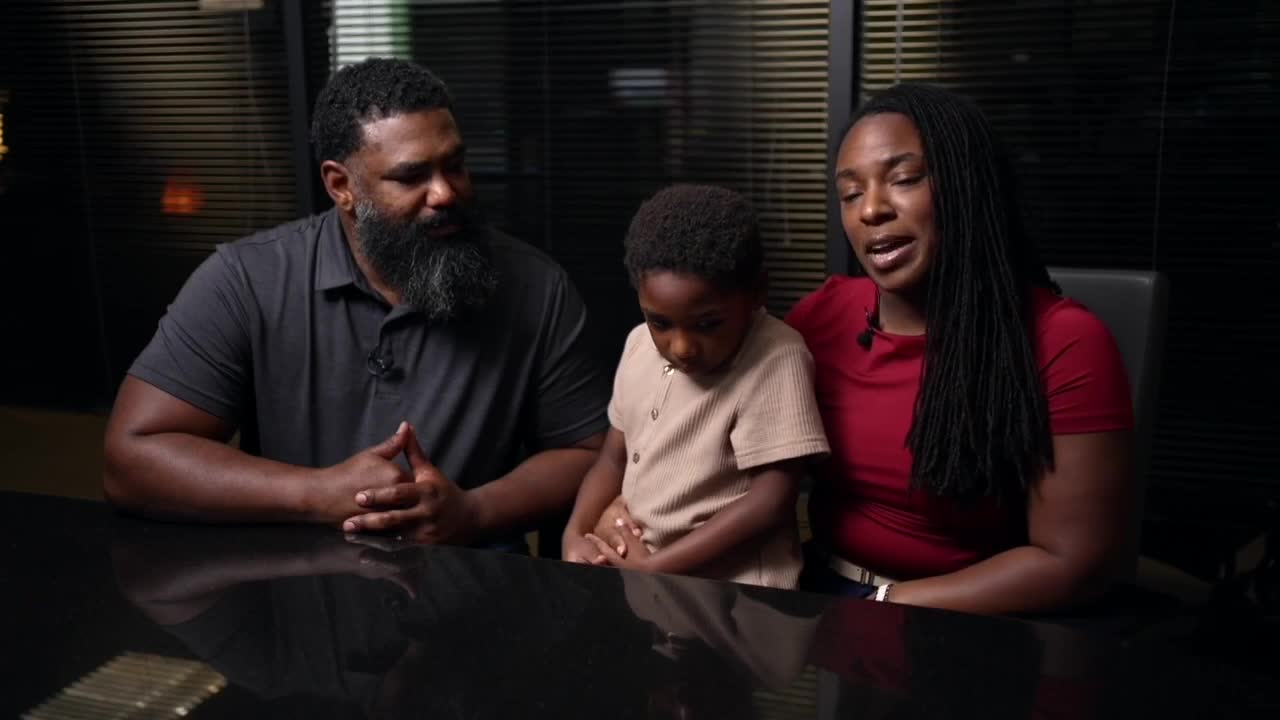


When Vincent and Dr. Anna Margot Blair received their son Luke's autism diagnosis, they were handed a 20-page report filled with medical terminology, observations and information about what autism could mean for their child.
What they didn't have was a clear roadmap for what came next.
Luke was 3 years old and had fewer than 100 words in his vocabulary. His parents had questions about his development, his future and how to best support him.
That's when the Southwest Autism Research & Resource Center (SARRC) became an important part of their family's life.
"This organization has been completely life changing for us," Vincent Blair said. "This organization was like a lighthouse for us to guide us and to be a support for him."
For the Blair family, SARRC provided more than resources for Luke. It helped his parents understand his diagnosis, gave them tools to support his development and connected them with other families navigating similar experiences.
One of their first steps was SARRC's JumpStart program, an eight-week program that teaches parents strategies to support their children, including navigating transitions and encouraging communication.
The program helped the Blairs better understand their role in Luke's development. It also gave them an opportunity to witness a milestone they had been waiting for.
During one of the training sessions, Luke began using words to advocate for himself.
"He told us no," said his mother, Dr. Anna Margot Blair. "We hadn't heard him say anything, let alone, 'Please give me my space. I'm fine here.'"
For a family whose child had been almost entirely nonverbal, the moment was emotional.
"It was so beautiful," she said. "I know I cried during that session."
Luke's progress continued through SARRC's programs, including its Community School in Tempe. He spent about a year in the preschool-based program, receiving both group and one-on-one therapy alongside children with and without autism.
His parents said he began speaking more, participating in classroom activities and even volunteering to read in front of the class.
Today, Luke is thriving in first grade at a Great Hearts school. He is learning Latin, enjoys wrestling and has developed a particular interest in glass recycling.
His reading skills have advanced so quickly that he skipped several levels in his school's reading program. His parents said his sight-word vocabulary has reached approximately 1,000 words.
But Luke's development is only part of the story.
SARRC also helped the entire family understand how to support him. His older siblings, Vincent and Alyvia, initially had questions of their own about the diagnosis and how it would affect their relationship with their younger brother.
Over time, both became active in supporting Luke. Vincent joined SARRC's peer mentorship program, while Alyvia participated in the organization's fundraising walk.
The experience helped them develop patience, empathy and a better understanding of how people with autism may experience the world differently.
"The Peer Mentorship Program definitely gave me a better view on how I can support my brother," Vincent said. "Really wanting to understand the person at the heart and how they think and think about life."
Alyvia said watching her brother grow has made her proud.
She also hopes other families understand the importance of patience and recognizing that progress takes time.
The Blairs said connecting with other parents has been equally important. Because autism is a spectrum, every family's experience is different, but having a community where parents can share questions and experiences helps them realize they aren't alone.
SARRC's support also extends beyond early childhood, offering resources that can follow individuals through different stages of life, including education and employment support.
For the Blairs, that broader mission is one reason they encourage others to support the organization.
Vincent said investing in SARRC means investing in opportunities for people with autism to develop their abilities and contribute to their communities.
"All these kids — they're just like you. They have interests, and they have dreams and goals and aspirations," Vincent said. "It's supporting those dreams and goals and aspirations that makes the biggest difference."
For parents receiving an autism diagnosis, Anna has a simple message: Let children develop at their own pace and don't limit what they might accomplish.
"There's a chance that they will surpass everything that you could envision for their life in the first place," she said.
Through its annual Operation Santa Claus campaign, ABC15 is highlighting organizations like SARRC that provide critical support to Arizona families.
For the Blair family, that support has helped turn uncertainty into understanding and given them a community to lean on as they watch Luke discover his potential.
You can donate to support SARRC at GiveToTheClause.com.

