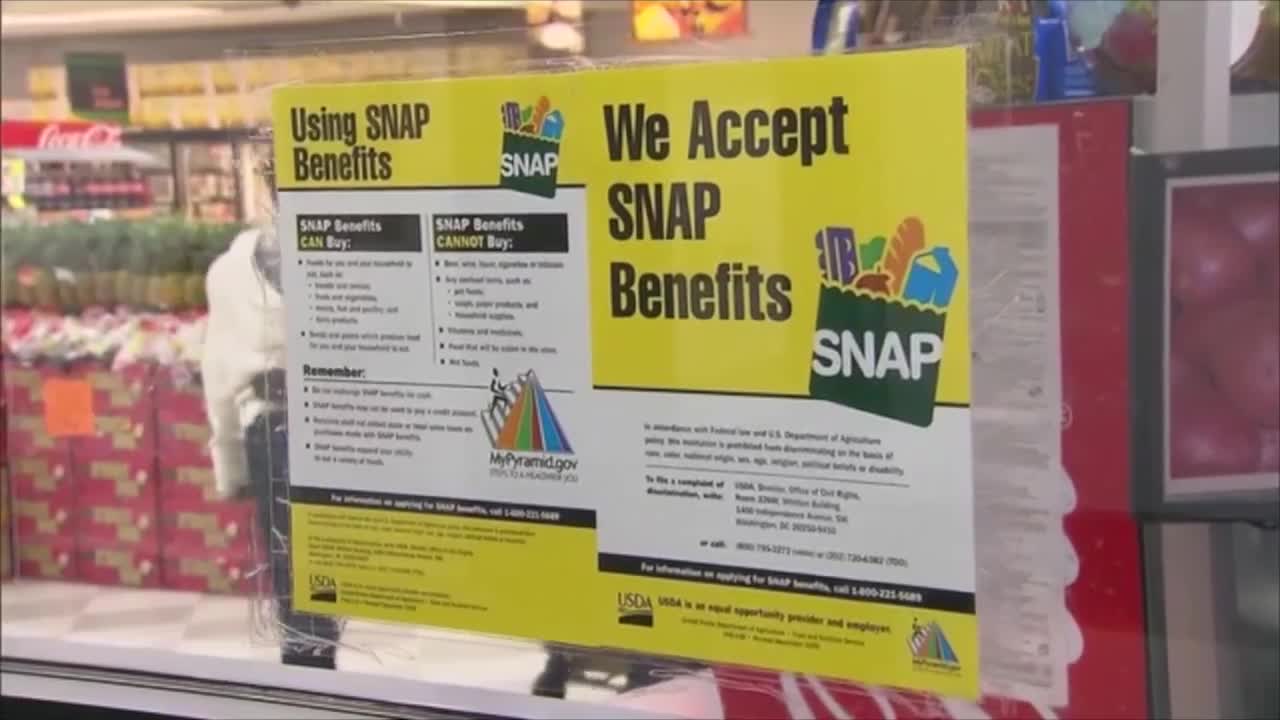


PHOENIX — The Arizona Legislature passed a Republican budget package Monday that includes a 5% cut to state agencies – including the department that administers SNAP.
The state Senate approved the 16 budget bills on party-line votes, with Republicans saying the package’s tax cuts will bring Arizona families relief.
“This is a good budget,” Senate President Warren Petersen said after the vote. “It should have been a bipartisan budget.”

Do you have a concern in your community or a news tip? We want to hear from you!
Connect with us: share@abc15.com
Republicans say they included several items Gov. Katie Hobbs proposed before she walked away from budget talks in March.
However, that list doesn’t include increased staffing at the Department of Economic Security.
Arizona has slashed enrollment in the Supplemental Nutrition Assistance Program in half since July 2025, when President Donald Trump signed the One Big Beautiful Bill Act into law.
The tax law, also known as H.R. 1, includes a number of changes to the federal food assistance program, including expanded work requirements, more frequent eligibility checks, less federal funding for administrative costs, and a mandate to dramatically lower SNAP’s error rate or the amount of overpayments, underpayments and errors.
DES Director Michael Wisehart told reporters Friday that H.R. 1 has made it more challenging for people to receive SNAP.
“Any time you require more documentation, it makes it both harder for the individual that's applying and harder for the person that's doing the work to assess the eligibility,” he said.
How would the budget affect SNAP
Wisehart told ABC15 his agency needs more staff, saying DES can’t absorb a 5% cut to its operating budget. The Republican proposal does not touch programs funded by state formulas.
In her budget proposal, Hobbs called for adding 146 full-time employees to implement the federal changes.
Her office has estimated it will cost the state $24 million a year to conduct eligibility checks twice a year; before H.R. 1, the agency checked annually.
The Republican budget package would require even more frequent checks: quarterly. That would cost $48 million annually, the Governor’s Office estimated.
The budget would also direct DES to lower SNAP's error rate to 3%.
Next year, the federal government will hit states with rates above 6% with financial penalties.
In Fiscal Year 2024, Arizona’s error rate was 8.8%, below the 10.9% national average.
Wisehart said his employees are doing the best they can, saying the state has underfunded DES compared to other states for years.
“Arizona invests less money in eligibility determinations than other states do, and that has led to both less staff than most other states have, but also less modern technology,” he said.
Arizonans have reported long backlogs for SNAP applications and appeals. One mother in Benson told ABC15 last month her family’s benefits were canceled in January when she reported a loss of income to DES.
“You have to have the workers being capable of handling the caseload,” Kimberly Skolkin said. “They absolutely do not have what they need to handle the caseload. The workers, they're overwhelmed.”
The agency restarted Skolkin’s benefits the day after ABC15 reported on her case.
When asked about the staffing concerns, Petersen said the state government needs to be more efficient.
“We believe that government can work within its means, and that it can be competent, and that it can do its job,” he said.
State Rep. David Livingston, the chair of the House Appropriations Committee, was open to additional technology funding, saying Republicans would need detailed discussions with Hobbs.
“I'm not sure if it's needed,” he told ABC15 after the House passed the budget bills Wednesday. “We didn't get enough information from the agencies to answer that.”
Given the large drop in SNAP cases, he believes the agency has enough staffing, Livingston said, adding that DES needs to automate as much as possible.
“We may need to give them a little more money for technology, to speed up the automation of all that,” he said.
Budget veto likely
Hobbs has said she opposes the 5% agency cuts and full conformity with Trump’s tax cuts. Her office released a list of items she objects to, including a continued tax break for data centers, funding cuts and “sweeps” of money out of various state funds and into the main budget.
She walked away from budget talks in March because of a dispute over whether to renew the now-expired school funding mechanism, Proposition 123. She also promised to veto all bills until Republicans publicly released their budget proposal but has not committed to lifting her bill moratorium.
“I am eager to get back to the negotiating table with them, to look at ways that we can make things more affordable for Arizonans and lower costs,” Hobbs told reporters Friday.
If Hobbs vetoes the budget, Petersen said he expects Hobbs to return to the negotiation table to work on a deal. But he encouraged her to sign the budget, saying the governor shouldn’t expect major changes in negotiations.
“There may be a couple of things where she can provide an alternative, where there's some consensus, but you're not going to see a budget that's much different than the one you saw today,” he said.
Want more news in your community? Add ABC15 as a preferred source on Google below: