

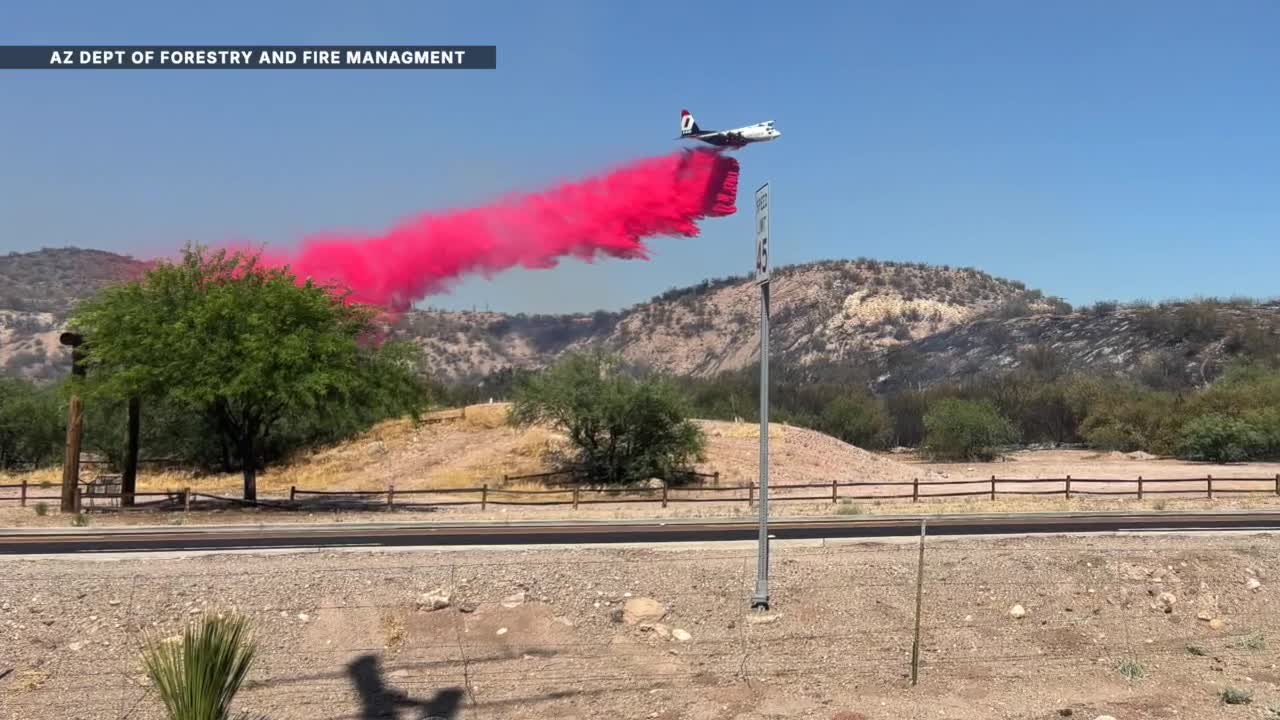


MESA, AZ — On the tarmac at Mesa Gateway Airport, a C-130 Hercules transport aircraft sits ready for action, loaded with up to 4,000 gallons of water and retardant, and primed to support Arizona's wildfire fight from the air.
The aircraft, operated by Coulson Aviation in partnership with the U.S. Forest Service, became a critical asset above Wickenburg this week as flames tested ground crews in the rugged desert.
"It's a good feeling when you get your drop where it needs to be," said Joshua Kryzsko, a captain with Coulson Aviation, after demonstrating the plane’s capabilities to ABC15 cameras on Monday.
By Wednesday morning, containment on the Jones Fire had improved to 23%, officials said—a testament to the high-flying support above and the exhausting ground fight below.
“The role we play when we arrive on scene is figuring out where the ground resources are and what their next move is going to be,” Kryzsko said. “And getting that retardant in front of the flames so they have time to build lines.”
Windy conditions on Wednesday posed concerns for both the airborne and ground teams as they worked to box in the fire.
“It can make it harder for the aircraft to fly,” said Rocco Terracciano with the U.S. Forest Service. “It can make it harder for the engine and the hotshots to get line around a fire. They can grow quicker if it’s windier.”
Terracciano said the C-130’s next destination remains uncertain, since Coulson and the Forest Service operate under a contract that can send them from coast to coast as wildfires flare.
The crew knows the season is only beginning.
“We know fires are coming, and we’ll be ready,” Kryzsko said.
