

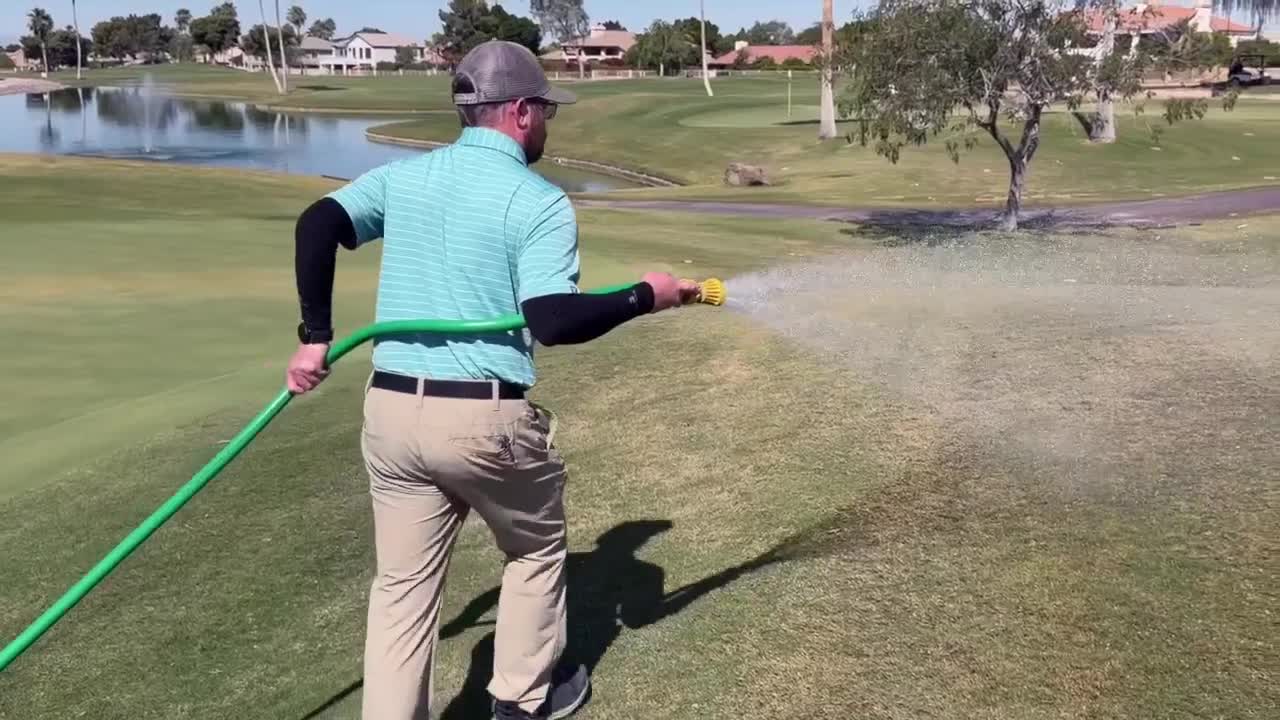


MESA, AZ — At Alta Mesa Golf Club, general manager Scott Mattiello said the club is trying to strike a delicate balance between keeping fairways green and conserving water amid Arizona’s ongoing water crisis.
Mattiello gave a tour of the course’s high-tech irrigation system and weather-forecasting devices that track soil moisture and adjust watering schedules to reduce waste. He said crews also still hand-water certain areas with hoses — “the way golf course managers did a century ago” — when it is the most efficient option.
“I understand why there’s a perception that golf courses are overusing or using too much water here in Arizona, but it’s really not the case,” Mattiello said. “We’ve actually been stewards of water usage for many years, even prior to the concerns.”
Three years ago, Alta Mesa installed a new grass blend called Tiftuf, a strand of Bermuda grass that Mattiello said requires less irrigation. He said the club has saved 15 to 20 percent of its water allowance since the change.
The debate over golf and water comes as the Phoenix metropolitan area faces rising demand. Salt River Project said the city of Mesa is the largest water user in the East Valley, serving about 530,000 customers. The Arizona Department of Water Resources says the valley, as a whole, is using more water than ever.
Golf provides an economic counterpoint: the Arizona Alliance for Golf estimates the industry brings about $520 million in annual revenue to the state.
Alta Mesa used about 560 acre-feet of water last year, Mattiello said — roughly the amount the club was allotted by the Arizona Department of Water Resources. He said he expects that allotment could be reduced in the coming years, which would force further conservation measures.
“The challenge is to maintain our product and support the local economy while responding to a shrinking water supply,” Mattiello said.
As municipalities and regulators weigh future cuts, golf-course managers around the Valley say they are adopting new grasses, smarter irrigation and more hands-on watering to do their part. The measures underscore a tense tug-of-war: preserving a multimillion-dollar recreational industry while confronting a long-term shortage of a vital resource.
