

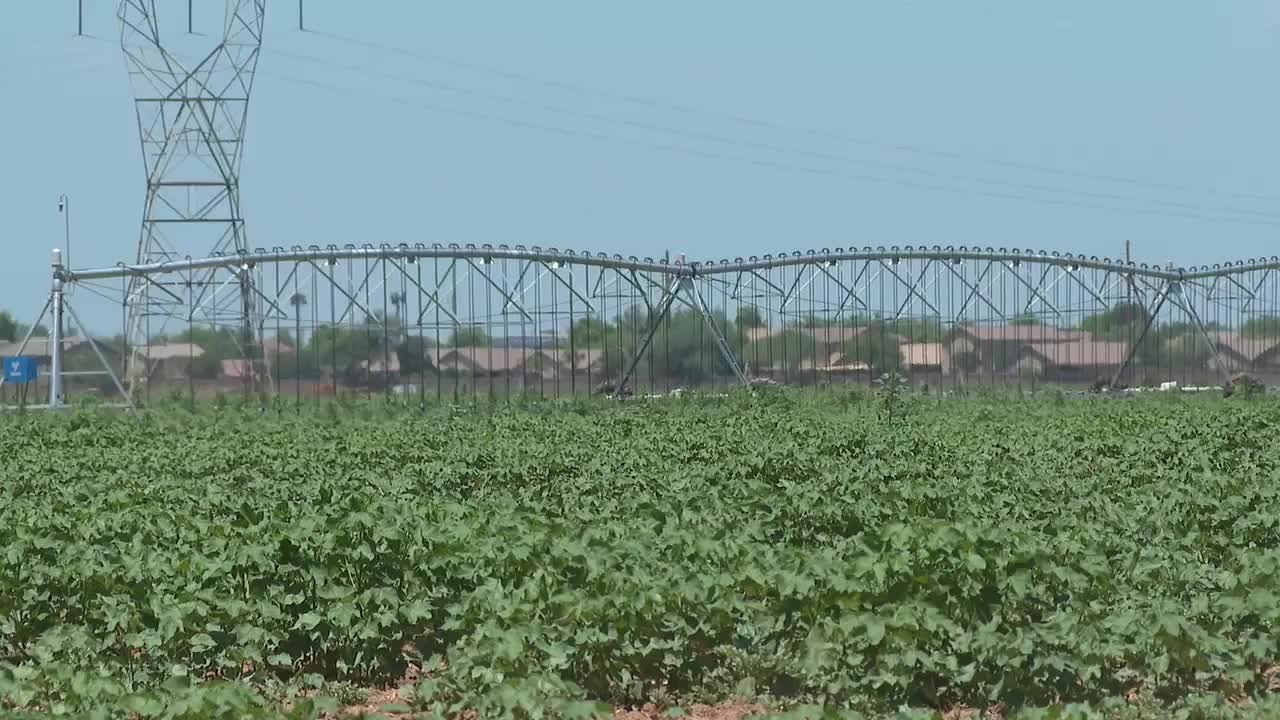


GILBERT, AZ — Arizona farmers are once again adapting to the state's punishing summer heat and bracing for a longer-term challenge that could prove even more difficult: significant cuts to Colorado River water.
For Wyatt Freeman, a fourth-generation farmer whose family has called Gilbert home for decades, dealing with extreme weather is simply part of the job.
"It's just part of what makes farming farming, you know, dealing with the weather and the heat, the heat and the cold, the rain and the drought," Freeman said.
Freeman's family grows cotton, corn, hay and wheat across several Valley farms. Earlier this year, a hot, dry spring forced the family's popular Gilbert sweet corn stand to close earlier than expected.
Now, another round of triple-digit temperatures means closely monitoring crops and making sure they have enough water to withstand the heat.
"If you get a really hot, long summer, it can definitely make things more difficult… you don't want to stress plants out too much, otherwise it can impact your yields," Freeman said.
Monsoon season brings its own set of risks.
"When these monsoons start coming in, it can flatten that silage corn down, and you can lose a, you can lose a crop or lose a huge percentage of your crop,” Freeman added.
But Freeman says the heat is only part of the challenge. With Arizona expected to receive less Colorado River water in the coming years, he says farmers are already preparing for difficult decisions.
The federal government says it met virtually with Colorado River Basin governors this week and plans to announce next steps soon.
"I can't say for sure yet. We might lose 30 or 40 percent of our water on a couple of these locations… so more fields laying doing nothing unfortunately," Freeman said.
Freeman says efficient irrigation systems help stretch every gallon, but there is only so much farmers can do if less water is available.
"Be conscientious about how you use it. We live in a desert and there's only so much that goes around," Freeman said.
Freeman says what the region ultimately needs is sustained relief from above.
"What we need is several years of some good snowpack in the winters, and that's what fills those dams up and, and keeps it going," Freeman said.
