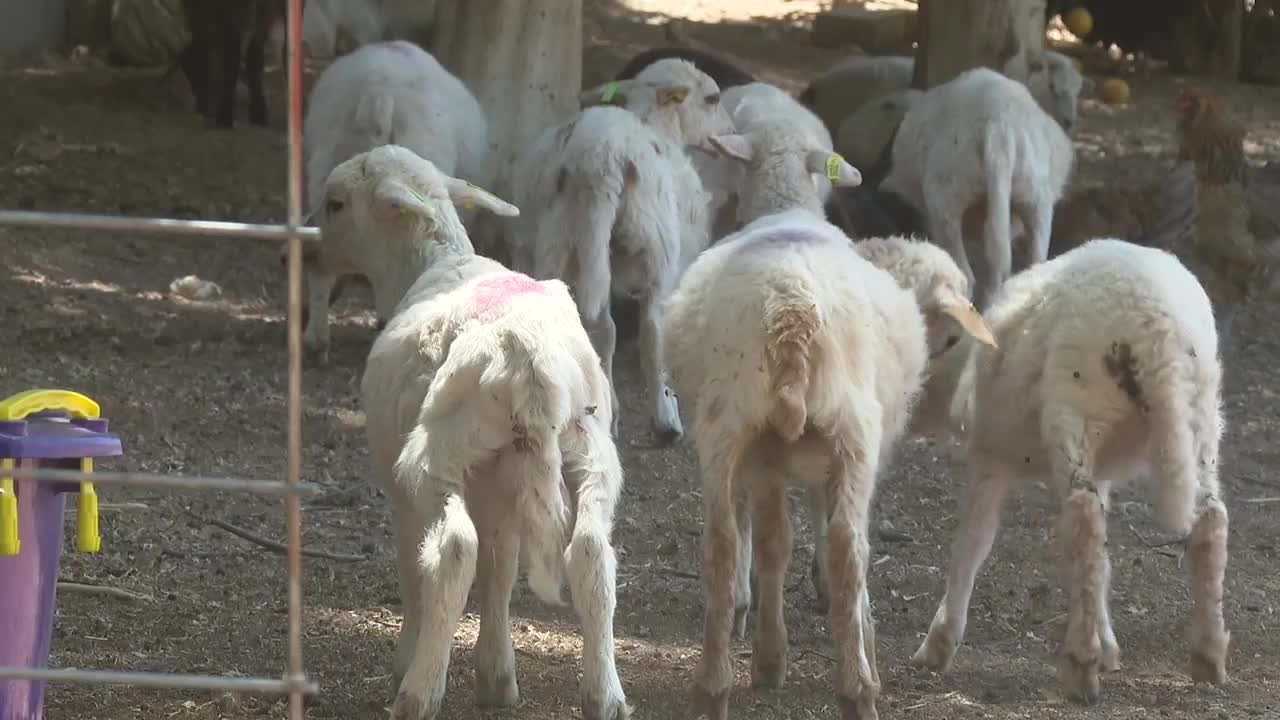


GILBERT, AZ — A Gilbert farmer says rising feed costs, diesel prices and drought conditions are putting pressure on local food production.
Scott Heartquist started Heartquist Hollow Farm in Gilbert in 2018 as a homestead. Then the pandemic hit. "We sold through six months of the meat in three weeks... and realized we had a business," Heartquist said.
He says it has since grown into a full-scale ranch raising beef, sheep, pigs and chickens, complete with its own USDA processing facility in Winkelman, Arizona.

Do you have a concern in your community or a news tip? We want to hear from you!
Connect with us: share@abc15.com
Years later, demand remains strong, but Heartquist says there are some pressures.
"Challenges we face right now are the cost of livestock, the cost of feed... the drought is making things challenging," Heartquist said.
With little rain, grazing land dries up, forcing farmers to buy expensive feed to keep animals fed.
"If we don't have grass in the pasture, then we have to buy hay to do it," Heartquist said.
Diesel costs have also become one of the farm's biggest expenses.
"Last year... we spent about $130,000 in diesel," Heartquist said.
The costs haven't eased up.
"That truck will cost us 400 to 500 bucks for the next few days. But it runs every week. That's how it gets expensive. But we also have trucks that haul our trailers. We have flatbed trucks at the ranch to haul livestock and move livestock around. So, that's why how the cost of diesel gets way up on us," Heartquist said.
Gilbert's rapid growth adds another layer of complexity for the farm.
"Gilbert growing is a double-edged sword... it gives us more customers — but it pushes our ranch further out," Heartquist said.
As more residents say they want to support local farms, Heartquist has a message about what that commitment means.
"A strong local food system does not mean cheaper food... it means more nutritious food," Heartquist said.
Want more news in your community? Add ABC15 as a preferred source on Google below: