

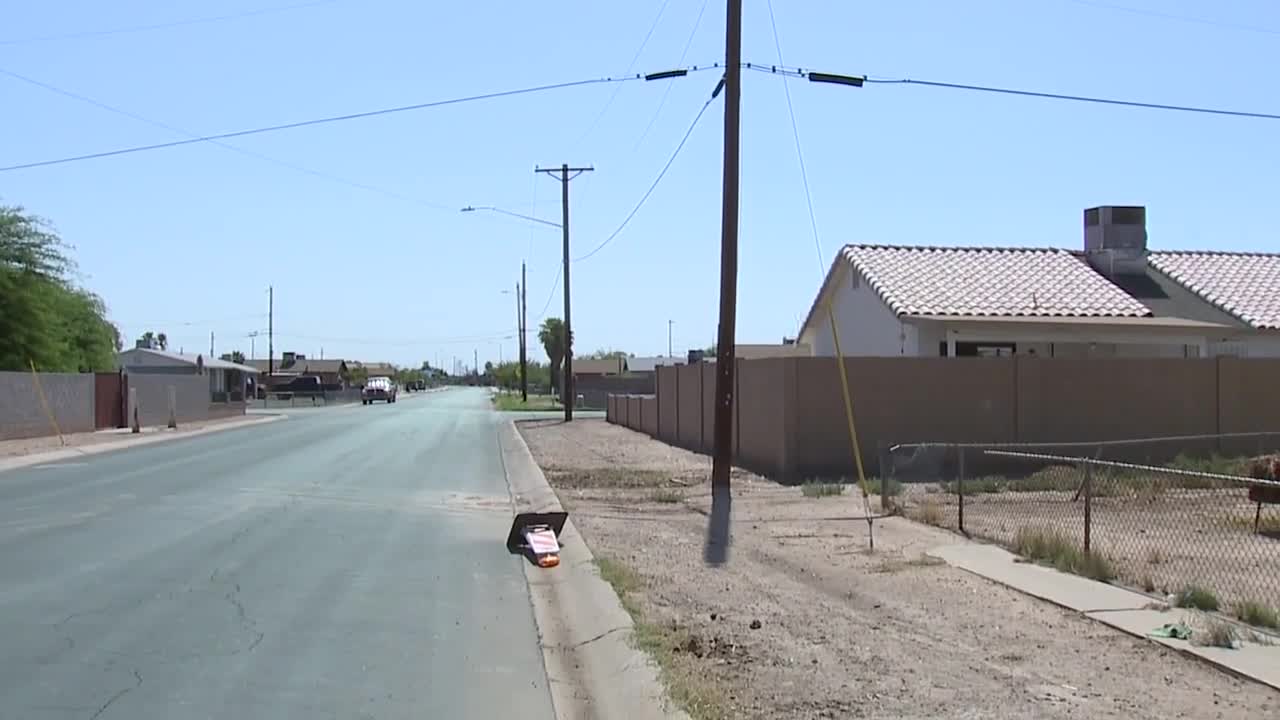


PHOENIX — Neighborhoods in the southern and western parts of Phoenix are getting hotter, faster, as tree coverage is far less than in other areas of the city. But multiple groups are trying to change that.
Parts of south and west Phoenix have tree canopy coverage as low as 2%, according to the city’s 2024 Shade Plan.
City leaders passed the updated plan two years ago with the goal of increasing tree canopy and shade structures in areas that need it the most.
ABC15 followed up with the city to see what’s been done specifically in south Phoenix since then.
The Office of Heat Response said that the Community Canopy program has planted 458 trees in south Phoenix since 2024. The Canopy for Kids program has planted 68.
The city also said south Phoenix schools received eight shade structures through the Shade for Students program, and four pedestrian shade structures have been installed at south Phoenix intersections and crosswalks in the past year.
The non-profit Unlimited Potential is also dedicating resources to plant trees and train people on how to properly care for them.
"Canopy solves a lot of those problems, but it only solves those problems if it's maintained well,” Arborist Chris Geldis said.
Executive producer Emma Viera said the lack of shade in south Phoenix has come over time, as the community developed.
"This all used to be farming area so it was covered with trees, it was covered with vegetation," Viera said.
Development replaced that greenery with concrete, putting heat stress on both people and their homes.
"There is really no air conditioner that can work well in 120," Viera said.
The organization is also a part of ASU’s Urban Nature Partnership, which is bringing community groups together to address the heat island effect through shade.
Jennifer Clifton is the assistant director for community economic development with ASU’s Walton Sustainability Solutions Service.
"We're trying to be really strategic about planning for shade in those areas. So not blanket increase of tree canopy across the neighborhood, but like where people need it most," Clifton said. "It's only part of the issue, and so it's really about dealing with infrastructure."
