



PHOENIX — A recent food action plan released by the City of Phoenix finds that nearly half of the city’s residents live in what’s considered a food desert, with the most need in south and west Phoenix neighborhoods.
Community organizations, corporate expansions and the city’s own food security plan all hope to address the need for fresh, accessible food.
“A food desert is an area where you might live a mile plus away from a full-service grocery store,” Phoenix Food Systems Program Manager Maddie Mercer said.
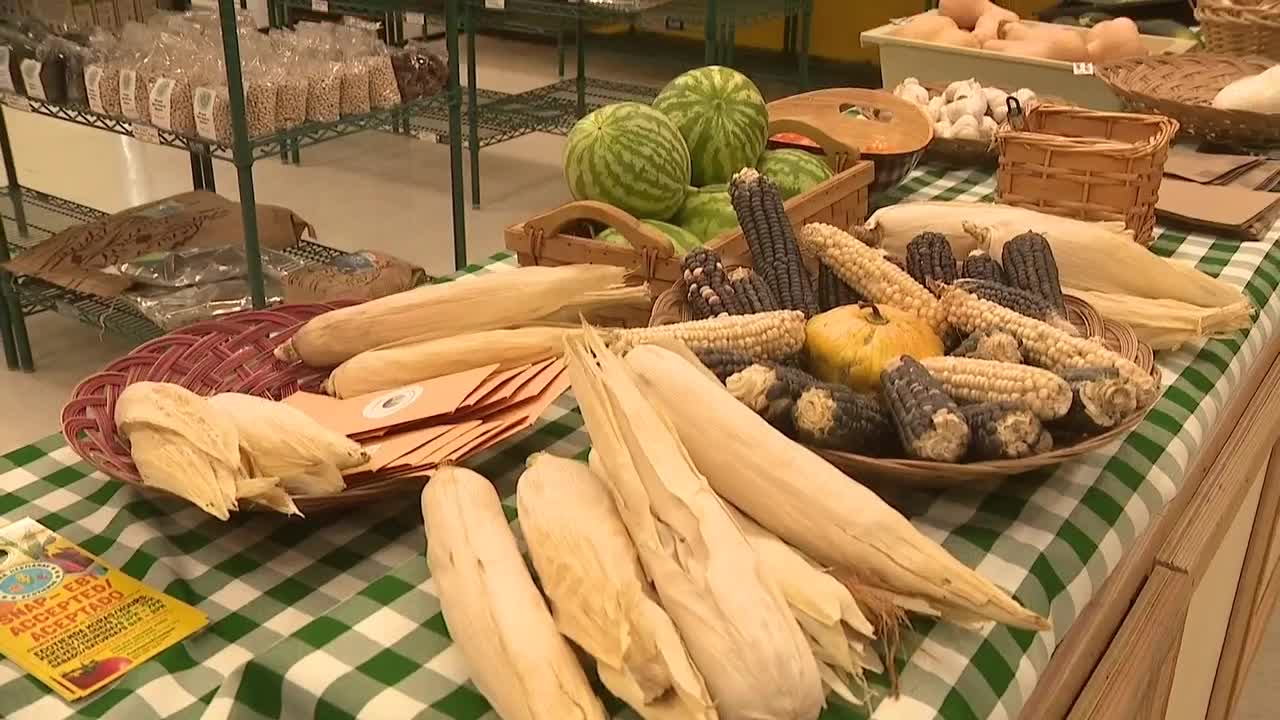
John Wann-Ángeles recently opened Las Tres Hermanas Ecotienda at the Brooks Community Center through his non-profit, the Orchard Community Learning Center.
He said the community center and surrounding neighborhood sit three miles away from the nearest full-service grocery store, in what the city designates a food desert.
“The system very generically hasn't put healthy food close to the neighborhood here,” Wann-Ángeles said. “This is one of the most economically oppressed neighborhoods in Phoenix.”
His mini store is open on Tuesdays, Thursdays and Saturdays, and focuses on fresh produce grown either in his community garden or by local growers in the Southwest.
"We switch that around and call it desert food because people have been eating out of this desert for thousands of years,” Wann-Ángeles said.
Phoenix leaders recently unanimously adopted the 2030 Phoenix Food Action Plan, which will act as a roadmap for everything from food accessibility to local partnerships, programs and food waste.
"We'll work to see how we can continue expanding food access sites,” Mercer said. "So that could look like a grocery store through different incentives, or it could look like other models where people can access food at a healthy corner store. It could involve focusing on transport.”
One South-Phoenix-food-desert-win is the upcoming development of a new Vallarta Supermarket along Baseline and Central, expected in early 2027, according to city officials.
"I love this new grocery store is right by the light rail,” Mercer said. "That's an essential part of food access overall, is having transportation to get to and from where your food is.”
