

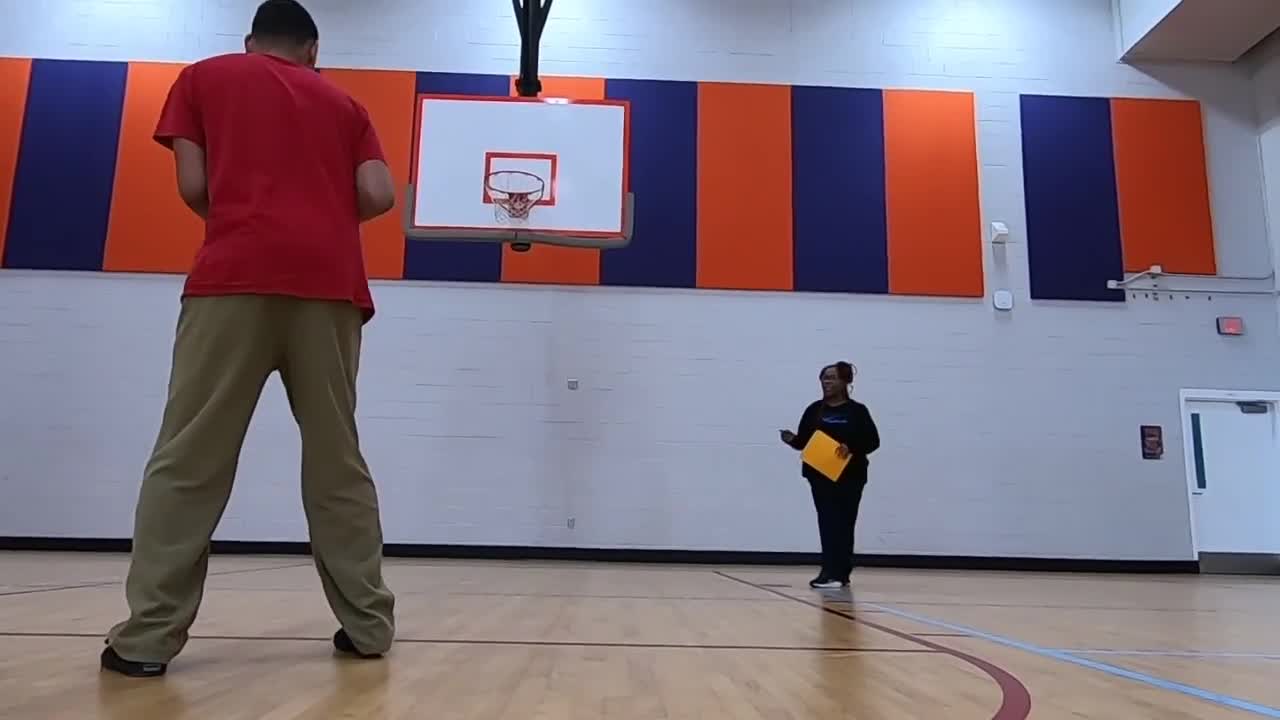


PHOENIX — A program inside the Durango Juvenile Detention Facility aims at reshaping the minds of boys and girls who have found themselves on the other side of the law.
After seeing an increase in youth violence for years in her community, activist and non-profit founder Dana Burns wanted to bring a program called “Shoot Your Shot” to incarcerated kids that would captivate their attention as much as correct their life journeys.
“Words are powerful, and that's what I'm teaching these kids to speak over their lives,” Burns said. "The increase in youth violence in our community is horrific to me, and I want to know what can we do as a community to bring the right resources to help our kids.”
Burns knows what it’s like to be incarcerated. She now dedicates her life to helping others turn their lives around.
She started A Permanent Voice, which is a south Phoenix-based organization aimed at strengthening community and addressing key issues.
The third cohort of her “Shoot Your Shot” program took to the court on Monday.
"To learn more positive life skills, and to be improved when they are released,” Burns said.
Students received books and worksheets to learn how to address trials in life with a positive outlook and vocabulary.
“I have younger like siblings and nieces and stuff and cousins, and they look up to me, and I think I want them to have a better example to look after,” a teen said as he started the program.
They then hit the gym to get quizzed on their life skills, while trying to land that perfect free-throw.
“You get the question right, you shoot the ball,” one student said. “If you're talking negative and you're hanging around negative people, you're going to make negative decisions, so it taught me to choose my circle wisely.”
The facility has roughly around 130 teens at any given time, with currently ten different programs geared toward youth development and mental health.
The Maricopa County Regional School District also has a traditional high school program within the center.
Mark Eastin, community and culture manager within Maricopa County Juvenile Detention, said the programs that thrive are the ones where the students can relate and engage.
"Them seeing that it's somebody from their community that's willing to put the effort in and come to see them within the detention setting is a big part of how programs are successful here,” Eastin said. "These kids do have a voice, and they are very smart. They're very intelligent, and they want to do big things. They just want to have people back them."
