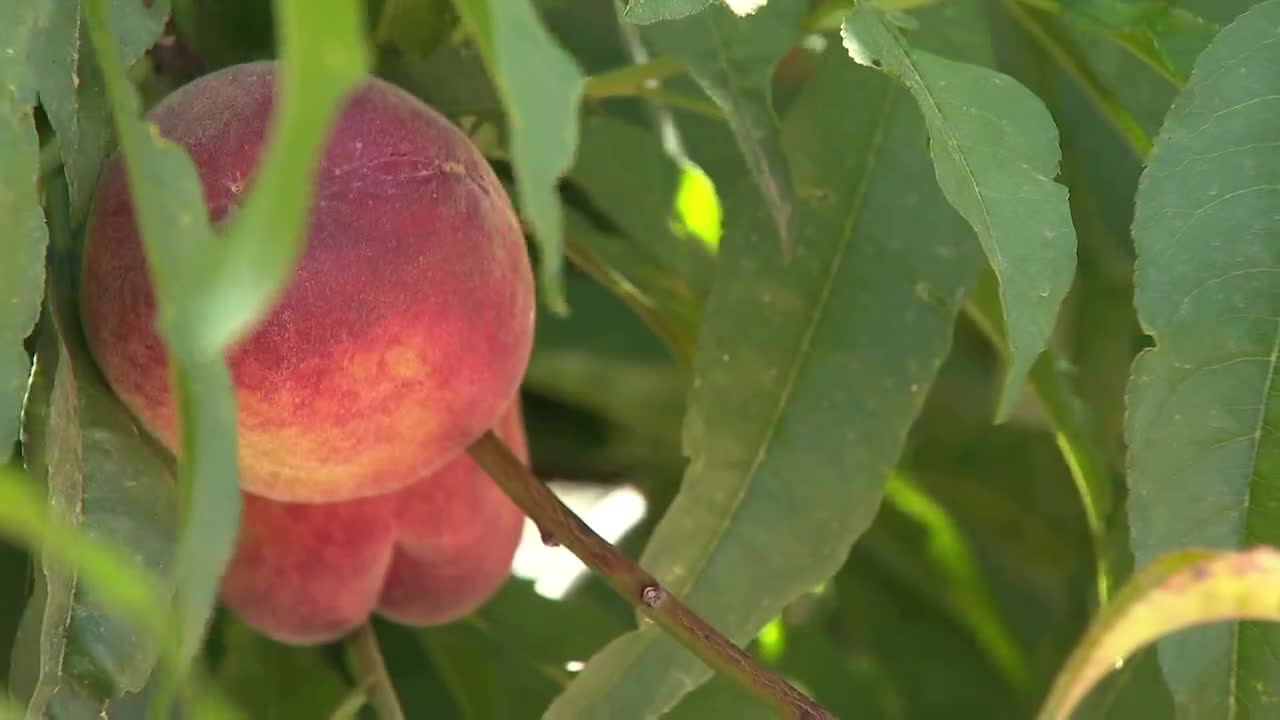


Changes are coming to Arizona’s largest peach grower this season.
Schnepf Farms says it saw a 50% loss of peach crops this year. Owner Mark Schnepf tells ABC15 this season was the second-worst he’s seen; the first was about 20 years ago.
“The loss will reach into the six figures and peaches are our largest crop we grow here on the farm,” Schnepf said.
It’s because of Mother Nature. The Phoenix area experienced the warmest winter on record. Schnepf says the peaches need to have enough of what’s called “chill time.”
“I plant trees that fit our climate here. It’s usually 200 to 300 chill hours per year per winter is what they need. We had far less than that this year so consequently, the trees didn't respond well and they didn’t produce well,” he said.
Now, changes are coming to peach season at Schnepf Farms due to the loss. When the community can come out and start picking peaches at the farm in May, they’ll be charging 15 cents more per pound of peaches to help offset the loss. Though Schnepf said that won’t be nearly enough to cover the losses.
“I just didn't feel like we could raise it more than that. I don't want to do that. I just want to hold the price down as low as we possibly can,” he said.
They also won’t be taking any pre-orders for peaches this year.
“We have to cut back,” he said. “We typically supply restaurants in the Valley with peaches and sometimes the resorts ask for them as well and specialty events. We’re not going to be do that. We’re just going to focus on those people that are able to come out to the farm and pick their own peaches.”
Schnepf said the peaches also ripened the earliest he’s seen since he’s been there over several decades. They ripened about two weeks earlier, whereas they usually start picking in the first week of May.
“It’s sad for me because it’s, of course, it’s a financial loss, but it’s also a loss because not as many people are able to get peaches this year. I can’t keep up with demand as it is, and I hate disappointing people."
While there’s a loss this season, including a couple of other fruits on his farm, Schnepf remains hopeful.
“As a farmer, I can’t be too nervous about the future because I can’t control it. just have to deal with it one year at a time,” Schnepf said. “I'm hoping that it was an aberration, that it was a one-time fluke thing, and we’re getting back to normal and going back to growing peaches the way it should be."
Want more news in your community? Add ABC15 as a preferred source on Google below: