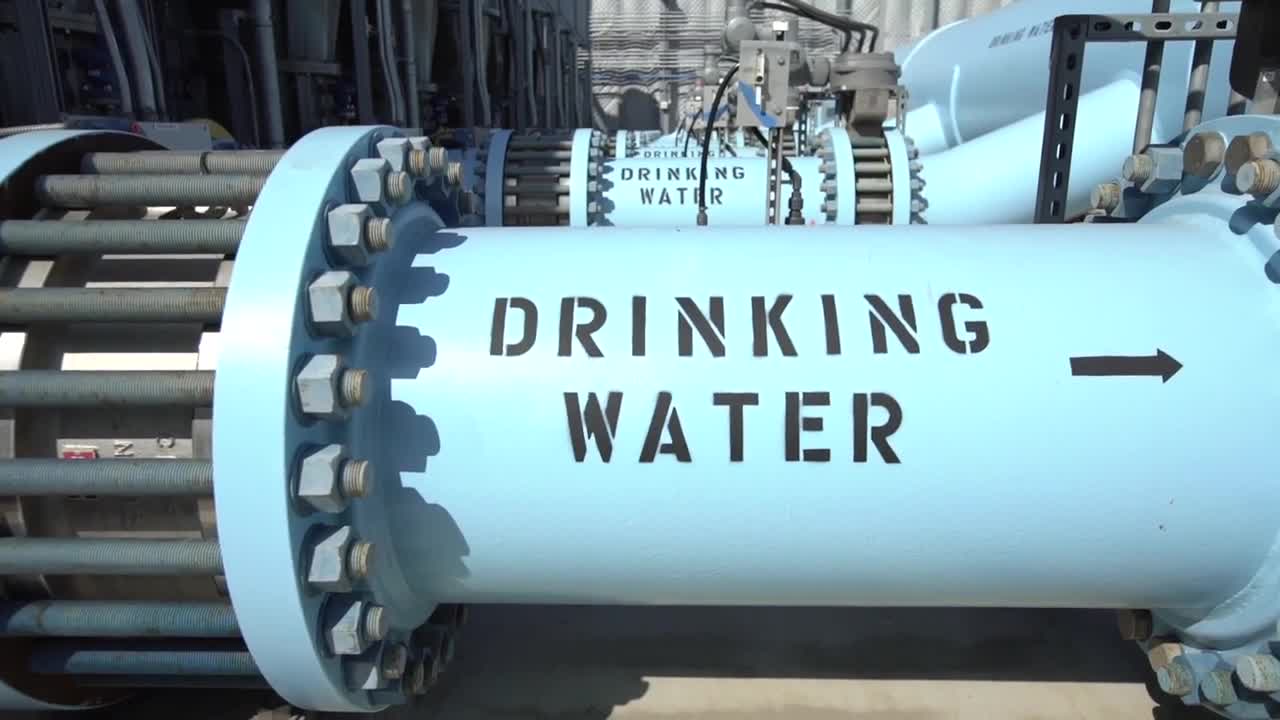


For years, Arizona has explored the possibility of turning seawater into drinking water as a way to help offset shortages on the Colorado River.
Now, state water leaders say a new partnership with California could move that concept one step closer to reality.
This week, Arizona signed a memorandum of understanding with California water agencies to explore a first-of-its-kind water exchange involving desalinated ocean water from Southern California.
The agreement centers on the Claude "Bud" Lewis Carlsbad Desalination Plant in Carlsbad, California, which currently has the capacity to produce about 56,000 acre-feet of drinking water annually. According to the San Diego County Water Authority, the facility could be expanded by an additional 6,000 acre-feet.
Colorado River managers say the need for new water supplies has become increasingly urgent as the river continues to suffer from a decades-long drought.
"So on the Colorado River, we've been in a 26-year drought exacerbated by climate change. Our river is 20% smaller than it was just 25 years ago," said Brenda Burman, general manager of the Central Arizona Project.
Burman said conservation efforts remain important, but Arizona will also need new sources of water to meet future demand.
"We need to be looking at innovative ways to move water across country lines, across state lines," she said.
The proposal does not involve building a pipeline to transport desalinated water directly to Arizona. Instead, Arizona and other partners could help fund an expansion of desalinated water production in Southern California.
That additional desalinated water would be used by California water users, allowing them to reduce the amount of Colorado River water they withdraw. Arizona could then access a larger share of the conserved river water.

Do you have a concern in your community or a news tip? We want to hear from you!
Connect with us: share@abc15.com
"By using an exchange, what we would do is more of the desalinated water would be used in Southern California, and that would allow their water users who take off from the Colorado River to take less, and then Arizona parties could take the Colorado River water," Burman said.
Officials with the San Diego County Water Authority say the arrangement would create a new tool for managing water shortages across the Southwest.
"This is something that's never been done before," Dan Denham said.
Desalinated water is significantly more expensive than traditional water supplies, but water managers argue the cost of inaction could be even higher.
"Your alternative is to not invest and not have water," Denham said.
The discussions come as the seven Colorado River Basin states continue negotiations over how water will be shared after current operating rules expire in 2026. Denham said they hope to have a formal agreement by the end of the water year.
Federal officials are expected to announce updated Colorado River operating guidelines later this summer.
Want more news in your community? Add ABC15 as a preferred source on Google below: