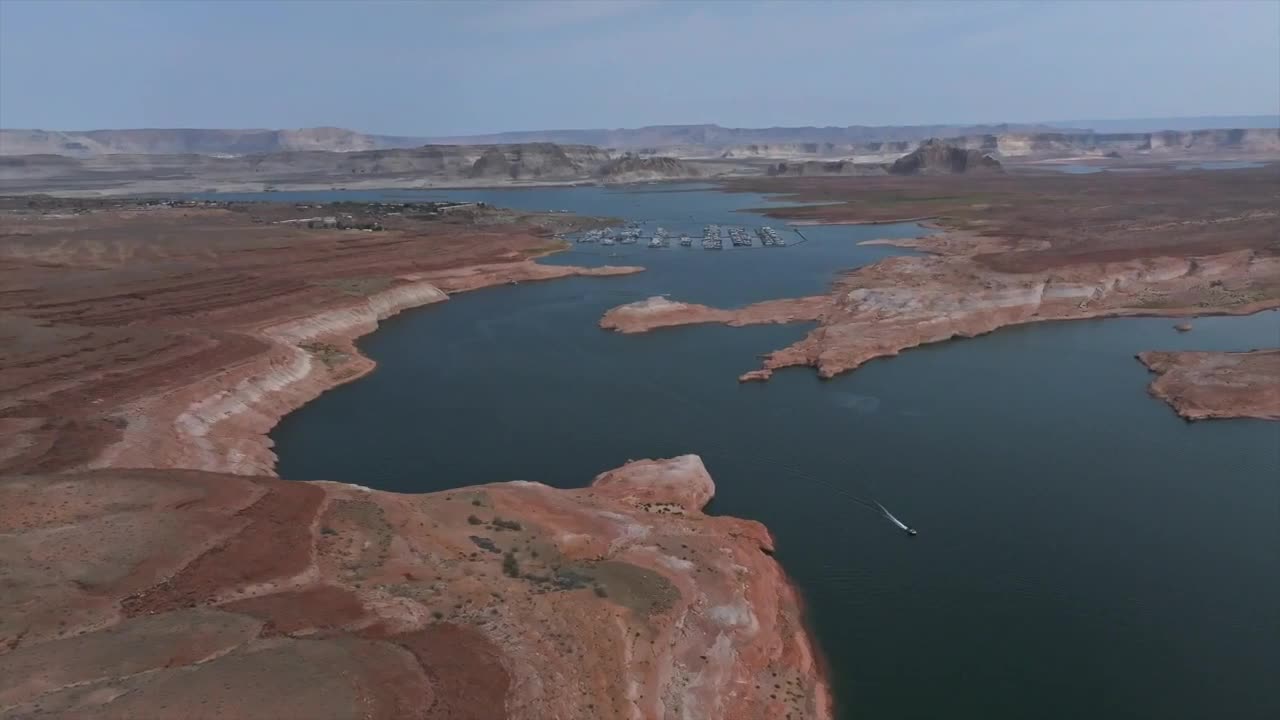


ARIZONA — The nation's two largest reservoirs are rising in October — something they rarely do this time of year.

Do you have a concern in your community or a news tip? We want to hear from you!
Connect with us: share@abc15.com
Heavy rain in Northern Arizona and Southern Utah has sent water downhill into Lake Mead and Lake Powell, offering a brief but welcome boost to both reservoirs.
Lake Mead hit a record low just last week. It has since risen 11 inches, to 1,038 feet — a gain of roughly 19 billion gallons.
Lake Powell tells an even bigger story. It hit a record low on Sept. 15, and has risen nearly 11 feet since then — about 173 billion gallons. That added water gives Glen Canyon Dam a much-needed cushion to continue generating power.
Don't call it a rescue
Despite the gains, Lake Powell remains at serious risk of reaching "dead pool" — the level at which water can no longer flow through the dam.
This year's average water level is the lowest on record. Not a single day in 2024 or 2025 recorded a level lower than today's reading.
Where the water came from
The boost came from rainfall, not releases from upstream reservoirs — a meaningful distinction.
From Oct. 20 to Oct. 22, unregulated inflow into Lake Powell jumped four-and-a-half times, reaching 65,000 cubic feet per second. That ranks as the second-highest October daily inflow since 1963.
The year is still a net loss
Despite the recent gains, Lake Powell is down 12 feet so far in 2026.
In 27 years, the reservoir averages an elevation change near zero. The historical range runs from a 48-foot rise to a 38-foot drop.
This story was reported on-air by a journalist and has been converted to this platform with the assistance of AI. Our editorial team verifies all reporting on all platforms for fairness and accuracy.
Want more news in your community? Add ABC15 as a preferred source on Google below: