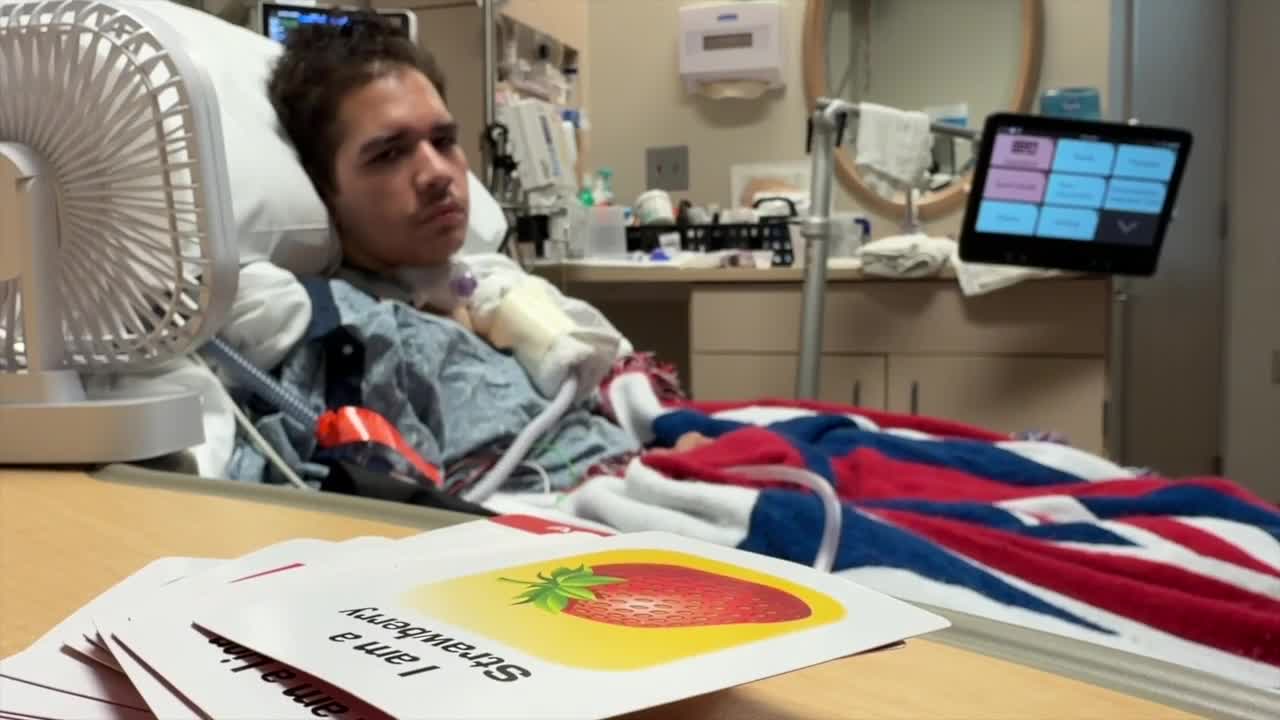


PHOENIX — Kahaone Kelau, or Kaha to the people who love him, grew up on the Big Island of Hawaii. Sandy beaches. Open water. A kid his family called "Mr. Aloha."
"He just had the biggest heart," his mother, Laura Kelau, said. "He would help anyone and everyone. He was friends with everybody. He kind of floated and had several friend groups."
Kaha came to Arizona to become a diesel mechanic. He went to school while working at Sanderson Ford. He graduated. He went home to Hawaii last April.
By July, he had a headache.
By August, he'd had a stroke.
The stroke was the only warning. The diagnosis took weeks because no doctor in Hawaii was looking for Valley Fever.
Valley Fever is caused by a fungus that lives in the soil of the American Southwest. When dust gets kicked into the air, the spores can be breathed in. They're invisible. Most people who are exposed never know it. Some get flu-like symptoms. A small number get much sicker.
And a smaller number still get what Kaha got.
"It's fortunately less than five percent of people who have this fungal infection spread outside of the lungs to involve the nervous system," said Dr. Marie Grill, a neurologist at Mayo Clinic. "But once the nervous system is involved, it can be especially challenging to treat, and it's associated with significant complications."
Kaha's infection had spread to his brain.
Laura Kelau has not left her son's side since August.
Her husband is back in Hawaii, working and raising their other children. She sees them every two months — if she's lucky.
When the diagnosis finally came, Laura started searching everywhere she could. Forums. Websites. Anything that might point to help. And then she found a video. A man in the Valley. A story that looked like Kaha's.
"It was a video that was posted of another Valley Fever survivor who was getting treated here at Mayo hospital," Laura said.
That survivor is Chris Sams.
Before Valley Fever, Chris Sams was a cyclist. He rode 150 miles a week in the East Valley.
Then, in 2017, he developed a cough that would not stop. It was Valley Fever. It spread to his brain, too.
Nearly ten years later, Chris is still being treated at Mayo Clinic in north Phoenix.
"I don't know to this day where exactly it happened," Chris said. "It just happened. I was out there… riding, walking my dogs."
He posted his story online, not knowing who might find it. Laura did, nearly 3,000 miles away.
"Chris' story definitely did save Kaha's life," Laura said. "If it wasn't for Chris posting that video, we never would have found Dr. Grill. We never would have found Mayo Clinic."
It cost $96,000 to medevac Kaha from Hawaii to Phoenix.
Today, he cannot speak with his own voice. But he has found one. A device that tracks his eyes, letting him build sentences word by word.
"I've been working really hard. I'm getting better every day."
Those are Kaha's words. Chosen by his eyes.
Last month, Mayo staff threw him a luau-themed birthday party. He turned 21 in a hospital room.
"He's become like Mayo's baby boy," Laura said. "Everybody hears him cough weird. Everybody comes running. It's hard not to fall in love with him."
Laura does not know when Kaha is coming home, or if he ever can.
"The reality of our situation is Kaha may never be able to return back to Hawaii," she said. "Hawaii does not have the medical capabilities to treat him. He needs to be close to his team here, at least for the next year. Maybe even longer."
Chris has one message for anyone who breathes Arizona air and doesn't think twice about it.
"You're not invincible. We think we are. But we're not."
Arizona leads the nation in new Valley Fever cases, according to Mayo Clinic. Doctors and researchers are working on a rapid test that could be ready as early as this summer.
If you experience a persistent dry cough, fever, or joint pain after dust exposure, get tested.
The Kelau family has set up a GoFundMe to help with medical and living expenses.
Want more news in your community? Add ABC15 as a preferred source on Google below: