

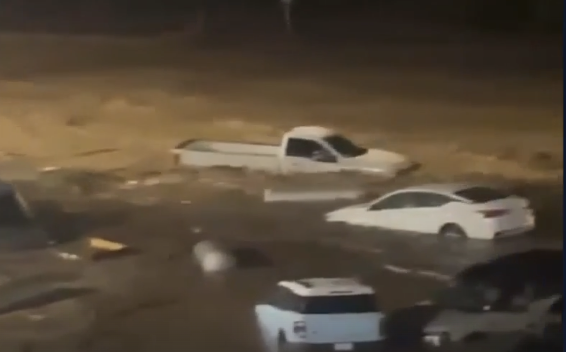
GLOBE, AZ — Nearly six months after deadly flooding hit parts of Gila County, as officials in Globe and Miami wait for an answer about FEMA relief dollars, they're also pushing to make the future safer for these rural communities by trying to stop deadly flooding before it starts.
Last year, Globe, Miami, and Gila County leaders applied for the NRCS Emergency Watershed Protection Program through the U.S. Department of Agriculture for flood mitigation projects. Recently, leaders found out they were awarded part of the funds they had requested through the grant, but also learned their required match component would be higher than they thought it would be.
Miami leaders told ABC15 that because they did not meet poverty-level standards according to the USDA, they would need to match 25% of what they were awarded instead of the 10% they had been hoping for. While it may not seem like much, it's a multi-million dollar difference for communities that say they are "economically distressed," according to a joint letter ABC15 received, addressed to USDA officials.
The joint letter, written by Gila County, Globe, and Miami leaders, is requesting a waiver of the 25% match to hopefully lessen the financial burden of these projects, which in Miami, would include at least one bridge in Mackey's Camp in an area where roads have been washed away, a large retention pond to prevent water and debris from flowing down into downtown Miami, and debris removal.
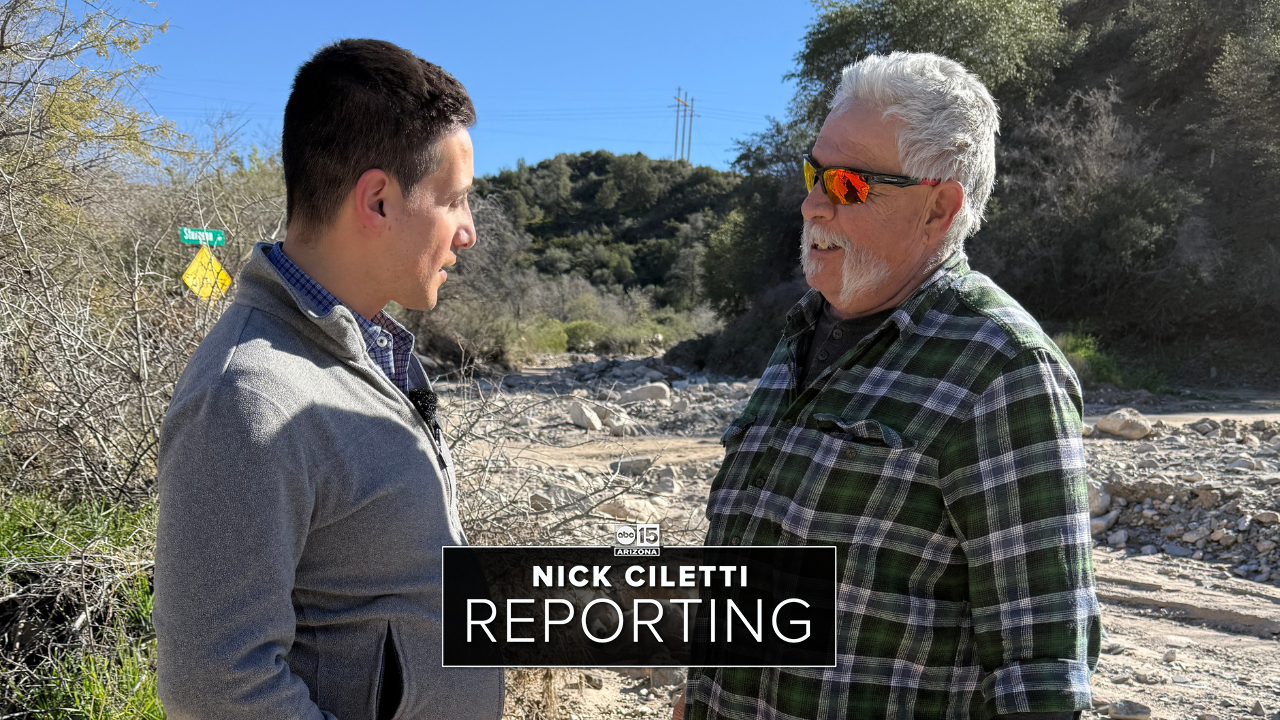
Earlier this year, ABC15's Nick Ciletti spent the day with leaders in Miami to see up close what kind of difference the projects would make.
"I remember every day of my life growing up," explains Miami Mayor Gil Madrid, who is also a native.
These are the kinds of memories Mayor Madrid would rather focus on - not the devastation that his town and the surrounding area endured in late September and once again in October.
"It really got it here. You can see all this erosion," explains Mayor Madrid, as he drove Nick around the Schultz Ranch and Mackey's Camp area.
"We had piles and piles of rock and this mud."
Standing from a bridge, where Mayor Madrid says the mud was piled nearly three feet high, he reflects on how far his town has come - and also what still needs to be done.
"This place has a lot of history."
A history that was almost wiped out in last Fall's flooding, which devoured parts of Gila County, killing three, and devastating dozens of businesses and homes.
Burn scars from the 2021 Telegraph Fire combined with late-season monsoon rain, creating the perfect storm.
Part of what we saw on our tour was an area covered with rocks, mud, and debris - even in January, more than four months after the flooding. It's an area that didn't look like much, but one where town officials said a bridge was desperately needed.
"We've lost three people on our watch, and it's unacceptable," describes Miami Councilmember Phil Stewart. "That's hard to live with...and it would be even more shameful if we couldn't do something so that it never happens again. That's the goal."
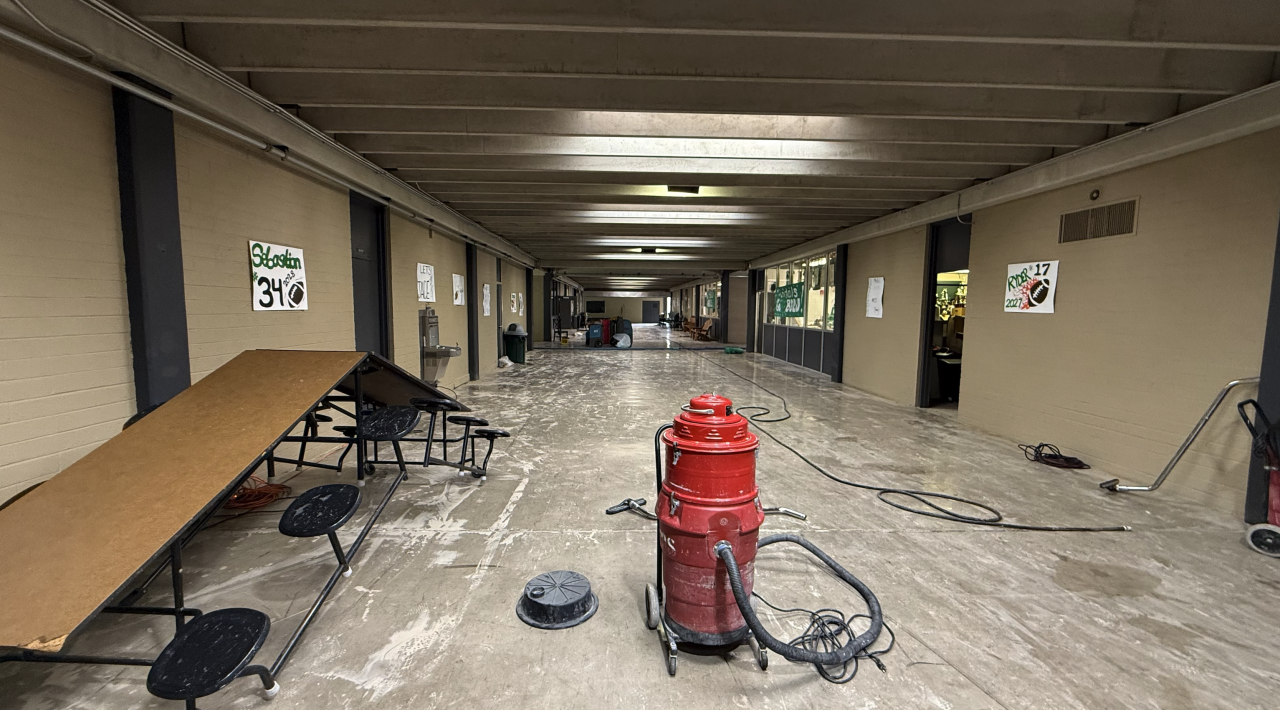
And that's why leaders in Gila County, Globe, and Miami applied for the USDA grant late last year.
For people like Fred, whom we met in January, it could make a world of difference. He says he and his neighbors were stuck for as many as three days during the most recent round of flooding, prompting neighbors to make life-changing decisions.
"He's going to move out," Fred says about one of his neighbors.
And Miami leaders worry the issues will only get worse.
"There's no communication," explains Miami Town Manager Alexis Rivera about what happens when heavy rains come through. "There's no ambulances...that's the important part of this money: To eliminate that barrier."
Town of Miami leaders say their total construction costs would be about $8.7 million, with about $6.5 million covered by the grant funding, meaning they would need to match roughly $2.2 million.
According to documents obtained by ABC15, Globe's construction costs were estimated to be about $22 million, and they would receive about $16 million through the grant, meaning they'd have to match roughly $6 million.

Gila County's total construction costs were estimated to be around $30 million, with about $22.5 million eligible for grant funding, meaning the County would need to match roughly $7.5 million.
We are told several leaders who sent the joint letter will be going to Washington, D.C., the week of March 23 to deliver the letter to USDA officials and hopefully receive a waiver for the match dollars.
ABC15 has also reached out to USDA officials to learn more about the process. Count on our team to continue following up.