

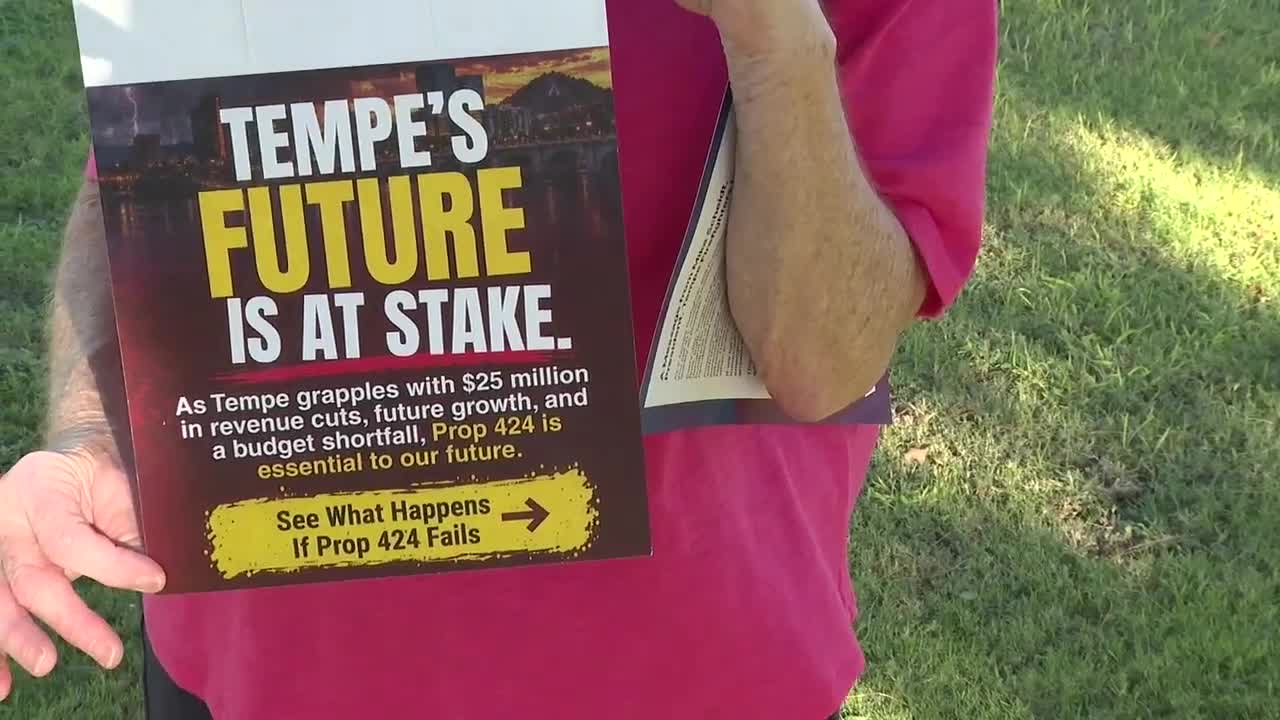


TEMPE, AZ — Tempe voters have two weeks to decide on a half-percent sales tax increase that would fund police, fire, and other city services — but which some argue is the wrong way to raise the money.
Proposition 424 would raise $50 million by adding 0.5% to Tempe's sales tax, amounting to 50 cents on every $100. Groceries for home use would be exempt.
If it fails, the city's sales tax stays at 1.8%.
Of the increase, 0.3% would fund police, fire and emergency operations, with 0.1% each for transit and child care services. The measure is designed in part to fill a budget hole created when state lawmakers abolished rental taxes — a cut that cost Tempe $24 million a year.
At Brick Road Coffee, owner Gabe Hagen isn't sold on the proposition.
"This will directly impact my business. It will impact my employees on their day-to-day," Hagen said. "Now their lunch just got more expensive. If they go out and eat at the restaurant next door, they're paying more, so it is regressive."
In a previous interview with ABC15, Tempe Forward PAC Chair Tom Duensing called the tax equitable because anyone who spends in Tempe chips in.
"It [allows] Tempe to fill a lot of promises," Duensing said. "It's a way to get direct services to the residents of Tempe, but it's paid by much more than just the residents of Tempe."
Mailers from Tempe Forward warn that without the tax, 911 response times would worsen. Linda Arters, who served as Tempe's first community relations manager for eight years beginning in 1988, had questions about that claim.
She said the emotional appeal used in the mailers "absolutely contradicts all the ethics I've ever lived under."
She began requesting 911 response data from the city in May, and said she's still waiting to receive the numbers from recent years.
"We're giving you our money to spend. You have an obligation to show us the numbers," Arters said.
Hagen said he supports plenty of taxes and that Tempe's problem-solving spirit makes him proud. But on Proposition 424, he said the argument for it relies on fear.
"I think when we fall back on the default of public safety and education as a way of scaring people into 'you must vote for it, otherwise nobody will come to your house if it's on fire'--I think that's a little tired," Hagen said.
Voters decide November 3rd.
This story was reported on-air by a journalist and has been converted to this platform with the assistance of AI. Our editorial team verifies all reporting on all platforms for fairness and accuracy.
