

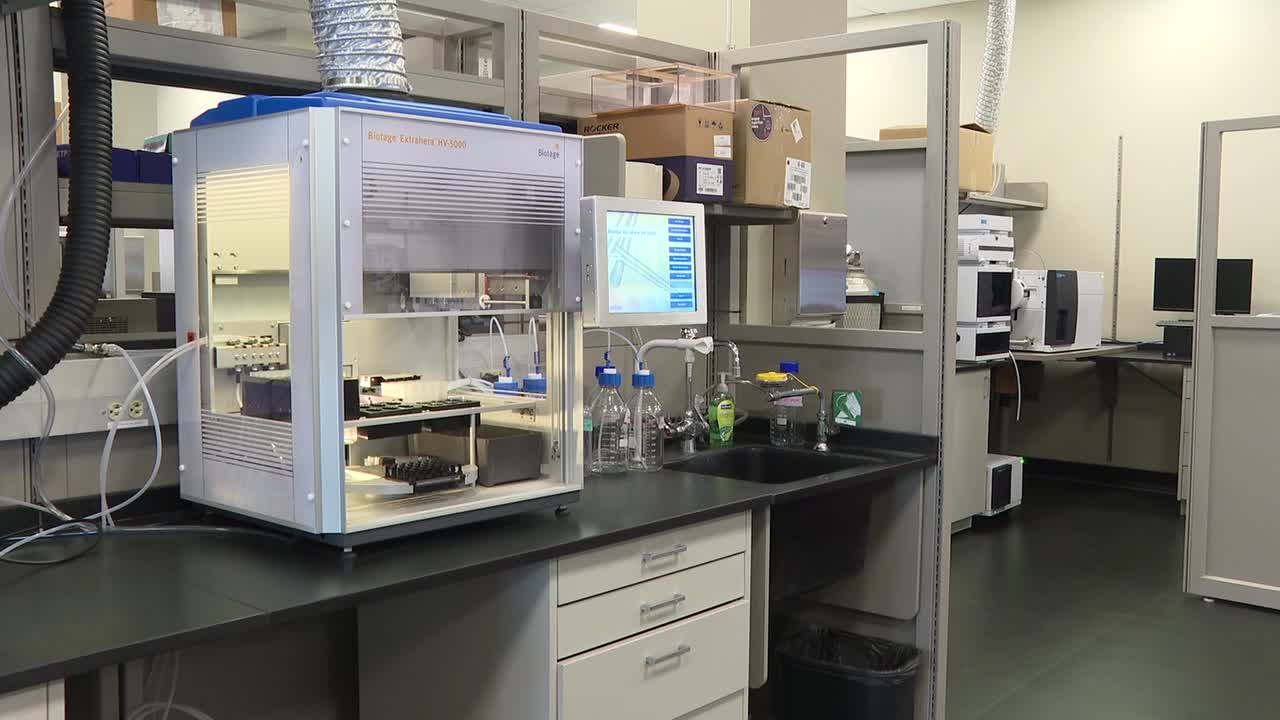


TEMPE, AZ — Tempe has opened a new BioIntel Innovation Lab, built with its existing monitoring partnership with ASU's BioDesign Center in mind, signaling the city's commitment to wastewater surveillance to better combat the opioid crisis and public health threats.
City leaders believe better data can finally move the needle on overdose deaths.
Tempe was the first city in the country to monitor its wastewater for narcotics, beginning in 2018. Since then, data trends have become a cornerstone of how the city monitors and reacts to infectious diseases and narcotics use.
Wydale Holmes, director of the city's Strategic Management and Innovation Office, leads the monitoring program and sees the lab as a meaningful investment with real impacts for community health.
The opening of a city-owned lab is a big milestone in Tempe’s efforts to expand the Wastewater BioIntel Program, which monitors Tempe’s wastewater for health information, such as COVID-19 trends or opioid use. The data provides cities, emergency responders and health partners… pic.twitter.com/H71IiHikAM
— City of Tempe, AZ (@Tempegov) June 24, 2026
"There's no way we're ever going to test every individual for some threats that are coming their way,: Holmes said. "But we can get this at a community level."
The city's multidisciplinary task force, Opioid Crisis -- Tempe Innovative Solutions, has set a 2038 target date to eliminate all overdoses. That remains a long way off.
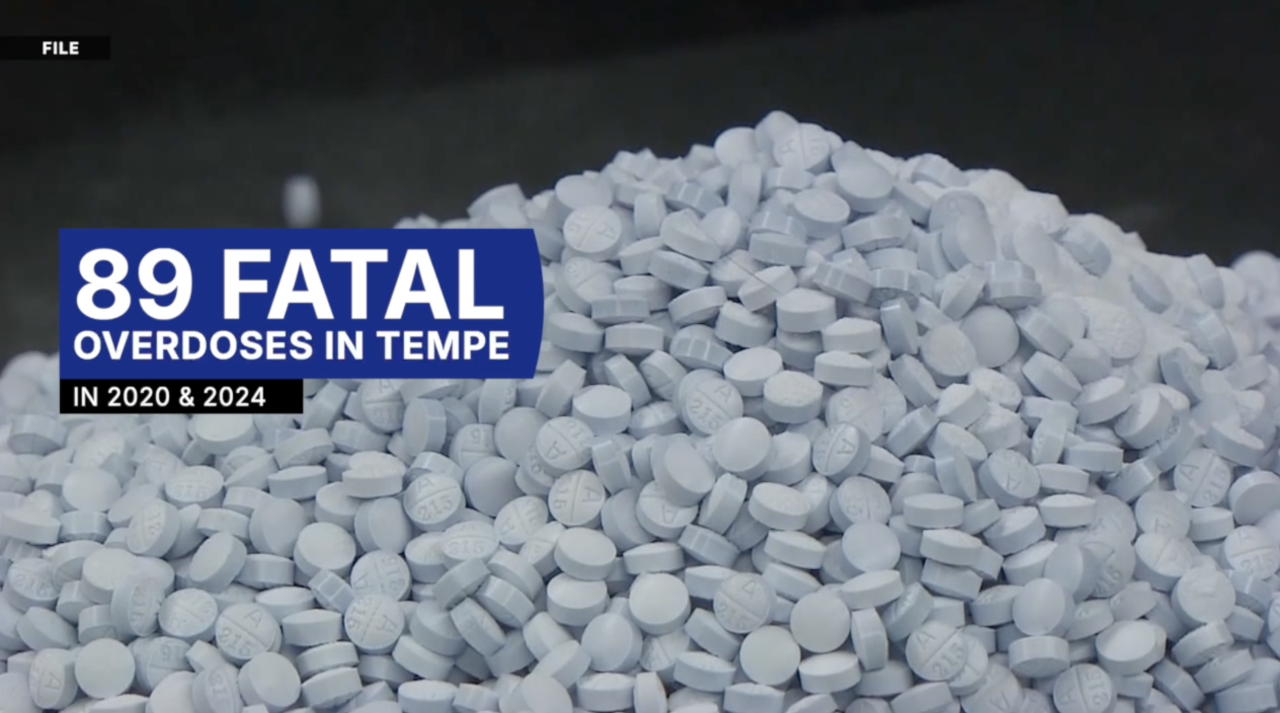
Fatal overdose numbers in 2024 matched those of 2020, with 89 overdose deaths each year, though annual nonfatal overdoses dropped from 480 in 2020 to 419 in 2024.
Results from the wastewater surveillance are posted publicly on the city's website, with weekly updates tracking opioids, measles, COVID and other health threats in real time.
The city does not monitor individual homes. Nine collection zones — mapped to Tempe's sewage system — show what is circulating and where. The goal is not to rank neighborhoods, but to understand what each one needs.
That distinction has proven consequential. When tranq — the animal tranquilizer xylazine — started appearing in the wastewater data, first responders knew they had to change their approach; it does not react with naloxone (Narcan) the same way fentanyl does.
The data, Holmes said, is also doing something harder to measure: breaking down stigma.
"We've actually gotten feedback that, wait a second, your community is being this innovative; we now want to be there. We want to be part of that. I want to have situational awareness from my neighborhood, my family, my business."
