

For most of human history, the moon was something we could only watch. Then, for a brief and brilliant moment in the 1960s and 70s, we touched it.
And then we stopped.
"We have gone to the moon and come home, we've spent a good bit of time in low Earth orbit learning how to live off of the earth," said NASA's Chief Exploration Scientist Jake Bleacher.
For decades, we have been learning how to survive away from the pale blue dot we call home. Artemis II is the next sentence in that story.
"Artemis II, now, standing on the shoulders of those giants, is taking this next big step out to learn how to live on another planetary body away from the Earth," Bleacher said.
The four astronauts making that step are Reed Wiseman, Victor Glover, Christina Koch, and Jeremy Hansen. They will not land on the moon. Not yet. But they will do something perhaps more profound.
They will go around it, crossing the far side, the side no human eye has ever seen up close.

Do you have a concern in your community or a news tip? We want to hear from you!
Connect with us: share@abc15.com
"They might get to see some parts of the moon that have never been observed by human eyes before as they cross around the far side of the Moon," Bleacher said.
And if they look back, they will see what the Apollo 8 crew saw in 1968.
"I can't even imagine. It gives me goosebumps to think about being able to see the Earth rise," Bleacher said.
Artemis II will also test laser communications in deep space for the first time. As we venture farther from home, we must learn to stay connected to it.
"Just like you like to be able to look at your phone and get the information you need, we've got to make sure that our astronauts get what they need," Bleacher said.
The mission lasts ten days, looping around the moon before splashdown off the coast of San Diego.
And then comes the next step.
"Our next lunar mission will be the one that can then land at the south polar region, once we've tested those systems and also our spacesuits, so we'll be ready to go for that landing," Bleacher said.
The cosmos is vast beyond all imagination. But every great journey begins with a single launch.
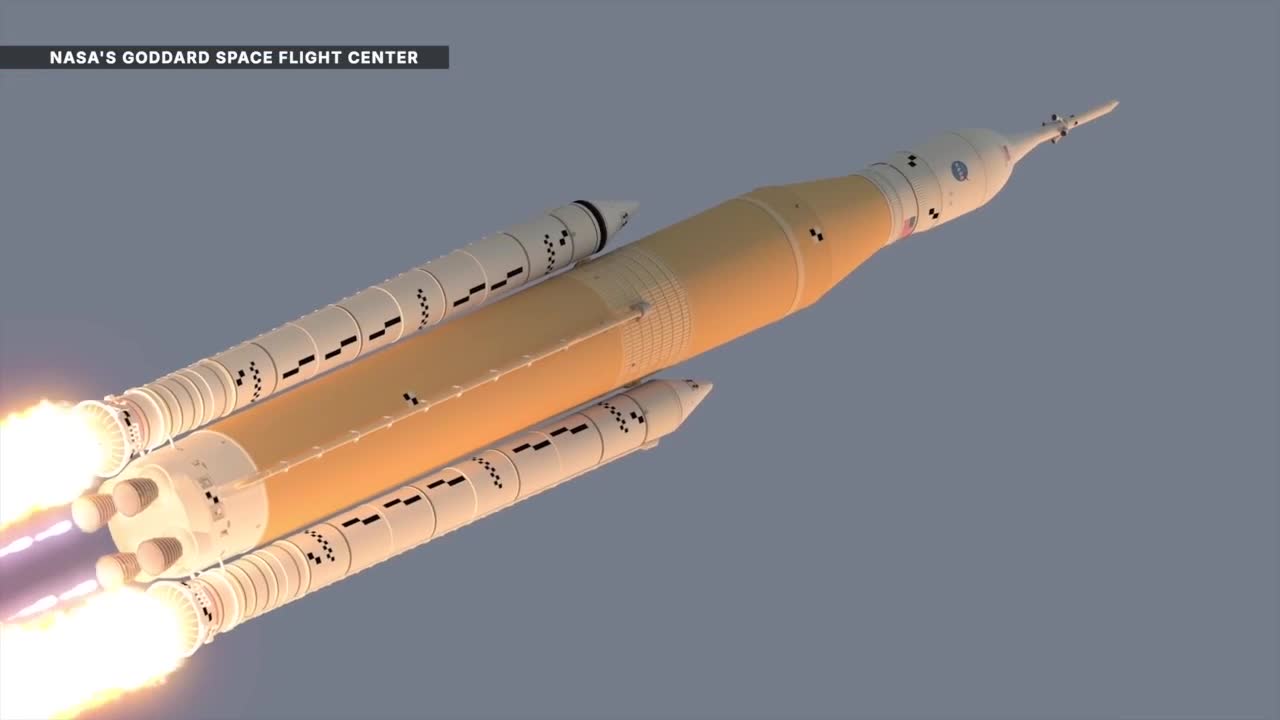
Artemis II is scheduled to launch this Wednesday. You can watch it live on NASA's website.
Want more news in your community? Add ABC15 as a preferred source on Google below: