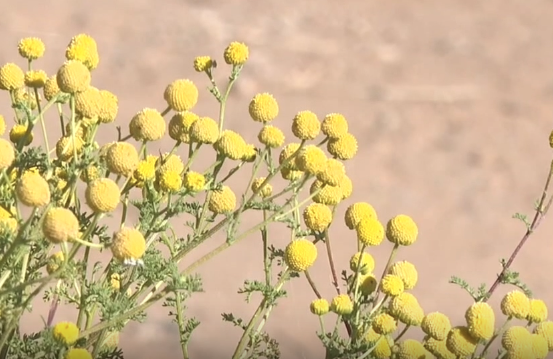


TEMPE, AZ — A tiny plant is creating big problems across Arizona, and some Valley cities are asking for the public’s help in stopping the spread of stinknet.
The plant may look pretty, but it has nasty impacts on the environment. With warm and dry conditions in State 48, wildflower season is in full bloom.
However, stinknet does not belong among the native wildflowers.
The invasive plant has exploded across Arizona. Plant researchers say it came to the state through its potent seeds as early as 2015.
It got its name from its distinctive smell. Some have described the smell similar to turpentine, a paint thinner, or a skunk-like smell.
Challie Facemire of the Central Arizona Conservation Alliance explained why the plant is harmful to the environment.
"It’s not good habitat or food for any of our wildlife, so it’s not helpful there either," Facemire said.
Facemire said stinknet grows in a way that steals nutrients and chokes out native desert vegetation. When it dries out and those yellow flowers turn a reddish color, it becomes highly flammable tinder. This is a major concern as wildfire season approaches.

Do you have a concern in your community or a news tip? We want to hear from you!
Connect with us: share@abc15.com
Those yellow seeds also spread like wildfire, creating further infestation and spreading that distinct smell.
The Arizona Department of Agriculture already has stinknet listed as a noxious weed.
The city of Tempe recently posted asking the public to use gloves when pulling stinknet, bag it to avoid further spread, and throw the bag in the trash where stinky things go.
"Not too bad to pull out," Facemire said.
"If you can, it's easiest just to pull it," Facemire said.
The Central Arizona Conservation Alliance provides a guide on other invasive plants to look out for here.
This story was reported on-air by a journalist and has been converted to this platform with the assistance of AI. Our editorial team verifies all reporting on all platforms for fairness and accuracy.
Want more news in your community? Add ABC15 as a preferred source on Google below: