

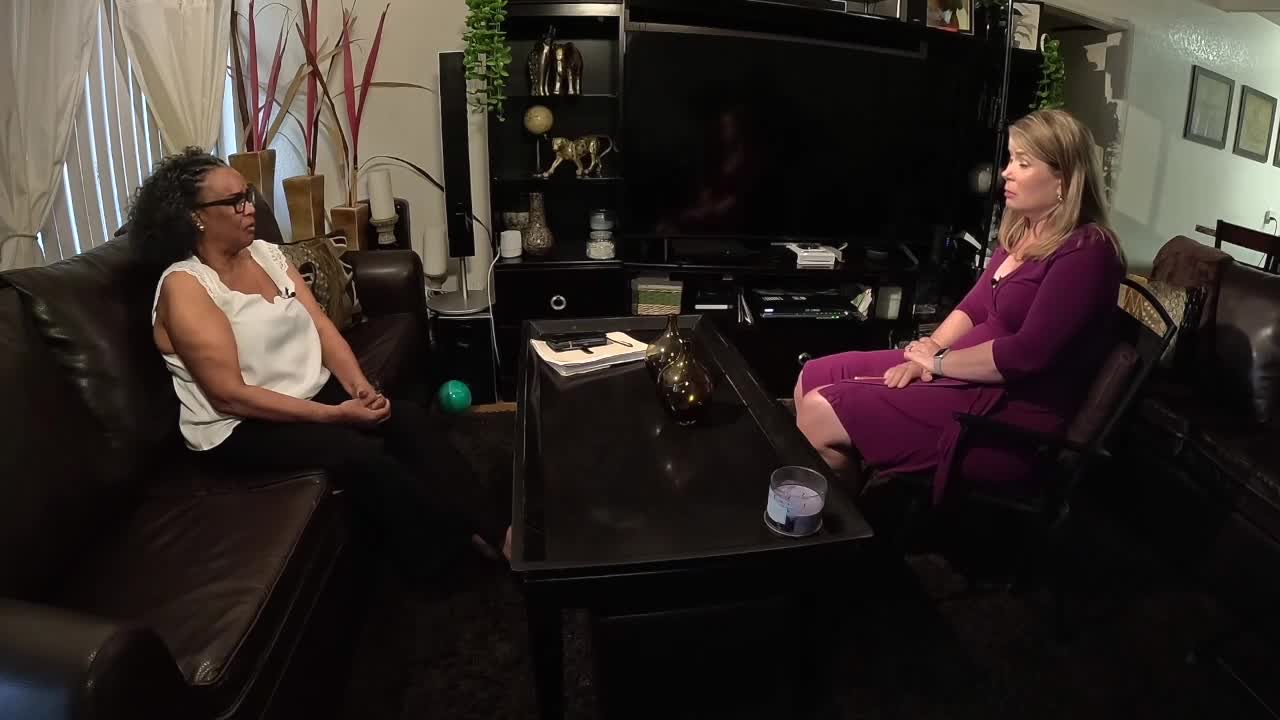



Arizona is supposed to safeguard foster kids’ federal benefits for future use, but a Phoenix grandma says the Department of Child Safety failed to communicate and delayed transfer of her grandson’s funds.
Sheila Thompson, 73, adopted her grandson as a baby.
As he grew up, he was diagnosed with mental health conditions, according to Thompson. He qualified to receive federal Social Security benefits for children with disabilities. The approved SSI benefit was about $900 per month.
Thompson said she started having trouble managing her grandson’s behavior when he was about 10 years old.
“He was all over the place,” Thompson explained. “He was tearing up things. Breaking things.”
DCS stepped in and took custody of the boy for a few years, but last fall, Thompson got custody back.
“I went to Social Security to start restoring his benefits,” she said. “That’s when I found out that one of the DCS workers was collecting his funds.”
Thompson first called the ABC15 Investigators for help in December.
She provided Social Security paperwork showing DCS as the representative payee for her grandson, and she had questions about who managed the money and whether it was spent.
ABC15 learned Arizona was the first state in the nation to pass a law intended to preserve these federal benefits for foster children’s future use. Typically, this involves Social Security survivor benefits or disability income benefits.

ABC15 is committed to finding the answers you need and holding those accountable.
Submit your news tip to Investigators@abc15.com
According to the 2023 law, DCS cannot use foster kids’ federal benefits payments to offset the state’s cost of care. The department must identify all kids who qualify for the benefits, put monthly payments in individual accounts, known as ABLE accounts, and coordinate with the child, relatives, and their lawyers on who will manage the account. ABLE stands for Achieving a Better Life Experience.
The William E. Morris Institute for Justice in Phoenix helped to get the law passed.
“The goal of changing the law was to protect these kids’ federal benefits so that they could have a little nest egg, a little something,” said Brenda Muñoz Furnish, an attorney with the Institute. She said the foster children can use ABLE accounts to buy things that the foster care system typically does not provide. The children can also save money for needs when they leave foster care, including rent, cars, and college.
“Could be a game changer for a lot of these kids in custody,” Muñoz Furnish said.
ABC15 shared a copy of the DCS’s policy on federal benefits and ABLE accounts with Thompson a couple of weeks ago.
“I didn’t even know nothing about the policy,” Thompson said.
Thompson said she did receive an email in mid-March, which included an application to become the manager of an ABLE account for her grandson. She said she hesitated to fill out the forms because she didn’t know what it was.
The email chain with the application included a series of messages between a DCS program manager and a consulting company that coordinates the financial accounts. A December 23 email from the consultant sought contact information for the teen, but it took multiple emails over 10 weeks for the DCS manager to confirm the grandma’s information.
DCS declined to comment on Thompson’s situation, citing confidentiality requirements. A spokesperson told ABC15 the department continues to refine this program and recently hired a dedicated manager to provide more oversight.
Child advocates say they heard about delays in other cases, too.
"We wanted to get away from having this money being applied for and used in secret,” Muñoz Furnish said. “We wanted everybody to be part of the process, and it's very disheartening to hear that that's not happening, at least in some of these cases."
Muñoz Furnish estimates 10% of kids in foster care qualify for federal benefits. In Arizona alone, there would be hundreds of kids and millions of dollars in benefits each year.
“That's what worries me,” Thompson said. “How many others are they doing this to and not telling the parents how it really works?”
Thompson said she has submitted the paperwork to be the guardian of her grandson’s account. She is still unclear about how much money will be available. She hopes it will be at least enough to pay for an orthodontist, so the teen can get braces.
DCS shared additional information about the ABLE accounts in this statement:
“The Department is the first in the country to implement this comprehensive program to preserve benefits for youth in foster care. Since its implementation, the Department continues to refine and strengthen the program, including the recent addition of a dedicated manager to provide increased oversight.
In general, even when DCS manages a child’s benefits, the money is saved for the child, and the law does not allow DCS to spend those funds. ABLE accounts are set up in the child’s name. The process being described does not move the money to a placement; it only transfers control of the account to a new authorized person. Children in DCS care can still access their funds and request money while this transfer is being completed.”
