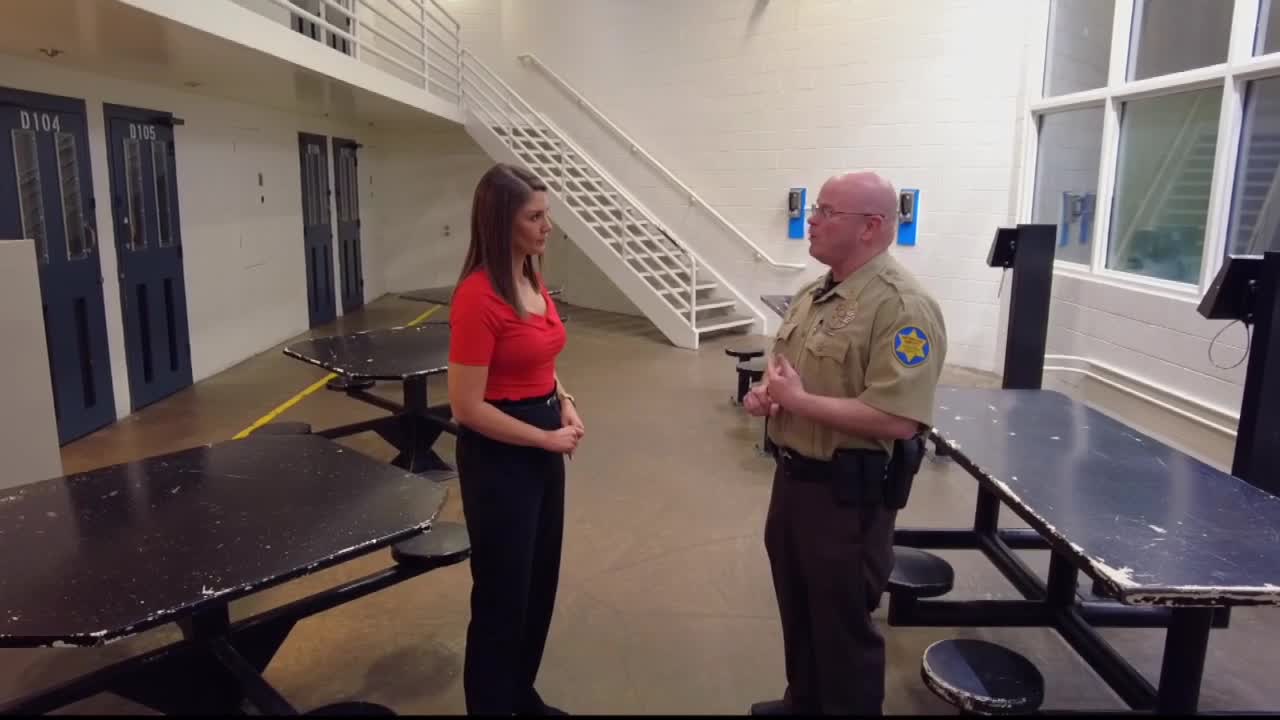


PHOENIX — Behind locked doors at Estrella Jail, more than 800 women are serving time. Their striped uniforms look the same, but their stories are not.
“The stories of their lives have been harrowing to read. Really sad experiences, lifetimes full of trauma,” Dominque Roe-Sepowitz, ASU STIR Director, said.
Now, the first survey of its kind in the country is putting numbers to those stories. Conducted by the Maricopa County Sheriff’s Office and ASU’s Office of Sex Trafficking Intervention Research, nearly half of inmates in Estrella Jail took part.
“The vast majority of those 408 female inmates had experienced profound, complex trauma,” Roe-Sepowitz said.
The results of the survey are stark.
80% report being a victim of domestic violence.
62% say they have been sexually assaulted.
50.9% say they have been sex trafficked.
“So we know that every other inmate in our jail was sex trafficked,” Roe-Sepowitz said.
It’s a reality that’s driving change. This spring women in jail in Maricopa County will have access to new programs, designed to address trauma and break the cycle of incarceration.
“We do screenings for sex trafficking already. About 25% self-reported. So it's about 25% more than we knew of,” Chief Deputy Brandon Smith, MCSO, said. “Now we have a number, so we're able to fine tune our programming to meet their needs.”

Do you have a concern in your community or a news tip? We want to hear from you!
Connect with us: share@abc15.com
Eleven new programs are rolling out, focused on trauma, mental health, addiction, education, parenting, and recovery. The idea: help incarcerated women access resources while serving time.
“If we address some of their trauma and we help get them on the right path, when they get out, they're starting at a better spot,” Deputy Chief Smith said.
Yet outside the jail walls, the cycle can be hard to escape.
Carrie Bradley knows that life firsthand.
“When we hit the streets, we fill purses with hygiene, makeup, jewelry, and if a girl is about to get into a car and prostitute herself, we've got a designer purse saying, ‘Hey, can I have a minute of your time?’” Carrie Bradley, IdentiFreed Founder and President, said.
“And then I say, ‘I was out here for 12 years. Are you sick of it yet?’” she added
Trafficked for more than a decade, now Bradley’s nonprofit IdentiFreed is helping other women find a way out. Every Thursday, they head to the streets of Phoenix to reach out to women being trafficked.
“Usually it takes about 20 to 30 times of contact before a girl will trust us enough to come out,” Bradley said.
Because escaping isn’t simple.
“One of the things they did was tell me, if I left, they were going to kill my grandparents,” Bradley said about her experience of being trafficked in the late 1990s and early 2000s.
She says threats, violence, and fear keep many women trapped. She was one of them, from ages 18 to 31.
“Before I knew it, I was locked in his house being raped and beaten for six months. So that's how I had my first son. And it was a series of just being passed around amongst a circle and kept pregnant,” Bradley said. “After they got all my kids, I was so beaten down and scared.”
Her story, reflected in the data gathered inside Estrella Jail.
“We've all, in one way or another, have dealt with trauma,” Christin Day, Crossroads, said.
A fellow volunteer and advocate, Day spent time in Estrella Jail. Now she’s back every week, running a 12-step substance recovery class.
“You don't have to go back to where you were selling your body,” Day said. “Let's build a foundation and get you ready for when you do get out, that you have an opportunity to change your life.”
Right now, experts and volunteers are training to launch the new programs sparked by the survey. They are funded in part by a grant from the Department of Public Safety.
“Just hopefully put better use to their time while they're with us,” Deputy Chief Smith said.
A chance not just to serve time, but to heal.
But with a cycle that can feel impossible to escape, Bradley says that work cannot stop at the jail doors.
“Estrella, they're not there very long, and it's really just a very small piece of their journey. Programs in there are great. Everyone's willing to do something in there” Bradley said. “It's the follow up, the case management, the making sure that they have somewhere to go when they leave. The vocational rehabilitation. The impacts of trafficking are so intense, that it's not just a one and done.”
MCSO and ASU will be conducting another survey at Estrella Jail in May to see how the results compare to last year’s findings.
Want more news in your community? Add ABC15 as a preferred source on Google below: