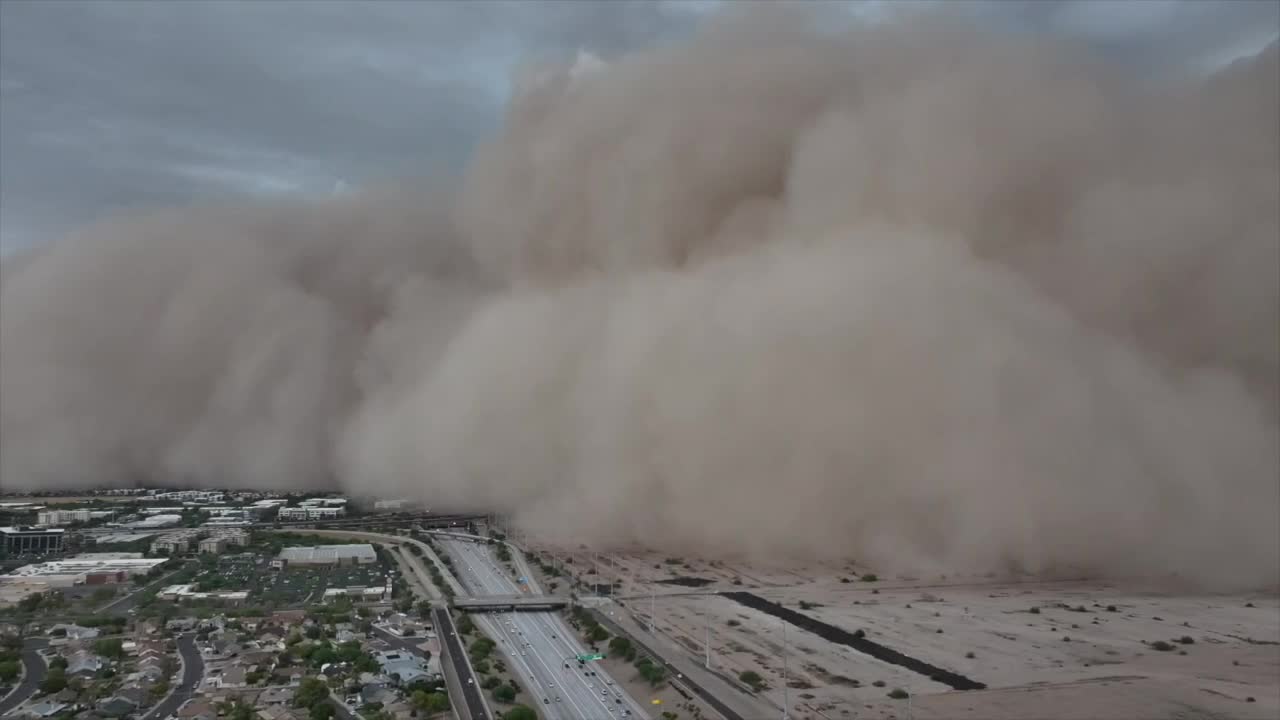


PHOENIX — Doctors are warning about a monsoon season danger you cannot see: Valley Fever.
Valley Fever lives in Arizona's soil. When the dust flies, so does the fungus that causes it, and for too many patients, the diagnosis comes too late.
Every year, an estimated 10,000 or more Arizonans are diagnosed with Valley Fever. Doctors believe the real number is far higher, in part because the standard test was developed in the 1950s.
"The median time to diagnosis is 23 days," said Dr. Thomas Grys of Mayo Clinic. "Half of the people take more than 23 days to find out they have Valley Fever, for such a common illness."
It is more common than many people realize. Doctors say 10-30% of community-acquired pneumonia cases in the region are actually Valley Fever.
"A lot of times when people go to their doctor, the very first thing thought is bacterial pneumonia," said Dr. Fariba Donovan of the University of Arizona Valley Fever Center for Excellence.
"So they get a course of antibiotics. No response. Another course. A third course. Until finally somebody says, maybe I should test for Valley Fever."
That delay can be devastating.
ABC15 introduced you to Kahaone Kelau and Chris Sams earlier this year. Two men whose lives were upended by a fungus most doctors never thought to test for. Neither was diagnosed until the infection had already reached his brain.
Dr. Grys has spent 14 years working to change that. His answer is a rapid test that delivers results in about 10 minutes.
"We're hoping this can really change the paradigm," Grys said. "So we're not giving antibiotics we don't need, and not needing to have the patient come back in multiple times."
At the University of Arizona, Dr. Donovan is working toward something even more ambitious: a test you could buy at a pharmacy.
"Ideally, it's like a pregnancy test," Donovan said. "You put a drop of blood or a drop of urine, and that test will show you with that line."
Doctors say Arizona's explosive growth is part of the reason Valley Fever cases keep climbing. More people are disturbing more soil.
"Between Phoenix and Tucson, it's almost becoming one city," Donovan said. "All that area being built will potentially increase the risk of being exposed to it."
As monsoon season begins, doctors want Arizonans to understand that the bigger risk is not the haboob. It is the everyday exposure.
"Every day we could theoretically be exposed, just walking around outside," Grys said.
If you have a persistent cough, fever, or night sweats, doctors say do not wait.
"When in doubt, when you don't know why you have this, see your doctor," Donovan said. "If they don't think about it, say, 'Hey, can you test me for Valley Fever?' You'll be amazed how many patients actually say, 'I asked my provider to test me for Valley Fever, and then it was positive.'"
The 10-minute rapid test could be available by the end of this year. A pharmacy test is still years away. But for the first time in decades, science is catching up to the disease.
Want more news in your community? Add ABC15 as a preferred source on Google below: