

PHOENIX — Arizona is one of the country's top destinations for data centers, and the largest projects have not yet been built.

Do you have a concern in your community or a news tip? We want to hear from you!
Connect with us: share@abc15.com
According to the site US Data Center Map, there are 5,098 data centers across the country. Virginia and Texas each hold about 12% of those facilities. California, Ohio, Georgia and Arizona follow.
Today, data centers nationwide draw about 49 gigawatts of power — three times Arizona's total power output. But the 1,600 more that are planned or under construction are far larger, projected to require 346 gigawatts — more than 20 times what Arizona produces.
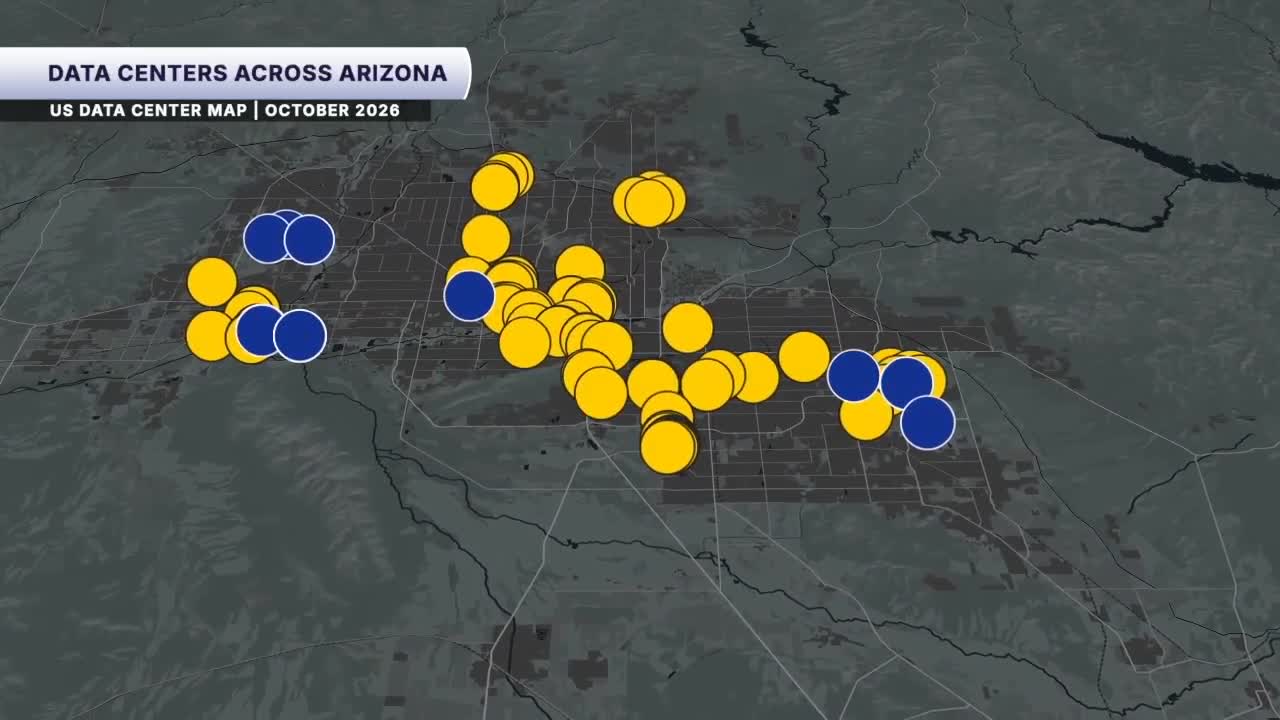
Arizona currently has 182 data centers. Of those, 107 are operating, 16 are under construction and 53 are planned.
The facilities operating today are mostly small, combining for 1.8 gigawatts. But the planned facilities would add nine more gigawatts, pushing the state past 12 — roughly equal to what the entire state uses today.
Most of Arizona's data centers are located on the edges of the Valley. In the far East Valley, four major campuses sit side by side: Meta, NTT, Apple and EdgeConneX. In south Chandler, a cluster of facilities is mostly owned by CyrusOne. In the West Valley, near Goodyear Airpark, Microsoft and Stream have facilities.
The largest data centers yet to come are in Buckeye, where two campuses are each projected to exceed a gigawatt.
The Greater Phoenix Economic Council estimates the industry has brought in 108,000 jobs over the past decade, added $11 billion to the state's economic output and driven half of its economic growth.
The benefits are significant — and so is the power demand. The question is whether one outweighs the other.
This story was reported on-air by a journalist and has been converted to this platform with the assistance of AI. Our editorial team verifies all reporting on all platforms for fairness and accuracy.
Want more news in your community? Add ABC15 as a preferred source on Google below: