

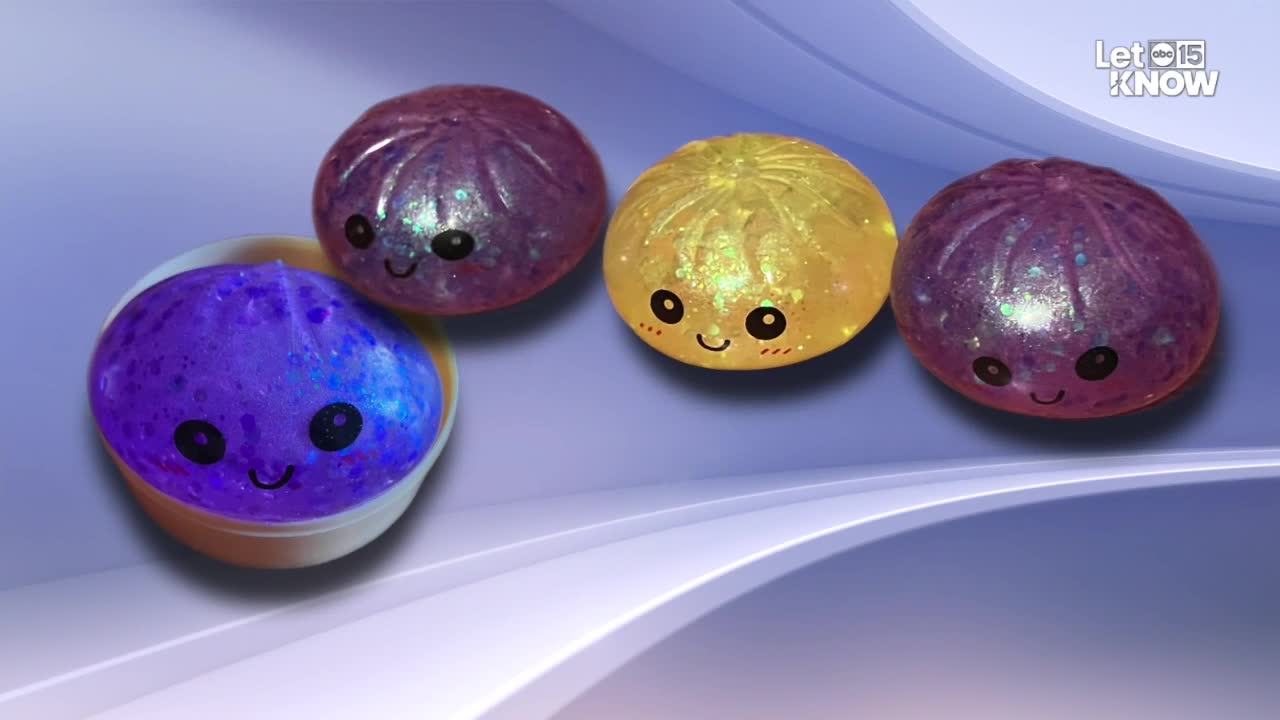


PHOENIX, AZ — If you have kids or grandkids, there’s a good chance you’ve seen squishy toys. Products such as NeeDohs and other soft, squeezable fidget toys have become popular with children.
But as families start their holiday shopping, consumer advocates say there are some potential dangers parents should know about.
The Arizona PIRG Education Fund is highlighting squishy and squeezy fidget toys as one of five areas of concern in its annual Trouble in Toyland report.
Some squishy toys can contain water beads, which are restricted by the Consumer Product Safety Commission. If swallowed, those beads can expand inside a child's body, creating a potentially serious health risk.
Consumer advocates are also urging parents to be especially careful when buying counterfeit or knockoff squishy toys. Arizona PIRG says some of those products may not comply with U.S. safety requirements and could contain toxic chemicals.
A social media trend involving squishy toys
There is another warning parents may not expect.
Regulators and industry experts have warned about a social media trend encouraging children to heat squishy toys.
According to the Trouble in Toyland report, children have suffered burns when heated squishy toys burst.
Parents may want to talk with their children about the danger and make sure they understand that these toys should never be heated.
Squishies aren't the only concern
Arizona PIRG's report identifies five categories for parents and caregivers to watch:
- Squishy or squeezy fidget toys: Some can contain water beads that can expand if swallowed. Counterfeit versions may present additional concerns.
- Pull-string and teething toys: Arizona PIRG says nearly half a million of these toys were recalled or were the subject of government warnings during the last year because of potential hazards.
- AI-powered toys: Researchers tested seven toys that use AI chatbots to communicate with children. Arizona PIRG says researchers were able to get some of the toys to discuss sexual topics and information about potentially dangerous objects in a home.
- Toys purchased online from unfamiliar sellers: The consumer group warns that products from some unfamiliar or international sellers may not meet U.S. toy safety standards.
- Recalled and counterfeit toys: These products can still turn up for sale despite recalls or restrictions.
The report also found that the number of toy-related injuries treated in emergency rooms has increased each year since 2020, with half of those injuries involving children 4 years old or younger.
What parents can do before buying
Before buying a toy, parents can check for recalls, pay attention to recommended ages and be especially cautious when purchasing from an unfamiliar online seller.
When shopping online, take a closer look at who is actually selling the product rather than relying only on the name of the website or marketplace.
And if you're considering a popular toy you've seen promoted online or on social media, take a few minutes to research whether there have been recalls or safety warnings associated with it.
Arizona PIRG has additional toy-safety recommendations for families in its consumer guide.
Read the full Arizona PIRG Education Fund Trouble in Toyland 2026 report for more information about the toys and potential hazards highlighted by researchers.


