

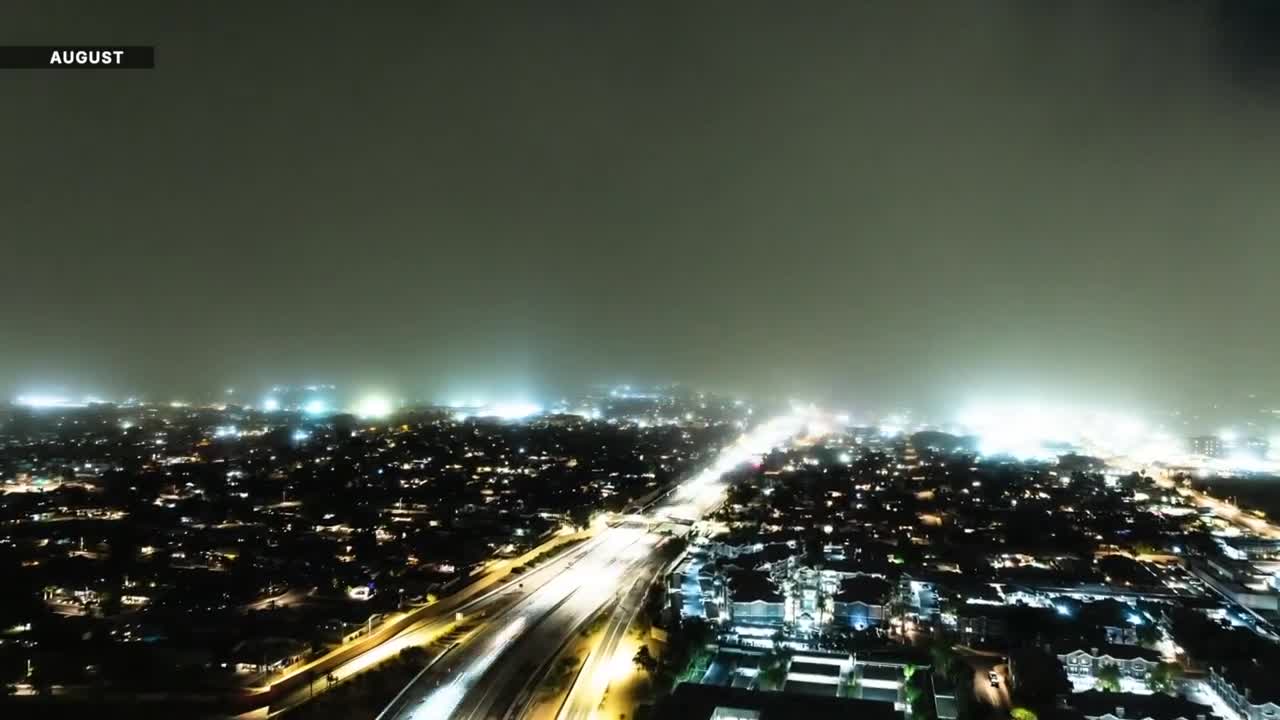


PINAL COUNTY, AZ — Two massive dust storms swallowed the Valley just three days apart in August, both reaching Category 5 on the Phoenix Dust Storm Scale, the highest severity rating.
Only six storms have reached that level since 2011, including four in the last four years.
Now, scientists are investigating an intriguing question: Could Arizona's Colorado River water cuts be contributing to more intense dust storms?
Ryan Heintzman, a teaching professor at Arizona State University's School of Geographical Sciences and Urban Planning, said the number of dust storms this year has been relatively normal. Their intensity, however, has stood out.
"We had two Category 5s in the span of basically just a couple of days," Heintzman said.
He explained that many of the dust storms reaching Phoenix originate from thunderstorms farther south, with powerful winds carrying dust north along the Interstate 10 corridor through Pinal County.
"Most of them actually come up from Tucson," Heintzman said,
That corridor is also home to agricultural communities that have faced significant reductions in their Colorado River water supplies.
Changing farmland, changing dust?
Pinal County farmers have been particularly affected by cuts to Colorado River water delivered through the Central Arizona Project.
Previous ASU research found a roughly 30% decline in cultivated farmland in one Pinal County irrigation district between 2020 and 2024, following major water reductions.
Now, Melissa Wagner, a researcher at the University of Colorado Boulder who earned her master's degree and Ph.D. at ASU, is using satellite imagery to examine how the landscape is changing.
Wagner began investigating the potential connection after ABC15 meteorologist Amber Sullins reached out to explore whether changes in agricultural land could be affecting dust storm severity.
"We are seeing a signal in terms of increase in idle fields, so more areas where there had been more active agriculture are becoming more fallow," Wagner said.
Her preliminary analysis shows some fields are not simply being left unplanted temporarily. Instead, some appear to be transitioning away from agriculture altogether, becoming more like the surrounding desert landscape.
That raises the possibility that more exposed soil could provide additional dust for powerful monsoon winds to carry toward Phoenix.
Heintzman said the drying of farmland could be happening alongside broader drying conditions in the surrounding desert.
"It could even be just a double whammy of things where we have the drying of fields and we have the drying of just the natural desert soil," Heintzman said.
Is there a connection?
Researchers caution that changes in farmland do not automatically translate into more severe dust storms.
Wagner explained that soil conditions play an important role in determining whether wind can lift dust into the atmosphere. In some cases, extremely dry soil can develop a crust that actually makes it more difficult for dust to become airborne.
"So that's something we're trying to dig into further because it's a lot more than just having the changes in the land use land cover," Wagner said.
Other factors, including thunderstorm intensity, wind speed, rainfall and natural drought conditions, also influence dust storm development.
While four of the six Category 5 storms recorded since 2011 have occurred in the last four years, Heintzman said it is too early to determine whether that represents a long-term trend.
More Colorado River water cuts are coming
The research comes as Arizona prepares for another significant reduction in its Colorado River water supply.
Beginning January 1, 2027, Arizona is expected to face a roughly 30% reduction in its Colorado River allocation under new federal operating guidelines.
Arizona has joined Nevada in a lawsuit challenging the federal government's decision, arguing the new guidelines unfairly burden the state with water shortages.
