



PHOENIX — Arizona's historic legal fight over Colorado River water is drawing a warning from one of the Trump administration's top officials, even as an Arizona congressman defends the state's decision to take the federal government to court.
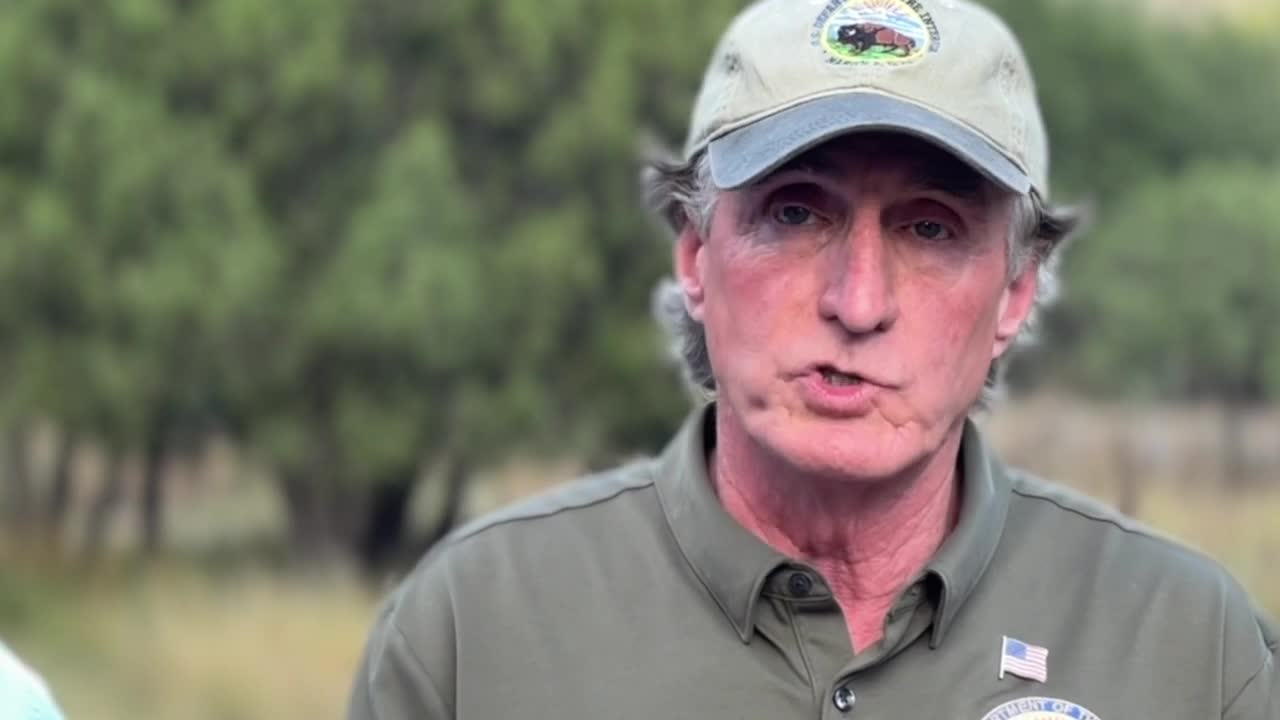
U.S. Interior Secretary Doug Burgum cautioned that the lawsuit could backfire on a state already facing significant cuts to its Colorado River water supply.
"The last thing that Arizona should want to do is have a judge decide where the water is going to go," Burgum said during a visit to southern Arizona earlier this week.
But Democratic Congressman Greg Stanton believes joining Nevada's lawsuit is necessary to protect Arizona's water future.
"I think it's a strong step by Governor Hobbs. I think it's the right thing to do," Stanton said.
The legal battle centers on how water cuts are divided among the seven states that rely on the river, particularly as prolonged drought and declining reservoir levels continue to strain the system.
Arizona's concern: More cuts could be coming
Under the federal government's plan, Arizona faces significant reductions to its Colorado River allocation over the next two years.
Stanton said those cuts amount to approximately 30% of the state's allocation, but emphasized that Arizona's legal challenge is primarily focused on what could happen after that initial period.
"We don't want to have cuts upon cuts upon cuts because that 30% cut is just for the next two years," Stanton said.
The congressman argues that Arizona and other Lower Basin states, including California and Nevada, are being required to shoulder a disproportionate share of the reductions while the Upper Basin states face no comparable mandatory cuts under the plan.
"The lawsuit is to say, make it clear we're going to fight to ensure that moving forward we're not going to continue to get the vast disproportionate amount of cuts," Stanton said.
The Colorado River supplies water to roughly 40 million people across the western United States and Mexico, supporting cities, agriculture and major industries.
The river's water is governed by a complex system of agreements, laws and court decisions developed over more than a century.
Stanton argues that the longstanding division of water between the Upper and Lower Basins should also guide how future shortages are shared.
"Arizona uses less water today than we did 50 years ago. Can you imagine that? We've grown exponentially and yet we use less water. That's leadership," Stanton said.
Burgum warns lawsuit could backfire
Burgum, who oversees the Department of the Interior and its Bureau of Reclamation, disputes the legal basis for the lawsuit.
"I think that the lawsuit will get tossed out because you can't be injured in theory," Burgum said.
The secretary also pointed to Arizona's relatively junior water rights under the legal framework governing the river, suggesting that allowing a judge to determine future allocations could leave the state in a difficult position.
"Arizona, unfortunately, has got the most junior water rights of any state of the seven states," Burgum said.
Burgum also said the federal government had to make a plan for the future after the seven states failed to reach an agreement.
"We've been mediating among the seven states, the upper and lower basin, for the last 20 months. There was no agreement," Burgum said.
He emphasized that the federal government remains willing to work toward a longer-term solution.
"Our job is to help be the facilitator across those states, and I'm still very optimistic that we're going to come up with a solution."
A legal battle with major economic implications
Stanton believes the outcome of the dispute could have consequences extending far beyond Arizona's water supply.
He pointed to the state's growing semiconductor manufacturing industry, which requires reliable water resources to support continued expansion.
"That's devastating to Arizona. It's devastating to the country because of what we do here in Arizona with our manufacturing, particularly in the semiconductor industry," Stanton said.
He argues that protecting Arizona's water supply is also a matter of national security because of the role semiconductors play in military technology.
"It is critical for our national defense that Arizona not get screwed in this process," Stanton said.
Despite the legal disagreement, Stanton said he remains optimistic about the state's future and believes the challenge can be managed through investments in water infrastructure.
Preparing for a future with less Colorado River water
Regardless of how the lawsuit unfolds, both Burgum and Stanton agree that the Colorado River is facing significant water supply challenges.
Burgum pointed to historically low reservoir levels and poor snowpack across the basin as evidence of the problem.
"We have a smaller pie. Americans are used to figuring out how to have a bigger pie," Burgum said.
He suggested that innovation, including desalination, could help expand water supplies in the future.
Stanton, meanwhile, is pushing for additional federal investment in advanced water purification, water recycling and infrastructure projects designed to reduce Arizona's dependence on the Colorado River.
He specifically highlighted advanced water purification facilities that could allow Valley cities to reuse more of their wastewater.
"The solutions are there. They're very expensive solutions," Stanton said. "Dealing with our water challenges is not going to be inexpensive."
He stressed that Arizona cannot wait for the courts to resolve the dispute before making changes.
"We understand that we're going to have to make significant, um, significant changes when it comes to water usage. We're going to have to reduce our reliance on the Colorado River, but we want the upper basin states to do the same thing," Stanton said.
What happens next?
The legal battle could take years to resolve.
Stanton believes the dispute could eventually reach the U.S. Supreme Court, although that outcome is far from certain.
No court date has been set yet.
The U.S. Department of the Interior and Bureau of Reclamation have until the end of October 2026 to file their formal response to Nevada's initial complaint.
