


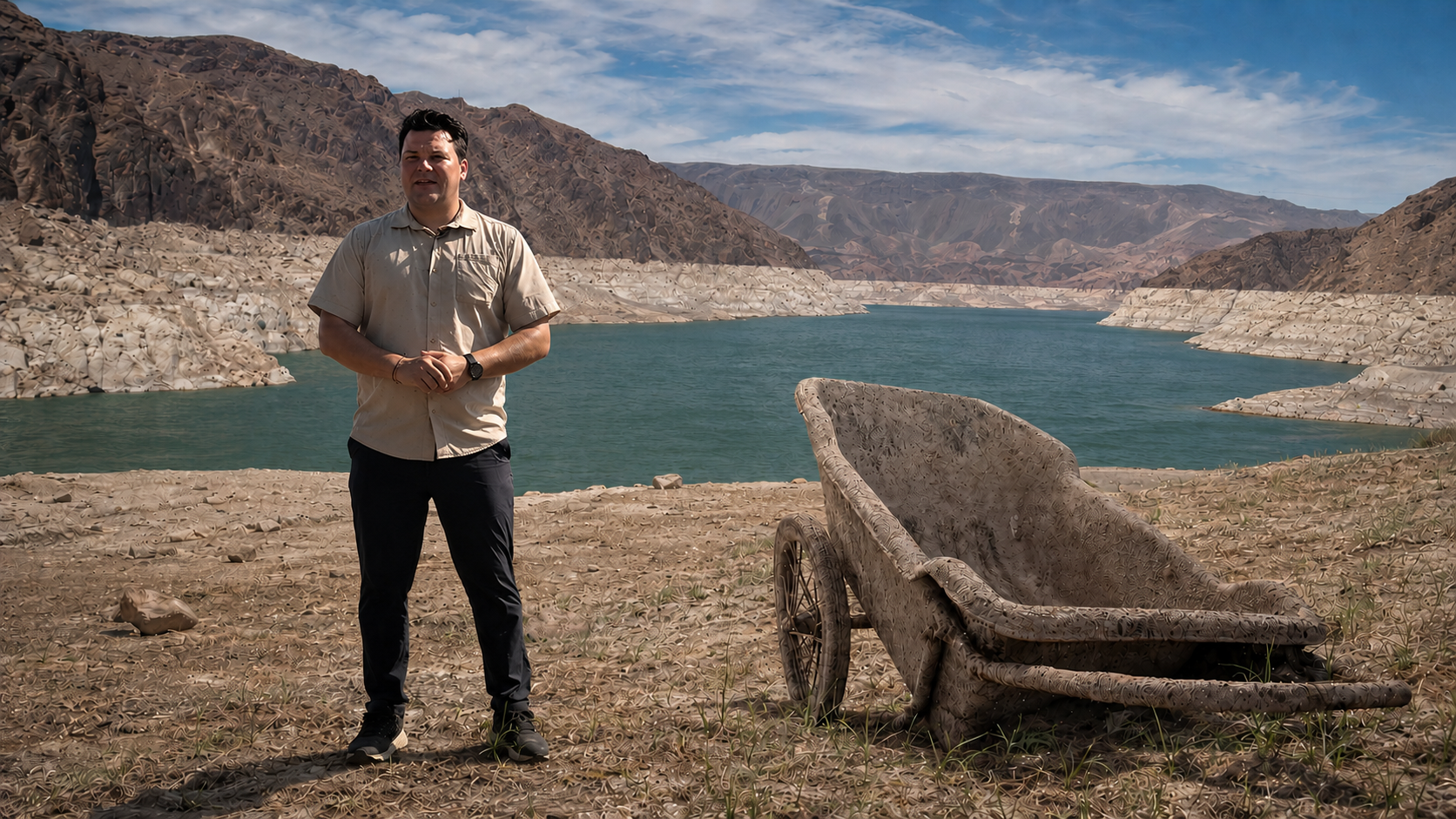


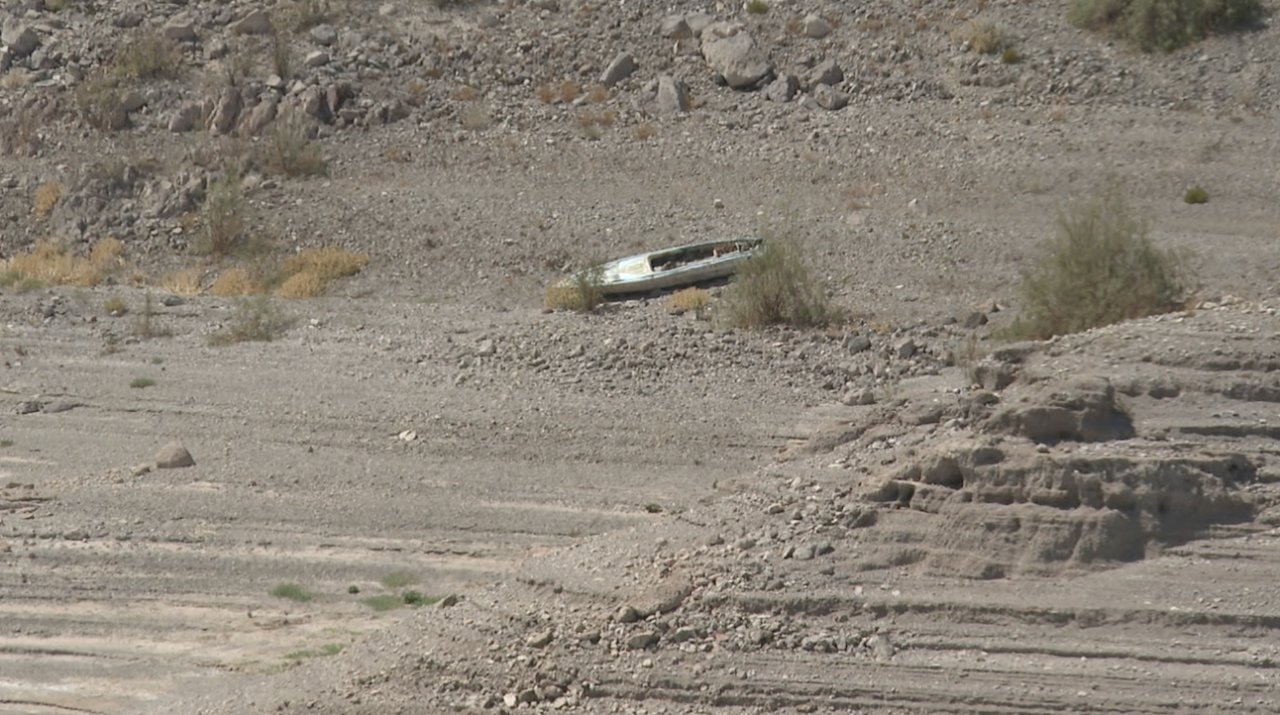
LAKE MEAD, Nev. — A wheelbarrow, a sunken boat and a widening expanse of exposed shoreline now sit where water once covered the landscape.
At Lake Mead, the signs of drought are difficult to miss.
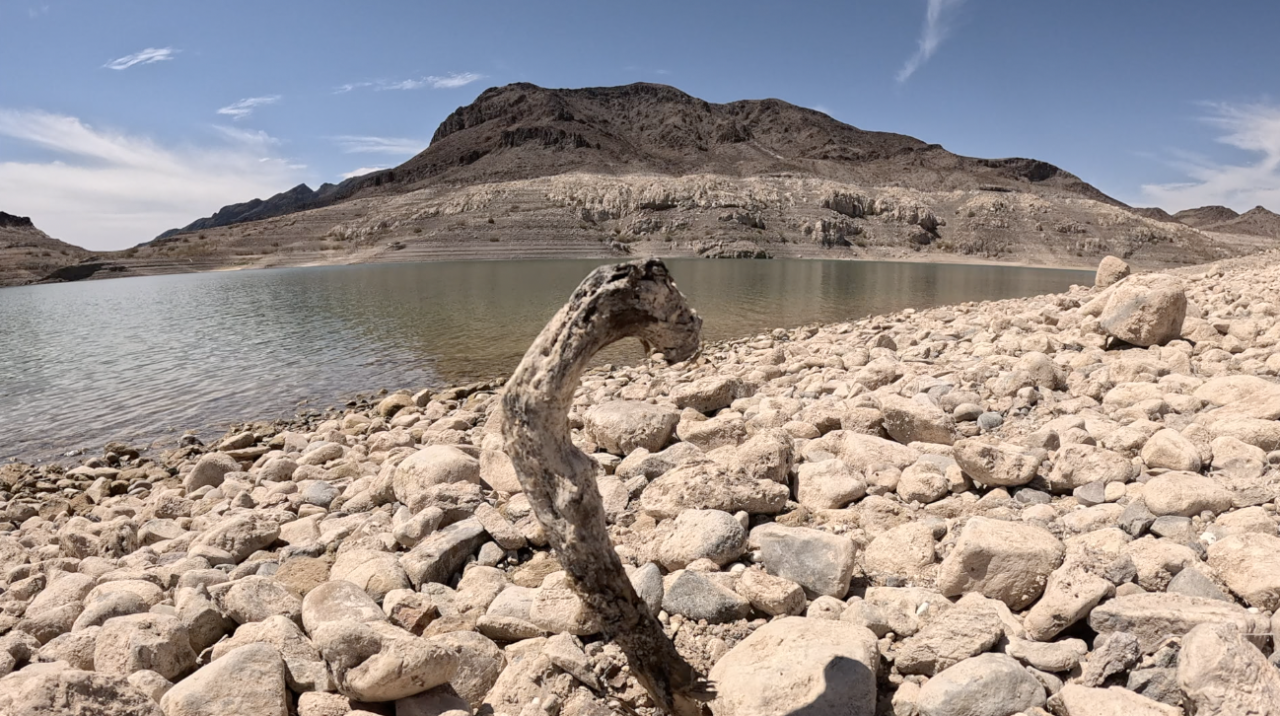
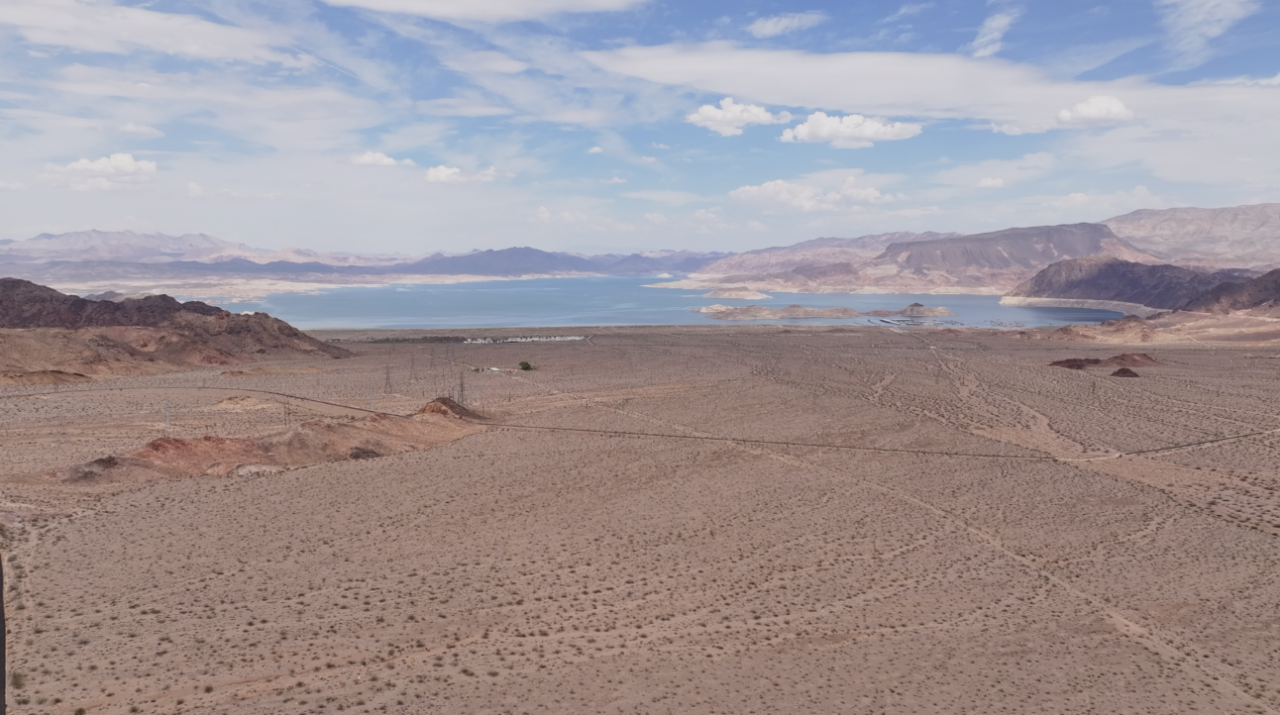
The nation’s largest reservoir has fallen to its lowest level since it began filling nearly 90 years ago. It is currently just 26% full, and federal projections show it continuing to decline over the next two years.
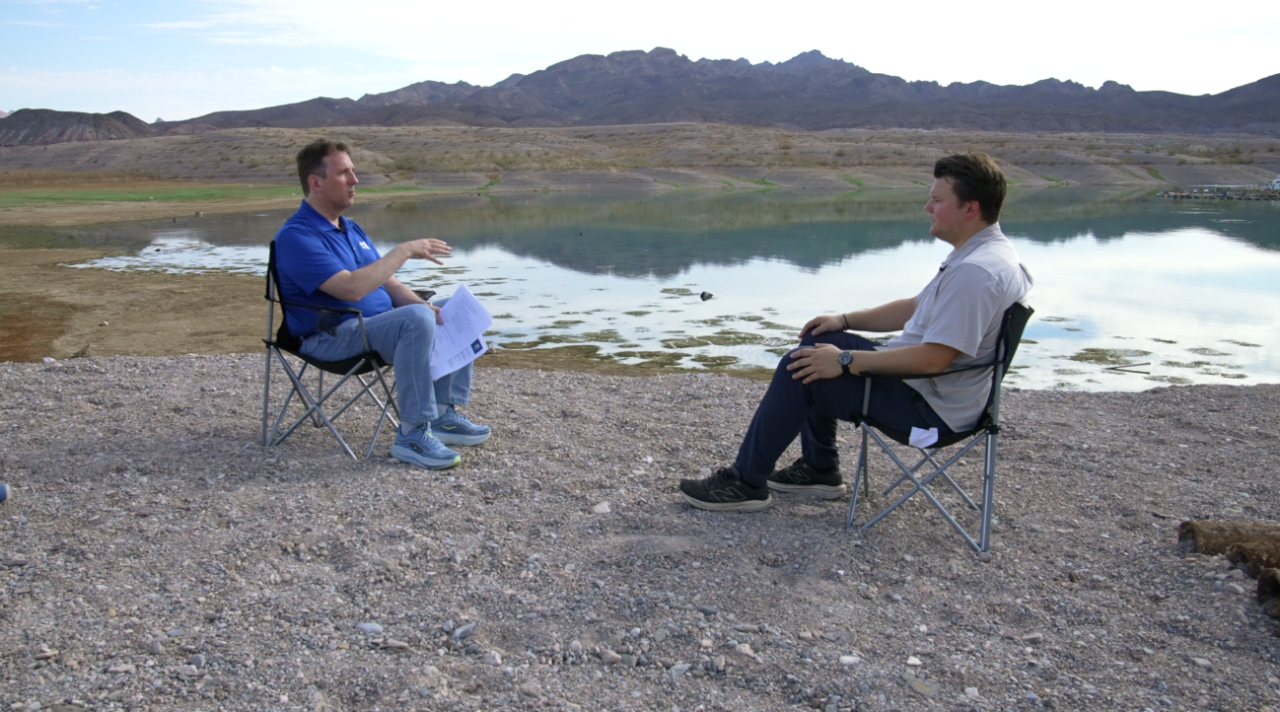
The reservoir’s white “bathtub ring” marks where the water once stood. Boats and other objects that sank years ago are now visible as the shoreline recedes.
“I think they’re they’re symbols of how we as a society are going to have to change,” said Kyle Roerink, a senior advisor with the Great Basin Water Network.
What happens at Lake Mead affects Arizona
Lake Mead sits along the Arizona-Nevada border, hundreds of miles from Phoenix. But the water stored in the reservoir supports homes, farms and businesses across Arizona.
“The water here is is what’s headed to Phoenix and in other parts of the state,” Roerink said. “So, what happens at Lake Mead doesn’t stay at Lake Mead. What happens at Lake Mead has impacts everywhere, not just from what is in your faucet when you’re doing your dishes or when you’re taking a shower, but also how your crops are grown and maybe how your business functions in in your community.”
The Colorado River provides drinking water to roughly one-tenth of the country’s population and irrigates approximately 5 million acres of farmland and pastureland, according to Dr. Trey Flowers, executive director of the Division of Hydrologic Sciences at the Desert Research Institute.
“A lot of the vegetables that we eat in the winter are come from Colorado River water and and the the farmlands that that it supports, so everybody in the country has a stake in the Colorado River, and every drop of water in the Colorado River system counts,” Flowers said.
Arizona faces the largest cut
Lake Mead’s decline comes as Arizona confronts historic cuts to its Colorado River water supply.
Under the federal government’s plan for managing the river after 2026, Arizona would get the largest reduction imposed on any state.
“Arizona has been told to cut their their allocation from the water from the Colorado River by 760,000 acre feet,” Flowers said. “That’s about a 27 percent cut from their their allocation.”
Arizona water leaders have gathered in boardrooms to discuss what those cuts could mean and how the state should respond. Nevada, meanwhile, has sued the federal government over the decision.
Roerink said Nevada’s legal challenge could also affect Arizona and California.
“I think Nevada is really carrying the baton, carrying the water for many of the states because if Nevada is successful, I think it will take some of the pressure off of a state like Arizona,” Roerink said.
But experts warn that negotiations, lawsuits and new water-management plans cannot control every factor affecting the river.
“I think it is an inconvenient truth,” Flowers said. “There are some things that are happening with the lake water levels that are out of our control.”
Drought and early snowmelt strain the river
The Colorado River Basin is experiencing its driest period in a century.
The river’s water supply largely begins as snow falling in the mountains. That snowpack acts as another reservoir, gradually releasing water as temperatures rise.
This year, low snowfall and an unusually warm March caused much of that snowpack to melt earlier than normal.
“This year was a low year for snowfall, and then we had a very unusually warm March,” Flowers said. “So, think of the snowpack as an additional reservoir within the within the system. It releases water slowly, and keeps the system healthy throughout the the year when there there are adequate supplies of snow.”
That variability will test how the federal government manages the river during another poor snow year.
“We also have a lot of uncertainty about how the federal government is is going to act in the future in in scenarios where we have more bad winters,” Roerink said.
Experts say there is still time to act
Despite the record-low water level, experts stress that Arizona is not at immediate risk of residents turning on their faucets and finding them dry.
“Lake Mead is not a is not a mud puddle,” Flowers said. “There are there there’s over 100 feet of of water remaining in the reservoir until it reaches that that dead pool level, so there there is water in the system, not just Lake Mead, but the entire system.”
Flowers said the conditions call for action, not panic.
“It is not time to panic, but there are actions that we can take, and it is time for us to to start taking action,” Flowers said.
Those actions include reducing water use and investing in water recycling, desalination and other new supplies.
Flowers said possible solutions include turning treated wastewater into drinking water, removing salt from brackish groundwater and using more efficient cooling technology. Those alternatives, however, are likely to cost more than Colorado River water.
“Colorado River water is relatively cheap compared to some of these other other sources of water, and as we have to continue to rely more heavily on these other sources of water, the cost of water is going to increase,” Flowers said.
Roerink pointed to Nevada’s mandatory turf-removal efforts, septic-tank conversions and water-recycling facilities as examples of steps other communities could consider.
“We need to start thinking: How can I personally change my behavior?” Roerink said.
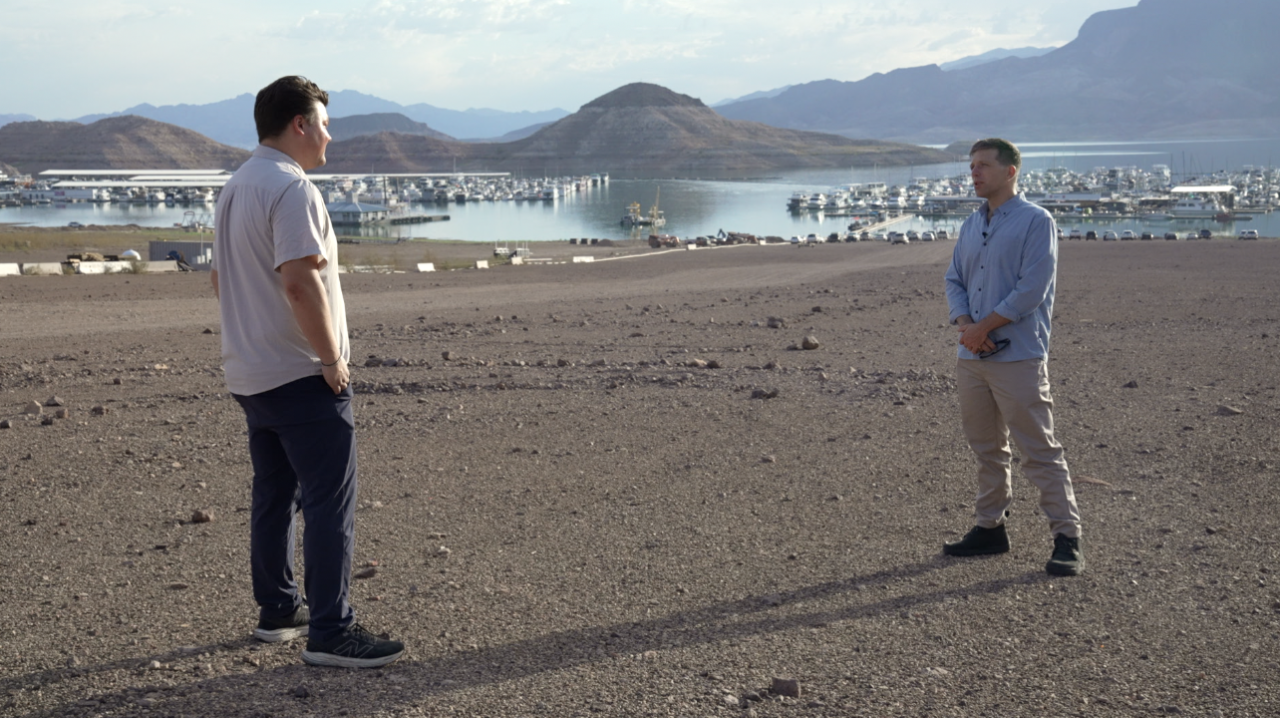
He said the conditions at Lake Mead should push communities across the Southwest to reconsider their relationship with water.
“We can’t we can’t live like it’s it’s 1999 partying like it’s 1999 like the Prince song can’t do that anymore,” Roerink said. “We have to live and we have to create societies like it’s 2026, and the symbols of 2026 are giant bathtub rings, exposed shorelines, and a lot of uncertainty.”
The bathtub ring and expanding shoreline reveal Lake Mead’s past. Its future will be shaped by decisions made by water leaders, choices made by water users and forces in nature that no agreement can control.