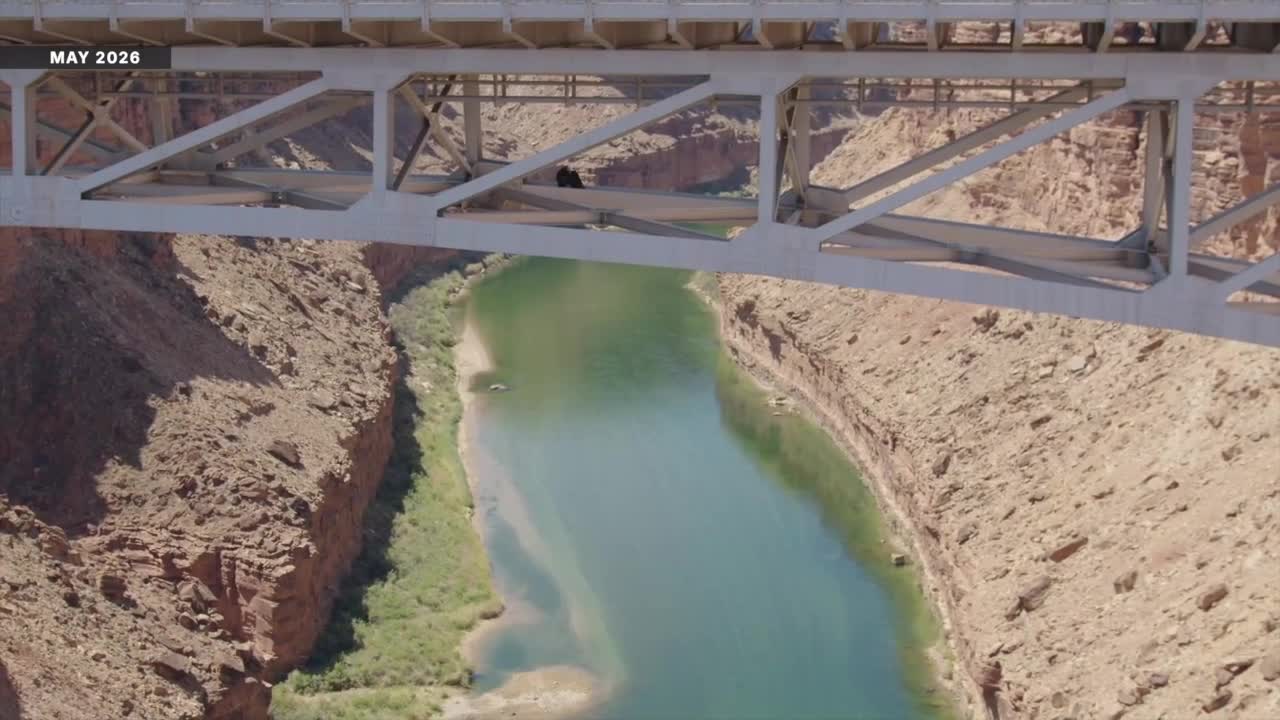


The Department of the Interior has finalized the Colorado River plans for 2027-2028, which include water cuts for Arizona.
The current cuts under Tier 1 drought conditions for Arizona were 512,000 acre-feet. In the finalized plan, the cuts are going up to 760,000 acre-feet, which is a 48% increase, and roughly 27% of total supply.
The Department of the Interior says the decisions provide for reliable operations of the Colorado River system, delivery of vital water supplies, and protection of critical federal infrastructure while preserving the flexibility necessary to respond to Basin states' voluntary actions, consensus recommendations, and the continued prolonged drought.

Do you have a concern in your community or a news tip? We want to hear from you!
Connect with us: share@abc15.com
Here are the 2027-2028 Operating Guidelines:
- Provides for reductions in deliveries of Colorado River water among the Lower Basin States of 1.25 million acre-feet in each year of the next two years. If the Lower Basin States implement their proposed sharing agreement, the reduction per State would be:
- Arizona: 760,000 acre-feet
- California: 440,000 acre-feet
- Nevada: 50,000 acre-feet
- Provide for Lower Basin States to voluntarily conserve and store at least 700,000 acre-feet of water over the two-year period to protect the system, in addition to the 1.25 million acre-feet per year of reductions.
- Provide for the Upper Basin States to enter into an agreement, in consultation with Lower Basin States and Basin tribes, using the Secretary's authorities to operate the Colorado River Storage Project Upper Initial Units (i.e. Aspinall (CO), Flaming Gorge (UT/WY), and Navajo (CO/NM) Reservoirs) to help protect Glen Canyon Dam infrastructure.
- Provide tools and flexibility in the Lower Basin to respond to drought conditions by allowing water users to store water.
- Provides for a Federally managed pool to help meet tribal firming obligations and provide limited offsetting to reduce tribal impacts.
- Provide elevation triggers for coordination and consultations to determine additional actions, if necessary, to minimize operational risks to infrastructure and manage risks to the urban, agricultural, and natural systems that rely on the Colorado River.
"We are grateful for the Seven Basin States, the thirty Basin Tribes, Mexico, and many other basin stakeholders who have provided the feedback and voluntary arrangements necessary for the development of the 2027-2028 Operating Guidelines,” said Secretary of the Interior Doug Burgum. “Forty million people, millions of acres of farmland and ranchland, industries that power the American West, and some of our nation’s fastest-growing metropolitan areas depend on the Colorado River."
Governor Katie Hobbs issued the following statement:
“I’m glad the federal government has chosen to implement the Lower Basin’s water allocation plan for 2027 and 2028. With this plan, we saved Arizona from forced federal cuts that would have crippled our economy and America’s national security. The 77% cut to CAP’s water supply that the federal government considered in January would have been an unacceptable disaster. Instead, we’ve united as a Lower Basin to deliver two years of stability that ensures Arizona families and businesses will have the water they need to thrive and continue our strong economic growth.
“I’m proud of my work with fellow Lower Basin states and grateful to Nevada and California, who have joined with Arizona to protect the Colorado River. Together, we proposed one of the largest water conservation programs in the Colorado River’s history and ensured that cuts to water usage were shared across the Lower Basin instead of falling on Arizona’s shoulders alone.
“While we’ve secured this important deal, we still have work to do. The federal decision also protects Upper Basin reservoirs at the expense of Lake Mead and falls short of providing the water that the Lower Basin is entitled to, all while the threat of unilateral federal cutbacks in future years remains. The Upper Basin’s refusal to negotiate any reductions to their water usage imperils the stability of the Colorado River system. They should be held accountable for their reckless actions, not rewarded by the federal government for irresponsible behavior.
“I will continue fighting relentlessly to protect Arizona’s fair share of the Colorado River. As long as I’m governor, Arizona will stand up to the Upper Basin states who are undermining the stability of the Colorado River system and ignoring the Law of the River. Arizona stands prepared to protect our water by any legal means necessary and won’t back down in defense of our rights.”
Tom Buschatzke, Director of the Arizona Department of Water Resources:
After more than three years of difficult negotiations over post-2026 Colorado River Operations guidelines, Arizona and the Lower Basin states have created a level of stability for the Colorado River system with the adoption of the 2027-2028 operating guidelines in the Record of Decision. While the framework for years 3-10 continues to be of concern, we applaud the Department of the Interior for clarifying the decision-making process for operations beyond 2028. That outcome allows for continued negotiations for years 3-10 while preserving our ability to protect Arizona’s legal rights to Colorado River water.
We will continue to work with our partners in Arizona, the Lower Basin and Interior, to finalize the agreements necessary to implement the Lower Basin Plan. With the Record of Decision, the 2027-2028 Operating Guidelines and the supporting agreements in place, we can focus on a longer-term, equitable, basin-wide outcome that includes shared sacrifices along with our Upper Basin partners in an effort to avoid protracted litigation. The actions in the Lower Basin in recent decades to protect the system have demonstrated how much we can accomplish when we all join together as part of the solution.
Want more news in your community? Add ABC15 as a preferred source on Google below: