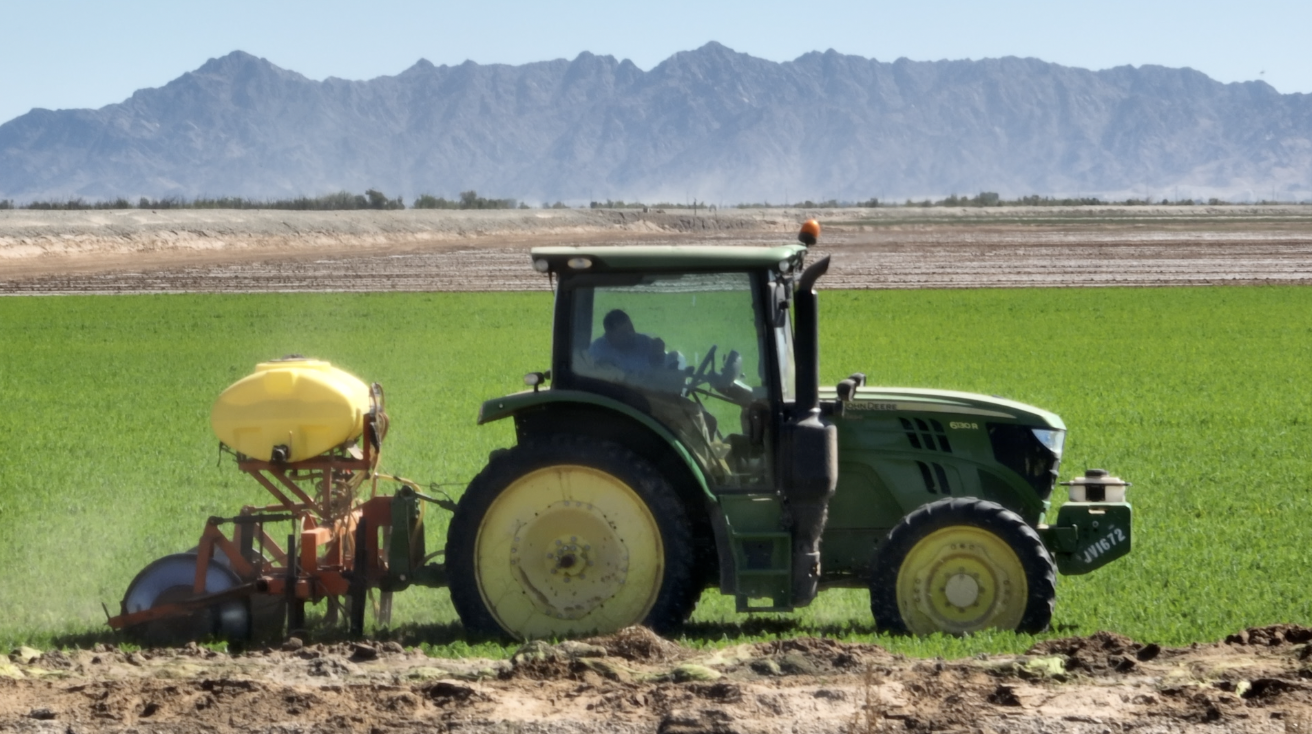


YUMA, AZ — Yuma farmers grow much of the country’s winter lettuce and vegetables, but growers say their future depends on a Colorado River agreement that still does not exist. Farmers, like Matt McGuire, say he and others are watching closely as the federal government now works to decide how water from the shrinking Colorado River will be shared for years to come.
“Yuma is special. It’s kind of unique,” said Yuma farmer Matt McGuire.
McGuire said there are roughly 210,000 acres of farmland in the Yuma area, including about 170,000 acres dedicated to vegetables.
That production has helped earn Yuma the nickname “Winter Lettuce Capital of the World”, and at one point in time, the city even dropped a head of iceberg lettuce to ring in the new year.
“More than likely, if you’re eating a leafy green, you’re eating something that came from Yuma right now,” McGuire said.
Colorado River water reaches Yuma through a large canal system that takes water from the river to farms across the county. But farmers say staying the lettuce capital of the world depends on keeping that water flowing.
“We might have a complete disaster along the river. That would be my fear,” McGuire said.
Even though many Yuma farmers have some of the oldest and strongest water rights on the Colorado River, they say they are still worried because of the uncertainty tied to negotiations. The federal government is currently weighing how Colorado River water should be divided in the future as drought continues across the Southwest.
“If they start allocating the water as they see fit, it might be hard to undo that,” McGuire said. “Like if they give the cities priority over the people who have water rights now.”
Concerns are not just coming from farmers. Mayor Doug Nicholls and the Yuma City Council recently sent formal comments to the federal government asking leaders to protect Yuma’s senior water rights.
“It is very frustrating, we are here, nearly the 11th hour,” Nicholls said. “This process could have been taken care of by the states, but wasn’t.”
Nicholls said less water reaching Yuma would affect more than just farming. Yuma generates much of its power from dams along the river, and also has parks and recreation tied to life along the river.
“It’s not just water,” Nicholls said. “There are other things that we depend upon every day that are really at risk with this conversation.”

Do you have a concern in your community or a news tip? We want to hear from you!
Connect with us: share@abc15.com
City leaders and farmers say they have already invested in conservation efforts and technology to use less water while continuing to grow.
“What we’re not saying is we want all of our water, you guys figure it out, we’re not isolating ourselves,” Nicholls said. “What we want is to be at the table, to make sure the solutions that are coming forward work.”
Farmers say if Yuma loses water, grocery store shelves could look much different, with fewer vegetables and higher prices during the winter months.
“If people think about what they put on their kitchen table the last four, five months, 80% of it came from here,” McGuire said. “And think about if we don’t have water, and we don’t farm, take those things off the table, off and on for most of the winter. That’s why we need Yuma.”
The new river-sharing plan needs to be in place by October 1.
Want more news in your community? Add ABC15 as a preferred source on Google below: