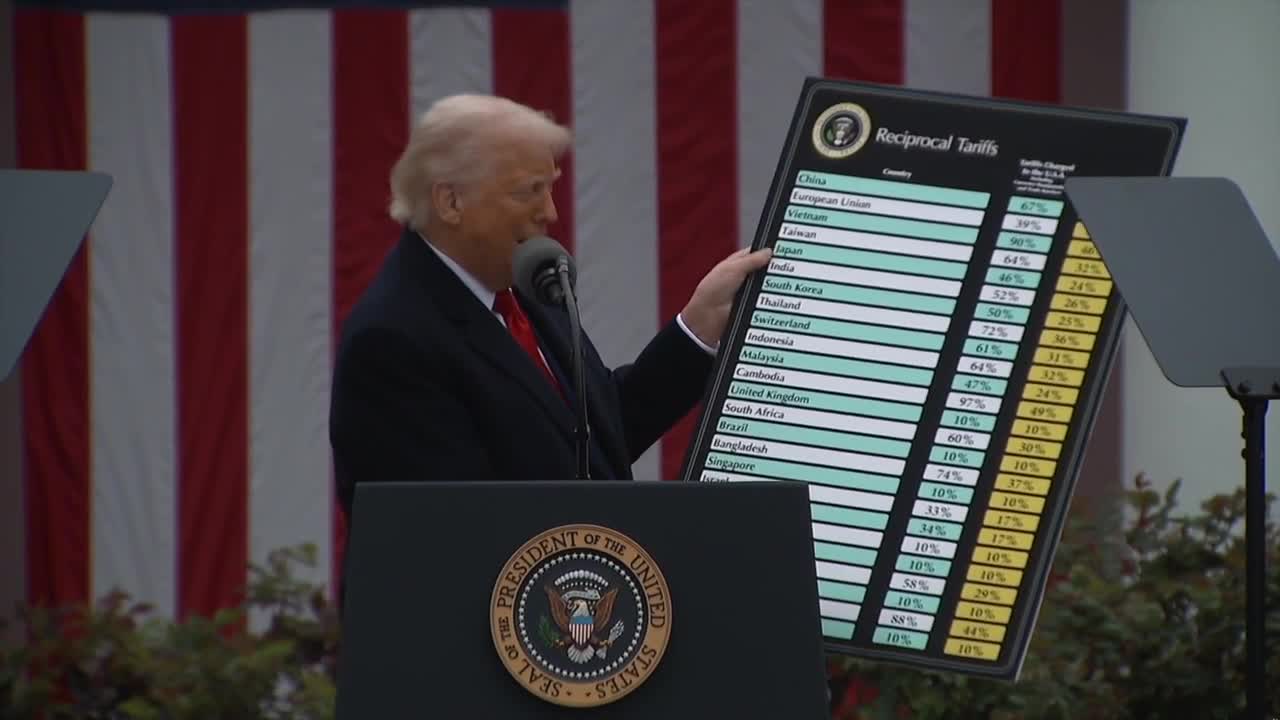


The Federal Reserve Bank of New York set out to answer a simple question: How much did the 2025 and 2026 tariffs raise prices for consumers?

Do you have a concern in your community or a news tip? We want to hear from you!
Connect with us: share@abc15.com
The answer: They did.
For every one-point rise in the average tariff rate, consumer goods prices climbed about a quarter of a percent within a year. That means a 10% tariff rate translates to prices rising about 2.5%.
Most of the price impact comes directly from imports. Those price increases run nearly one-for-one — a 5% tariff produces about a 5% price jump.
But the effects don't stop there. U.S.-made goods get more expensive, too. Companies pay more for imported parts and equipment, and when a competing import gets pricier, other companies raise their prices as well. That second wave can take six months to a year to show up.
The study also examined what happened after the Liberation Day tariffs. By April of last year, price inflation for consumer goods was essentially zero. By February, consumer goods prices were up 3%. The research suggests goods prices would have moved lower without the tariffs.
Tariffs have also added $362 billion to the Treasury since last year — more than double the previous two years.
Where tariff rates stand today among major trading partners:
- China (highest among major partners): 27%
- Vietnam: 15%
- Canada and Mexico: Just over 5%
- Taiwan (Arizona's biggest trading partner): 11%
This story was reported on-air by a journalist and has been converted to this platform with the assistance of AI. Our editorial team verifies all reporting on all platforms for fairness and accuracy.
Want more news in your community? Add ABC15 as a preferred source on Google below: