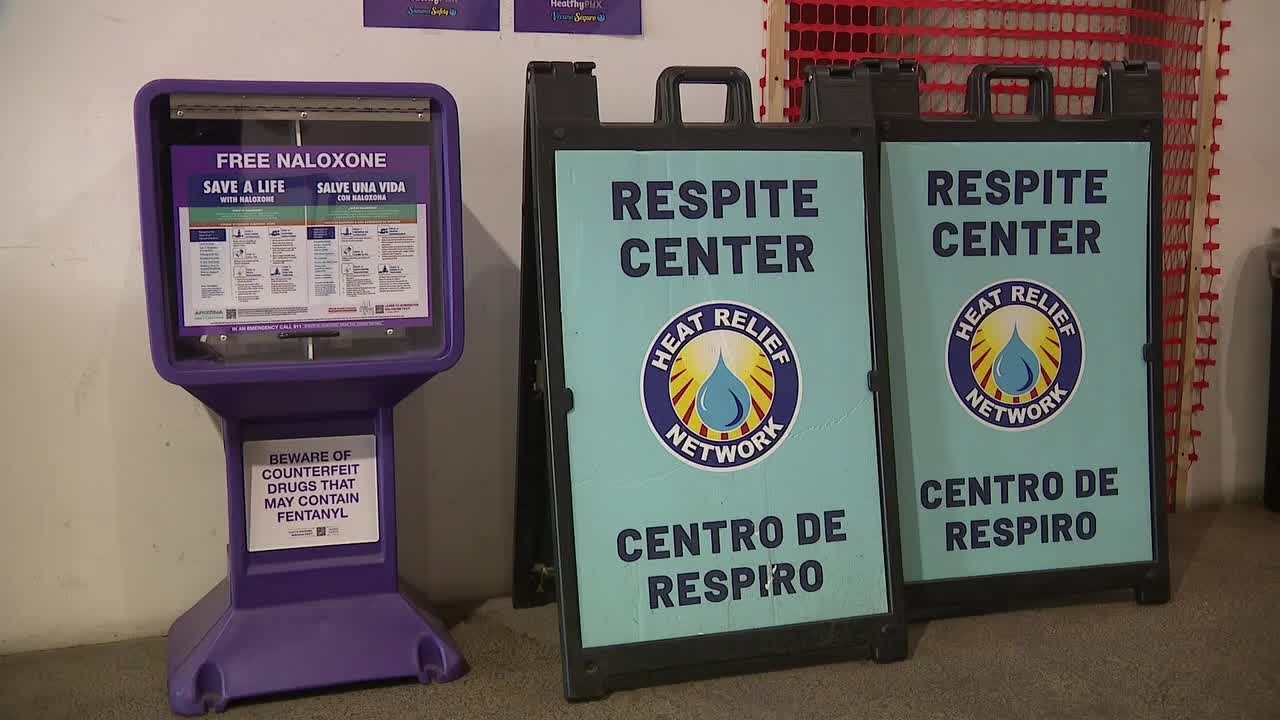



PHOENIX — As the Valley's heat relief season comes to an end, so does COVID-era funding that helped expand cooling and respite services across the region. American Rescue Plan Act funds must be used by the end of the year, when they expire under the Act.
Now cities, Maricopa County and community organizations are looking ahead to how those services will be funded in 2027.
For Richard, a Phoenix resident who used a downtown respite center, the service offered an escape from a dangerous summer.
“The respite center has been a great place for the summer for people to come in off the heat, off the streets, and get some water and get some rest,” Richard said.
The regional Heat Relief Network had more than 200 participating locations this summer, including cooling centers, respite centers, libraries, recreation centers, community centers, nonprofits and faith-based organizations.
Phoenix's extended-hour and overnight heat relief sites typically saw around 3,000 visits a week this summer, according to the city's weekly heat reports. During some of the busiest weeks in June, those sites recorded more than 4,000 visits.
The need for heat relief remains serious.
Maricopa County's latest data shows 275 confirmed heat-related deaths, with more than 500 additional cases still under investigation. Heat-related deaths are running higher than at the same point last year.
“If there's no shade or anything like that, that can get really dangerous,” Richard said.
Federal funding expires, but Heat Relief Network will continue.
Federal American Rescue Plan Act, or ARPA, funding helped expand heat relief efforts across the Valley following the COVID-19 pandemic. Under the federal program, the remaining money must be spent by the end of 2026.
That does not mean the regional Heat Relief Network is going away.
Maricopa County Public Health tells ABC15 that many organizations participate in the network without receiving that funding. Some participating locations, including libraries, recreation centers and community centers, are also facilities that remain open to the public throughout the year.
The department says it is working to identify funding to fill potential gaps and is working with a select number of sites to remain open beyond the traditional heat relief season.
The regional network itself has existed since 2005, before ARPA funding became available.
Phoenix, meanwhile, says its heat relief services will not be cut when the federal funding expires.
City officials tell ABC15 that General Fund dollars are in place to maintain the same level of heat relief services in 2027.
St. Vincent de Paul already transitioned away from federal funding.
At St. Vincent de Paul, shelter program manager Andrew Peters said the organization's afternoon heat relief program served roughly 150 to 200 people per day this summer.
“Without it, it could mean the difference between life and death for them,” Peters said.
St. Vincent de Paul previously received ARPA funding for shelter, food and heat relief efforts but transitioned away from those federal dollars in 2024.
Its heat relief services are now supported through City of Phoenix funding combined with the nonprofit's own fundraising efforts.
While its seasonal afternoon heat relief program is ending, its Overnight Heat Relief Shelter will continue operating year-round.
Peters said Arizona's dangerous heat does not always follow a calendar, and staff have seen firsthand how quickly conditions can become medical emergencies for people living outside.
Staff members provide assistance when someone shows signs of heat-related illness and coordinate with emergency medical services when additional care is needed.
“With all of the medical interventions that we've had to do, and also coordinate care with emergency medical services, I would definitely say that we're saving lives here,” Peters said.
For Richard, knowing the Phoenix respite center he relied on this summer has funding to return next year, is welcome news.
“I probably don't even know how many lives it's impacted,” Richard said. “Let's keep it going.”
This story was reported on-air by a journalist and has been converted to this platform with the assistance of AI. Our editorial team verifies all reporting on all platforms for fairness and accuracy.

Do you have a concern in your community or a news tip? We want to hear from you!
Connect with us: share@abc15.com
Want more news in your community? Add ABC15 as a preferred source on Google below: