



Oil prices rise, and fuel costs climb, but when crude falls, drivers often don't see relief at the pump. An industry expert explains the many hidden costs baked into every gallon.
When oil prices go up, gas prices go up. But when oil prices go down, what we pay at the pump sometimes stays stubbornly high.
The U.S. Oil and Gas Association offers some answers.
With Brent crude trading around $118 a barrel, it's hard to find a driver who isn't hyper aware of how the Iran conflict is impacting gas prices.
"Gas prices are way too high right now, for sure. Yeah, especially for young working Americans trying to make a living, it's it's it's a lot," Marque Delpino said.
But there's a lot more to what we pay than the wars in the Middle East and Ukraine, says the U.S. Oil and Gas Association's Dan Simmons.
"We have a refining problem more than we have an oil problem," Simmons said.
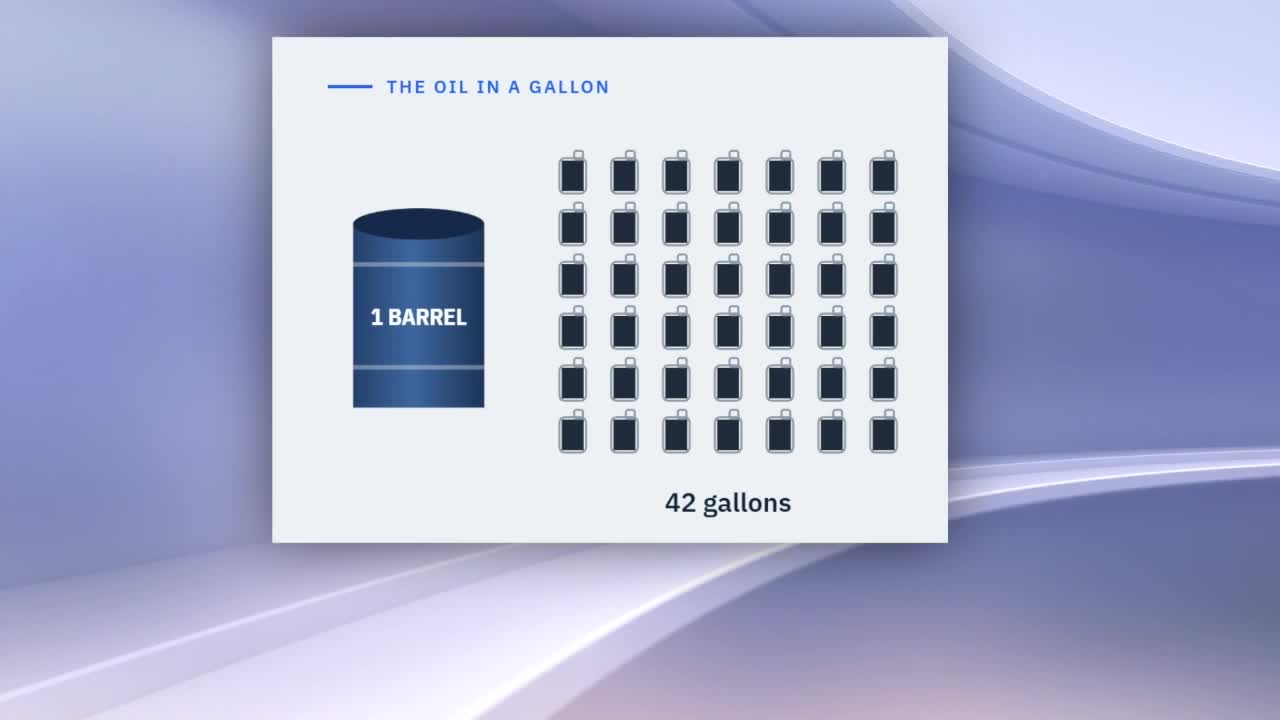
His group recently put out a video on X. If you want to know how much oil impacts gas, he says, simply divide the current price of a barrel of oil by 42 — that's how many gallons are in a barrel.
When asked what accounts for the rest, Simmons pointed to a range of added expenses.
"There are refining costs, there are transportation costs, there is the cost of running a gasoline station, there are taxes, and then in the United States, we also have the renewable fuel standard, which also adds additional cost to every gallon of gasoline," Simmons said.
The renewable fuel standard is basically the amount of renewable fuel the EPA requires refiners to blend into the fuel mix, he says. It ups the cost for refiners, and that's passed down to drivers.
Back at the pumps, the whys may not matter as much as the bigger question: How soon will prices finally come back down?

