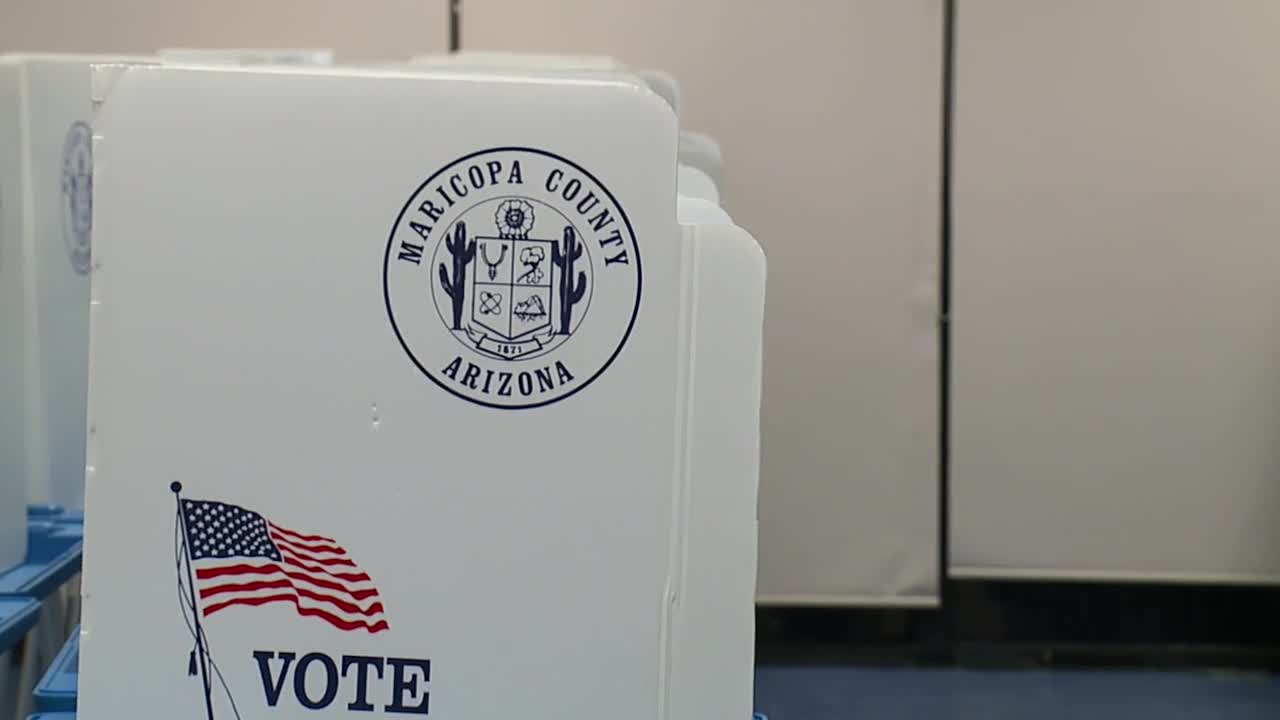


PHOENIX — The Arizona Supreme Court has sided with Maricopa County Recorder Justin Heap in his battle with the Board of Supervisors over early voting, but voters casting ballots won’t experience any changes.
Heap and the board have been locked in a legal battle for a year and a half over technology funding and who has authority over early voting. The Supreme Court on Tuesday threw out an appeals court decision and reinstated a lower court ruling in favor of Heap.
The unanimous decision landed two weeks into early voting for Arizona’s primary and just two weeks before Election Day. But voters won’t see any changes to how they cast a ballot or how their votes are counted.

Do you have a concern in your community or a news tip? We want to hear from you!
Connect with us: share@abc15.com
In her order, Chief Justice Ann A. Scott Timmer instituted a 12-point interim plan proposed by Heap’s attorney. Under the framework, voting locations and drop boxes will remain the same unless both Heap and the board decide on changes. Heap will gain access to the databases used to administer elections, and the existing vote tabulating equipment and procedures will be used.
“My office is ready to implement the Court's order and deliver secure, lawful, and professional elections for the people of Maricopa County,” Heap said in a statement.
In a joint statement Board of Supervisors Chair Kate Brophy McGee and Vice Chair Debbie Lesko said they were disappointed in the decision but said their primary concern is the county’s 2.6 million registered voters.
“The Board will follow the law and abide by the court’s decision, and we look forward to Recorder Heap’s plans in terms of how he intends to exercise his newfound authority to administer lawful, high-quality elections this year and beyond,” they said.
State law divides election responsibilities between recorders and county supervisors, but the wording of those statutes is often unclear, assigning duties to the “recorder or other officer in charge of elections.”
To avoid confusion, county boards of supervisors and recorders usually specify who handles what in a shared service agreement. After he took office last year, Heap terminated the agreement the board signed with his predecessor, which had moved the recorder’s IT department to the county.
Heap has argued that duties delegated to the “recorder or other officer in charge of elections” fall under his purview, and Timmer in her order said his interpretation would likely prevail in court.
He called the Supreme Court’s order "a decisive victory for the rule of law.”
Heap and the board have been in court-ordered mediation to reach a resolution to the dispute. Brophy McGee and Lesko in their statement said they had reached a consensus Monday.
Want more news in your community? Add ABC15 as a preferred source on Google below: