

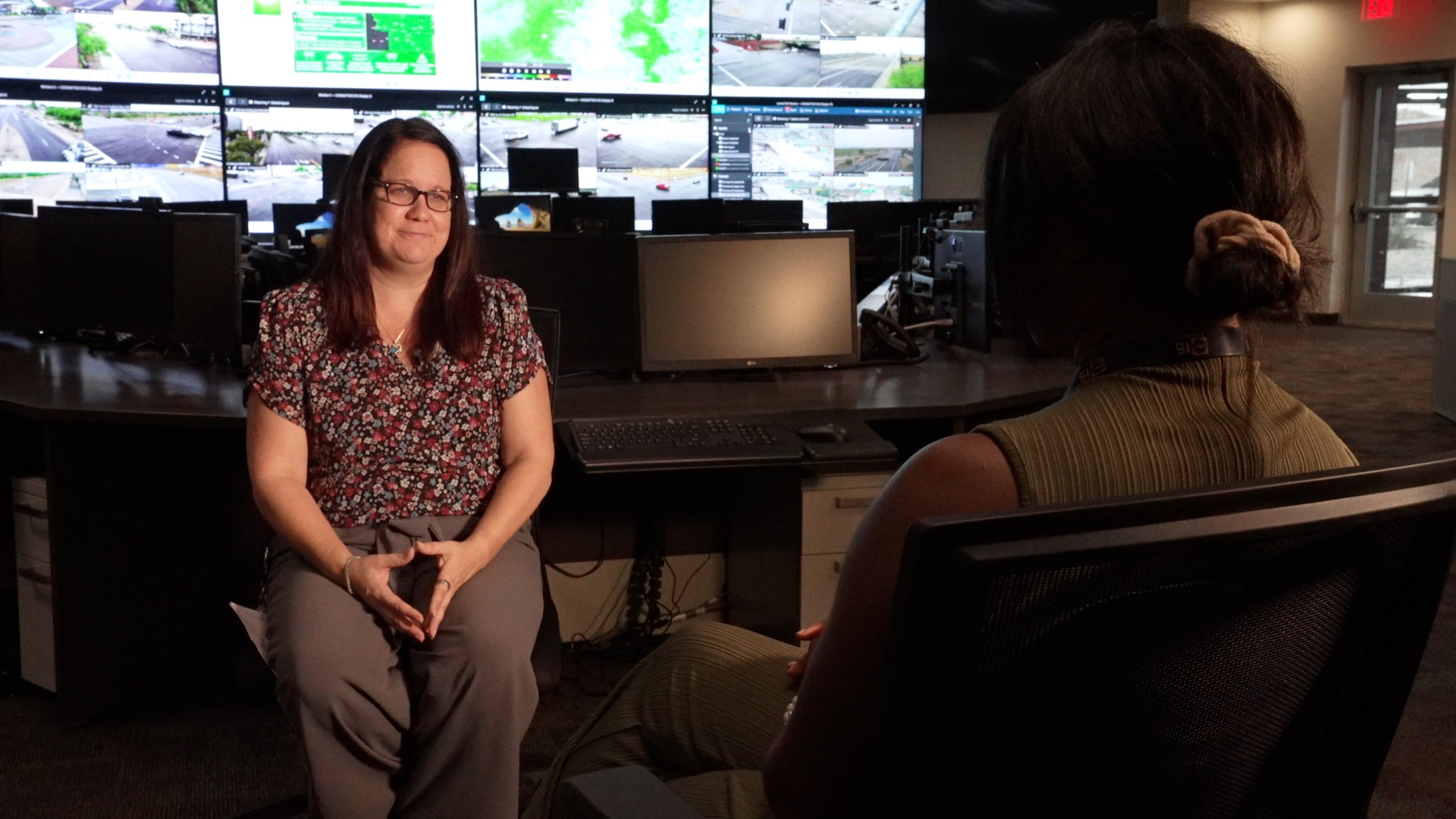


GLENDALE, AZ — Most people don't think about emergency preparedness until they're already facing an emergency. But inside Glendale's Emergency Operations Center (EOC), that planning never stops.
The EOC serves as the city's command hub, a central location where department leaders from Parks and Recreation, Street Transportation, Police, and Fire gather to share information, coordinate resources, and make critical decisions when a threat emerges.
"The emergency operations center becomes that location where subject matter experts can come together to support the response to the community in its time of need," said Nicole Munson, Glendale's Director of Emergency Management.
With storms currently moving through the Valley, the city is monitoring the forecast in real time and urging residents to stay alert.
What You Need to Know Right Now
Emergency managers are warning residents to watch for standing water on roadways and water rushing through normally dry washes and streams. The numbers may surprise you: just six inches of moving water can knock a person off their feet, and one foot of moving water is enough to move a vehicle.
"Just be very cautious when entering those areas because it doesn't take much," Munson said. "Six inches of water, moving water can knock a person down. And a foot of water can move a vehicle by itself."
Free Sandbags Available
The city is offering free sand and bags at two locations to help residents protect their homes. Residents must bring their own shovel.
- Bonsall Park South - 59th Avenue and Bethany Home Road
- Glendale Fire Support Service - Orangewood and 55th Avenue
How Glendale Compares to What Happened in Globe
Last year, the city of Globe was devastated by post-wildfire flooding that came rushing off the mountain and into the community. Glendale was among the cities that responded, sending staff resources to Globe through the Arizona Mutual Aid Compact, a statewide agreement that allows cities and towns to share resources during emergencies.
Munson says Glendale also participates in a multi-jurisdictional hazard mitigation plan with cities and towns throughout Maricopa County — an ongoing effort to identify local risks and fund projects that minimize their impact.
While Glendale does not have a high overall potential for flooding, Munson acknowledged the city does have areas with unbridged crossings where water flows during significant rainfall events.
How to Stay Prepared
Munson says the most important steps residents can take right now are:
- Turn on wireless emergency alerts from the National Weather Service on your cell phone
- Know your evacuation route before roads become flooded
- Have a communication plan with family members, including contacts outside the city or state
"Know where you get your source of information and make sure it's trustworthy," Munson said. "In the matter of weather events, we lean into the National Weather Service as our source of weather truth."
This story was reported on-air by a journalist and has been converted to this platform with the assistance of AI. Our editorial team verifies all reporting on all platforms for fairness and accuracy.
