



GLENDALE, AZ — The federal government has ordered cuts of 1.25 million acre-feet to Colorado River deliveries in both 2027 and 2028, and Arizona is expected to take the largest reduction of any Lower Basin state. But in Glendale, city leaders say they saw this coming, and they have spent decades getting ready.
"Glendale did not wait for a crisis to begin planning," Glendale Mayor Jerry P. Weiers and Glendale Chamber of Commerce President Zach Yentzer wrote in a joint op-ed. "Water security did not happen overnight, and it did not happen by accident."
Where Glendale's Water Actually Comes From
About 55% of Glendale's drinking water comes from the Salt and Verde rivers through the Salt River Project. Approximately 41% comes from the Colorado River through the Central Arizona Project, and 4% comes from groundwater. Reclaimed water is also used for industry, landscaping, and aquifer recharge.
That means a significant portion of Glendale's water supply is directly tied to the Colorado River, the same river now facing its steepest federally mandated cuts in history.
A Water Bank Built Over Nearly 30 Years
Since 1996, Glendale has been doing something most residents may not know about: banking water underground.
Joanne Toms, the city's Environmental Program Administrator, says the system works just like a financial bank.
"Think of these long-term storage credits like a bank," Toms said. "We deposit that water to be stored underground, and that becomes what's called a long-term storage credit, and these credits can be withdrawn just like you can withdraw money from your bank when we need that water."
The city has accumulated approximately 209,000 acre-feet in underground storage credits, a reserve built up over nearly three decades that can be tapped when surface water supplies run short. Toms says Glendale would begin drawing on those credits at around a 65% cut to its Colorado River water supply.
More Than $100 Million in New Infrastructure
Glendale is not just relying on what it has already saved. The city is actively investing in new infrastructure to strengthen its water future.
Five new groundwater well projects are currently in development at a cost of between $54 million and $70 million. The funding is already allocated through the city's capital improvement program. Glendale has also committed approximately $50 million to the planned Bartlett Dam expansion, a long-term project on the Salt and Verde River system that would add significant new storage capacity.
Toms says one acre-foot of water, the unit used to measure the Bartlett Dam investment, equals roughly 325,000 gallons, or about the average annual water use of three families.
"It's a lot of money for that amount of water," Toms said, "but it's an investment in making sure that we have ample water resources for the future."
Glendale's Drought Plan And Where It Stands Right Now
The city has had a drought management plan in place for more than 20 years, required by state law and built around four stages of increasing severity.
Right now, Glendale is in Stage One, a drought watch. The city has set a mandatory 5% water use reduction goal for city parks and public right-of-way, and is asking residents to voluntarily cut their own water use by 5% as well.
Mandatory restrictions on outdoor and landscape watering would not take effect until Stages 3 and 4.
Toms says the goal is a gradual, step-by-step approach, not a sudden shift.
"We don't want to go from stage one to stage four," Toms said. "We want to really kind of go through each of those steps where it's a gradual kind of nudge to get our customers to continue to conserve water because they have done a really good job."
What Residents Can Do Right Now
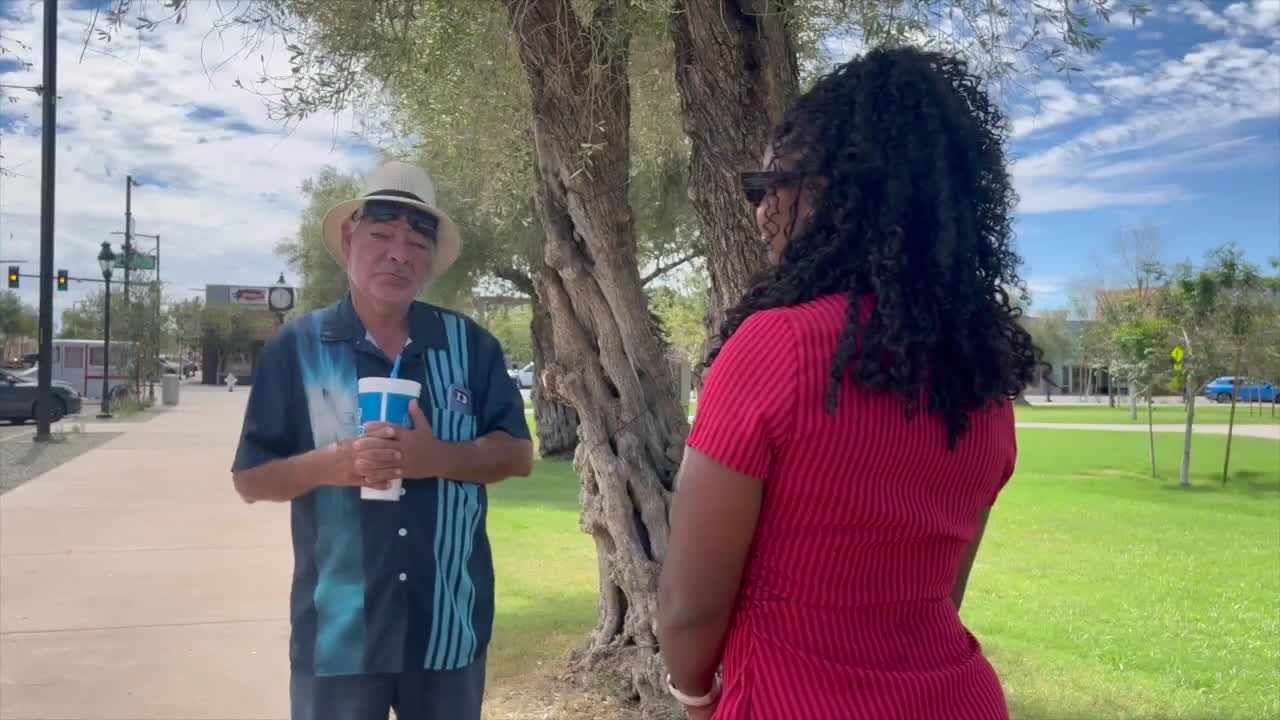
Glendale resident Daniel Holguyn says water is something he thinks about every day.
"Water is very important," Holguyn said. "You use the water to take a shower, use your water to wash your clothes, water your grass, water the plants and stuff like that."
When asked what he would cut back on if the city required reductions, Holguyn said he would shave less frequently and turn off the tap while brushing his teeth; small steps that water officials say add up across an entire city.
The city's water conservation program currently offers rebates for water-efficient products and incentives for converting grass lawns to desert landscaping.
The Bigger Picture
Toms says residents should not expect one single solution to solve Arizona's water challenges. Advanced water purification, a process that recycles wastewater and treats it to a high-quality standard for reuse, is also being explored as another long-term tool.
"It's not just one thing that's going to solve everything," Toms said. "It's really complicated, and it's all of these efforts and all of these investments into our future."
Glendale holds a state-issued 100-year Assured Water Supply designation, a distinction that city leaders say gives both families and businesses the confidence to invest in the city's future.
"Water security makes responsible growth possible," Mayor Weiers and Yentzer wrote. "Responsible growth, in turn, provides the resources to keep our water system strong and resilient."
This story was reported on-air by a journalist and has been converted to this platform with the assistance of AI. Our editorial team verifies all reporting on all platforms for fairness and accuracy.
