


APACHE JUNCTION, AZ — It has been nearly six months since Apache Junction police officer Gabriel Facio was shot and killed in the line of duty. The department is now releasing body camera footage from that day, as Officer Facio’s family speaks to ABC15 in their first-ever media interview.
AJPD released the body camera footage on Thursday, as the East Valley Critical Incident Response Team has completed its investigation into the shooting involving police. It shows the moments before Officer Facio was shot, while part of the response to a road rage call on June 2. He died nearly a week later.
“It hits very hard,” Chief Michael Pooley, Apache Junction Police Department, said.
Just before 9:30 a.m. on June 2, one officer pulled over the suspect, Roger Nunez, after a caller reported he had pointed a gun at him and his son.
“He’s in a Tesla, flashing his gun,” a man said during a 911 call.
The body camera footage shows Nunez first telling the police officer he has no weapons, but moments later, he pulled a gun on the officer and stepped out of his car.
“Drop it, drop the gun!” the police officer repeats in the video.
Investigators say Nunez ignored commands as more officers arrived on the scene when police deployed pepper balls, Nunez fired, shooting Officer Facio in the face.
After shouting “shots fired,” the video shows police returning fire. A single bullet struck Nunez in the stomach before officers retrieved his gun.
Nunez remains in custody in Pinal County and faces multiple charges. The County Attorney’s Office is seeking the death penalty, but will not bring charges against the officers involved.
Officer Facio’s family recently watched the footage showing his final moments.
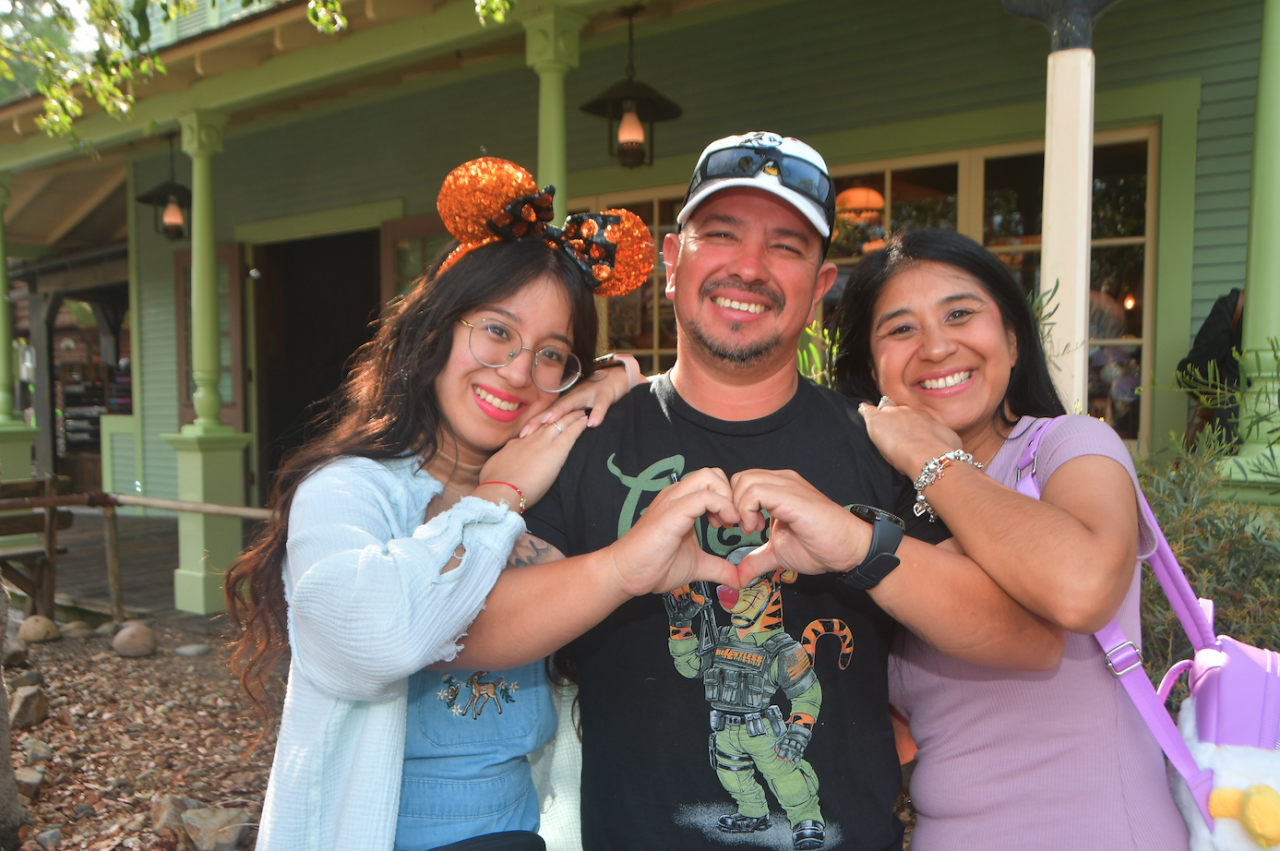
“It definitely hurts a lot, just thinking that he was going on in his day, just doing what he loves, doing his job. And an act of violence. Just in seconds, took him away from us,” Ana Facio, Officer Facio’s daughter, told ABC15 in an exclusive interview.
"A tragedy this magnitude, you know, like we never see it coming,” Mizael Facio, son, said in his one-on-one interview with ABC15. “I feel like not a lot of people understand how different it is to have a parent pass away than to actually view it. It's just a senseless act of violence."
Ana and Mizael Facio say that after watching the video, they have no concerns about the officers’ actions.
“Would I like to have my dad here? Yes. But then at the same time, I put myself in the position, as in this is their job, and they have protocols to follow,” Ana said.

Do you have a concern in your community or a news tip? We want to hear from you!
Connect with us: share@abc15.com
Chief Pooley says the department conducted an internal investigation and found all polices and procedures were followed.
“I watched this video for the first time the day after it happened,” Chief Pooley said. “It was the same feeling I feel today, and that’s I feel angry, I get upset about it, and at the same time, it breaks my heart.”
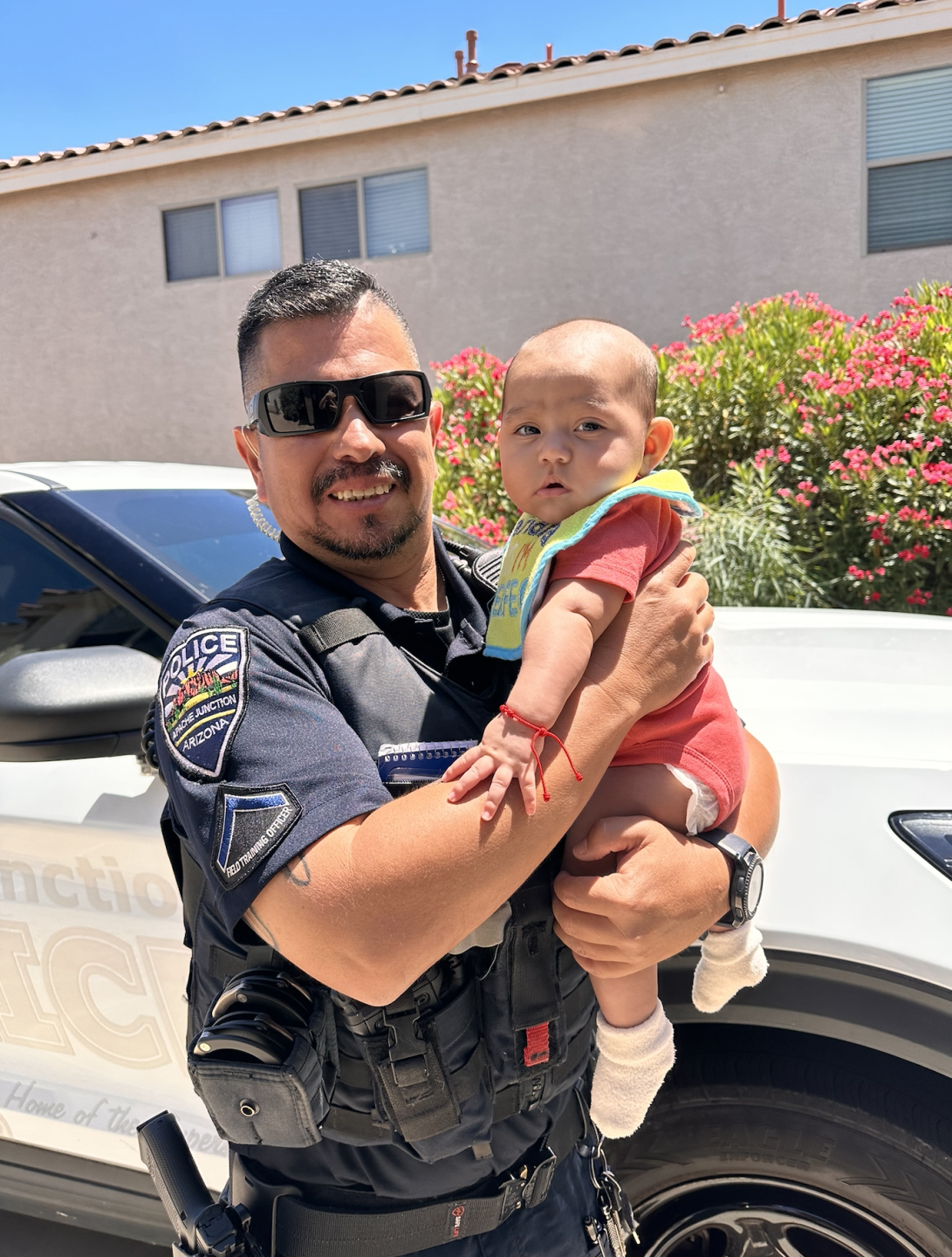
Officer Facio’s death is the only line-of-duty death in the police department’s history. Chief Pooley says the loss will be felt for years to come.
“Six months have passed, and people still want to remember him,” he said. “I believe it’s going to continue six months more from now, six years from now, because it’s what he represented.”
He says the Apache Junction Police Department has also reviewed the body camera footage to strengthen tactics and training.
“It does give me comfort, because it would allow other officers to go home to their families,” Facio said.
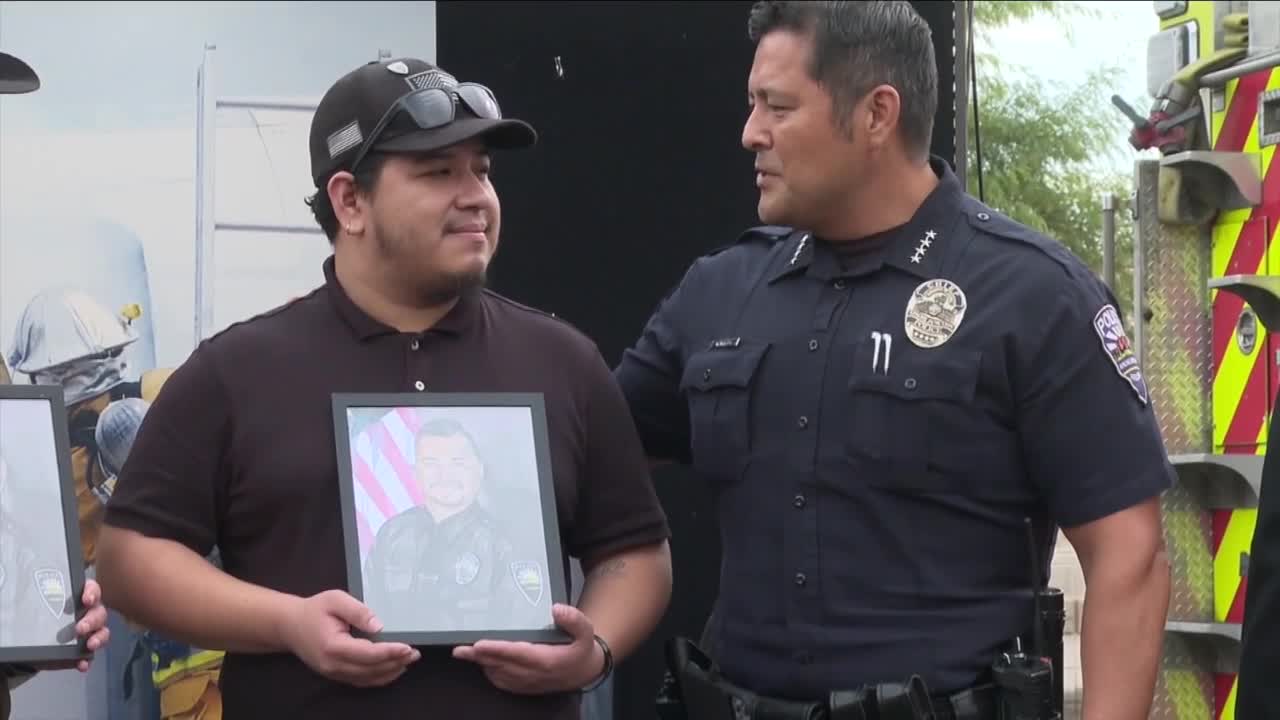
Several members of law enforcement, including Sheriff Jerry Sheridan and Chief Pooley, were out at Samurai Comics in Glendale Saturday morning. They were part of an event honoring first responders, in particular Officer Facio, who made the ultimate sacrifice.
"Growing up, my dad used to show up for all my events,” Mizael Facio said. “Now it's painful to say, but it's my turn doing the same for him, but it's an honor to do it.”
Mizael accepted the posthumous award honoring his dad’s dedication to public safety and the community, presented by Chief Pooley.
"Love you very much, and love your dad very much as well,” Chief Pooley told him.
"This is a portrait of my dad. Means a lot, again, just the community showing love, is just overwhelming,” Mizael said.
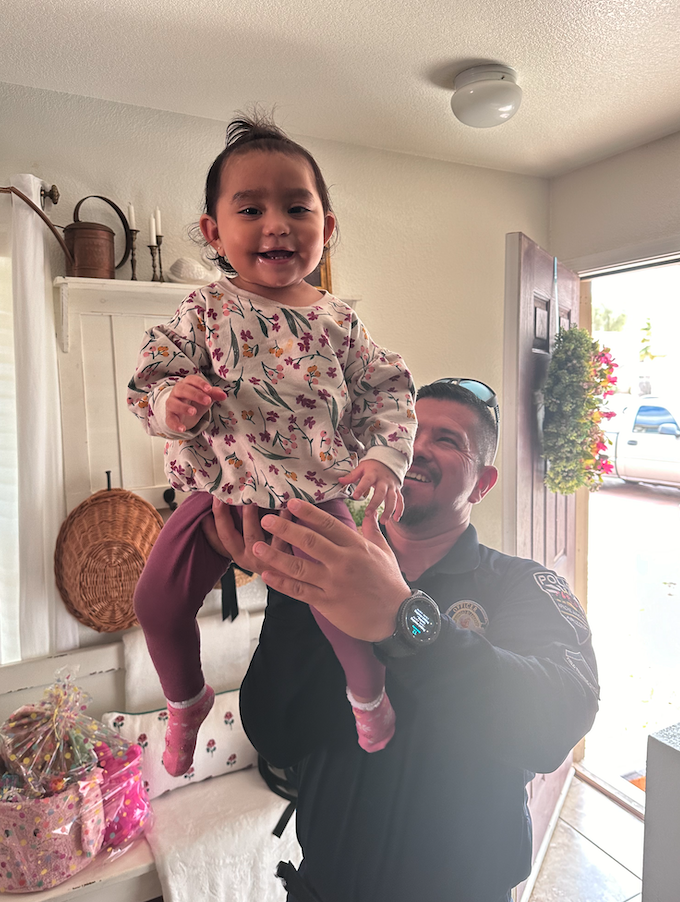
Mizael says the hardest part is knowing that just seconds of violence stole years of family moments, especially for his 3-year-old daughter.
"She was always at grandpa's house every weekend. She was there up to three days a week,” he said. "Now she knows where grandpa's at: she points at the sky. She knows he's in heaven.”
There are also future grandchildren, who Mizael says will never get to know his dad.
"We found out we were having another kid a month after my dad passed,” he said. "I remember my dad being there for the first, the first birth of my daughter. So now looking at it and it's like something so big, I'm going to turn, my dad's not going be there this time, is gut-wrenching."

Facio says her dad set the standard for love and kindness.
“He was very loving. He always loved my mom the best he could, and he would always spoil her,” Facio said. “He would always help people that were homeless. He would give them food. He would give them blankets. He was just a very kind person.”
She says the time without her dad means robbed moments. At his funeral, Facio spoke about one day she would miss him the most: her wedding.
“I’ll be saving you a seat on my wedding day,” she said during the funeral in June. “Every time I’ll look over at your chair, I know you’ll be looking down and smiling to see me happy.”
Two months later, Facio had a seat. His police jacket was draped around a chair at the ceremony, holding his photo.
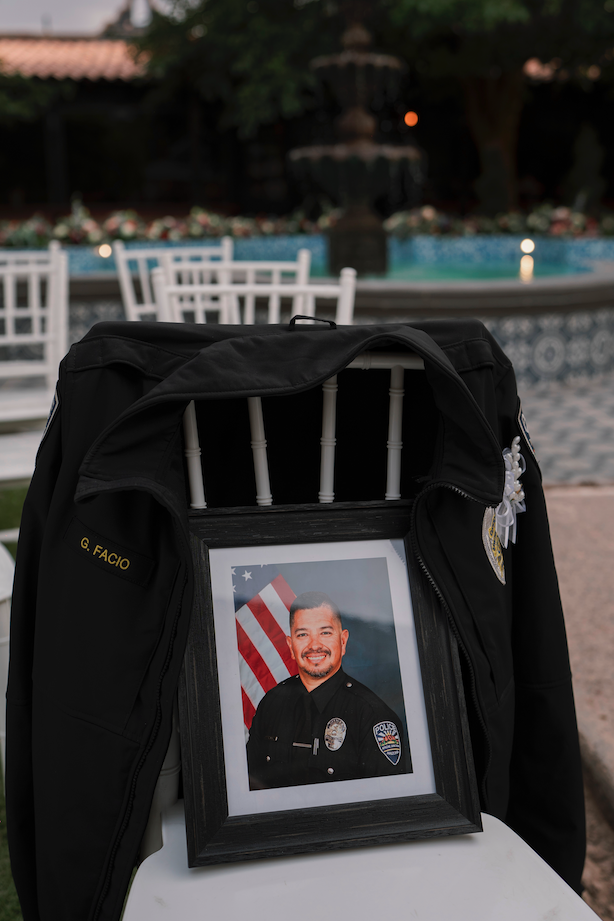
“I couldn't stop thinking about my dad, what if he was here?” Facio said. “What would he be looking like at the first look? You know, he never got to see me wearing my dress.”
Members of the Apache Junction Police Department attended the wedding in Mexico, including Chief Pooley.
“I have three daughters of my own... and for a father to be at their daughter's wedding is one of the most important special days a father can ever experience, but it's also for the daughter one of the most important experiences,” Chief Pooley said. “We were there to represent, as much as we could, a small piece of who her father was.”
Facio carried tributes to her dad throughout the day, including his photo and a charm on her bouquet, keeping him close as she walked down the aisle.
“I just started crying,” she said. “What's supposed to be the most beautiful moment of my life is turning into a day that is full of happiness, but at the same time, is full of so much grief and sadness.”
Mizael Facio also carries tokens to remind him of his dad, everyday wearing a bracelet and a pin he received at Facio’s funeral.
“The kind of person he was, he was always selfless, and I feel like we could all learn a little bit from just that,” Mizael Facio said.

The family says Officer Facio’s lifelong mission was to become an American police officer, even when he was a teenager growing up in Guanajuato, Mexico. He even proclaimed that dream to his wife when he married her at age 19.
It’s something Chief Pooley recognized in his fellow officer.
“You can see Facio in the video, just a brief moment of him right before the shooting happens,” Chief Pooley said. “He was doing his job. He was doing what he loved to do. He was giving everything he had, his entire dream and goal was to be a police officer.”
Officer Facio finally accomplished his goal in his forties, serving with the Apache Junction Police Department for nearly four years before he died.
"When he got it done, man, he was so proud of himself,” Mizael Facio said. “He wouldn't stop telling us the main reason he would do most of these things, he would say, is because he wants to show us that you can do anything. Doesn’t matter the age: you could be 40, 50, 60, you want to be an officer go ahead and do it. As long as you put your heart and mind to it.”
Ana Facio says that by finally becoming an officer later in life, her dad’s years with AJPD were a dream realized.
“Lately, I think about it, and I'm like, well, why did he pursue that career? Like he would have still been here if he would have decided to be a doctor or something else,” Facio said. “But at the same time, I'm proud of him. Because he never let anyone tell him he wasn't able to do something.”
Want more news in your community? Add ABC15 as a preferred source on Google below: