

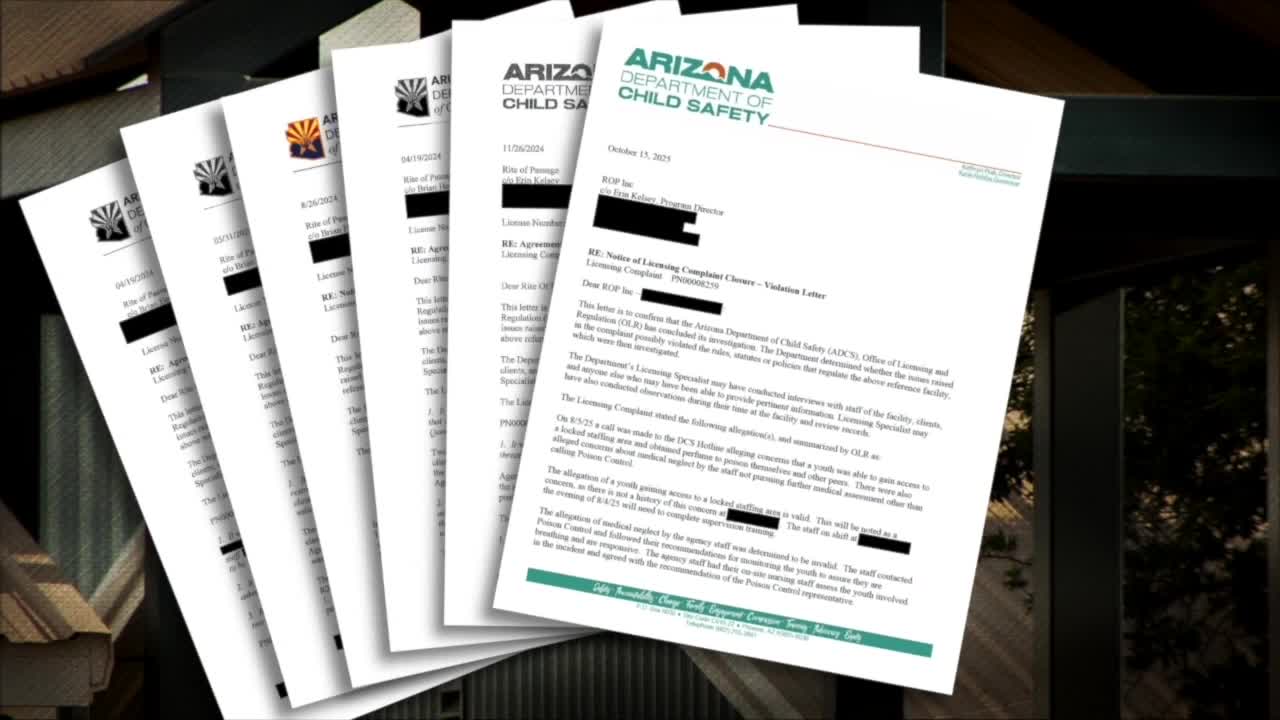



The Arizona Department of Child Safety investigated nearly 80 licensing complaints during a two-year period against the state’s largest group home for foster children.
DCS licensing investigators looked into claims against Canyon State Academy and Desert Lily Academy in Queen Creek. The complaints ranged from sex crime allegations to verbal abuse and physical punishment, as well as improper restraint techniques.
According to the academies, they serve more than 600 youth a year as a qualified residential treatment program. Behind tall block walls, the kids live on a sprawling campus, and they attend school, activities, and therapy.
“It sucked, but it was kind of - at the same time – nice,” said Nicholas MacNeil, a former Canyon State Academy resident.
MacNeil said he found stability and structure at the facility from 2013 to 2016.
“When I got there, it was like, ‘Hey, every morning we're going to wake up, make your bed, brush your teeth, going to eat three meals a day,’” MacNeil said. “And I never had that.”
Lanique Anderson said she had a much different experience from 2024 to 2025.
“It was, like, stressful; I just hated it there,” Anderson said.
Anderson said she witnessed fights, kids trying to run away, staff using abusive language toward residents. She said sometimes the staff used physical force.
"They just did more than what was necessary with restraints," Anderson said.
Last summer, ABC15 heard from relatives and child advocates who were concerned about the safety and well-being of youth at the facility. Through public records requests, ABC15 obtained Queen Creek Police calls for service data and DCS state regulator reports.
In a previous story, ABC15 reported on more than 2,000 police calls for service coming from the joint facility from January 2022 to September 2025. About 600 of the calls involved missing child reports.
Inspections and Violations
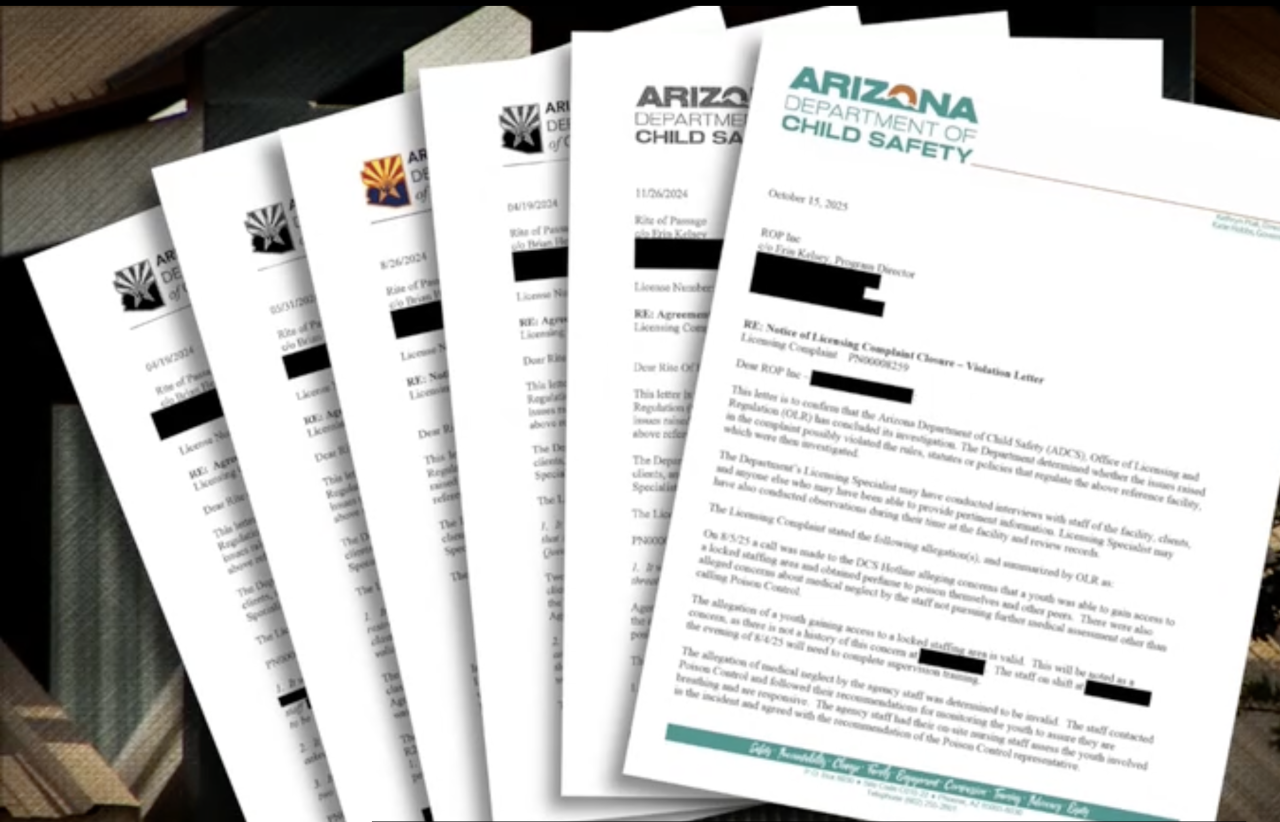
In recent weeks, DCS has turned over facility inspection reports and about 50 investigative closure letters. They detail the outcome of 79 licensing complaints over a two-year period from January 2024 to December 2025.
ABC15 asked an independent licensing consultant, Jowharah Hall, to read over the DCS-released documents.
“It's about pattern, and it's about the numbers,” Hall said.
Hall said she has worked for other group homes in Arizona, but she has not worked for these academies.
DCS investigators could not validate most of the complaints, according to the letters, but state regulators did find eight total licensing violations over the two-year period. Seven violations were noted at Desert Lily Academy, and Canyon State Academy had one.
“These are children who are away from their homes; these are children who have, maybe, behavioral issues,” Hall said. “To have these sort of patterns of behavior to me -- three is too much -- one is too much.”

ABC15 is committed to finding the answers you need and holding those accountable.
Submit your news tip to Investigators@abc15.com
In one letter, DCS said Desert Lily violated a staff-to-child ratio rule by allowing an employee to be alone with a girl who had a history of sex trafficking and abuse. The now-former staff member, Christopher Allen, was accused of having sex with the teen. Allen was arrested in September 2025, and he has pleaded not guilty to charges of sexual exploitation of a minor. He is awaiting trial.
At Canyon State Academy, regulators found a violation, saying employees failed to make a timely report after one boy alleged another youth sexually assaulted him in July 2025.
“That is very egregious,” Hall said. “I have worked with several smaller organizations that were shut down for such activity.”
Desert Lily received notice of six other violations:
- Failing to notify DCS of a resident who obtained perfume from a locked area to poison themself and others
- A staff member using threatening language
- A staff member violating boundaries by providing her phone number and offering a ride to a youth planning to run away
- Using unapproved restraint techniques
- Refusing to let a child use the restroom
- Physical punishment and verbal abuse
Licensing inspectors noted additional concerns in other letters to Canyon State Academy, including:
- Unclean resident cottages and a lack of hygiene supplies
- Youth threatening to assault new kids
- A coach who was accused of using unjustified force on a player who left a game, without attempting de-escalation techniques
“If you do choose to go hands-on, that's one of those areas that needs overtraining,” Hall said.
Academies Respond
In response to questions about licensing complaints and violations, Canyon State Academy and Desert Lily Academy issued this statement:
"Child safety is our highest priority. Our youth are not placed with us by their choice, and many have complex behavioral needs, trauma histories, and multiple prior placements. Incidents may occur, but do not define our program. We report allegations to DCS, fully cooperate with all investigations, and take decisive action when validated concerns are identified. Thousands of lives are changed for good through our care, and we encourage reporting about these positive outcomes."
Eight employees, who were named in complaints, were either fired, resigned, or reassigned according to DCS documents and the academies.
According to the DCS letters, Canyon State and Desert Lily Academies also promised to improve policies and retrain some workers to address issues raised by state investigators.
The academies denied ABC15’s request for an on-camera interview, but a spokesperson answered several questions in writing over the last two months.
As for the allegations of excessive force, the spokesperson wrote:
“Staff are taught appropriate boundary training before interacting with students. In the rare circumstance that physical de-escalation is necessary due to a safety issue, staff are taught how to mitigate any potential risk with the utmost focus on student safety and comfort.”
He also wrote the academies have a “zero-tolerance policy on inappropriate sexual conduct.”
“It's tough when you have a larger organization. It's tough when you have a regulatory agency that has to man so many different providers,” Hall said. “But you know what? Our children and the safety of our children are worth whatever we need to do to ensure their safety.”
After the eight licensing violations in two years, DCS confirms Canyon State and Desert Lily remain in good standing with their license.
A DCS spokesperson said, “We take all reports involving child safety, supervision, staff conduct, and facility operations seriously and work closely with providers and law enforcement to ensure appropriate action is taken when concerns arise.”
According to DCS, the size and population served at the facilities must be considered when reviewing incident data.
Support for Future Residents
Anderson is now 19 years old and lives in another state. She said the girls at Desert Lily Academy are struggling, and she said staff could do better.
“They're already at a group where they don't want to be at, so you can at least assist them or talk to your staff about helping the girls feel more at home and like they want to actually be there,” Anderson said.
Meantime, MacNeil named his tree-trimming business Canyon State Trees in honor of the academy.
“Canyon State was the best place for me,” MacNeil said. “I use the active listening that they taught me and stuff like that.”
MacNeil said he returns to campus regularly for church events and charity work to support the next generation of boys.
