

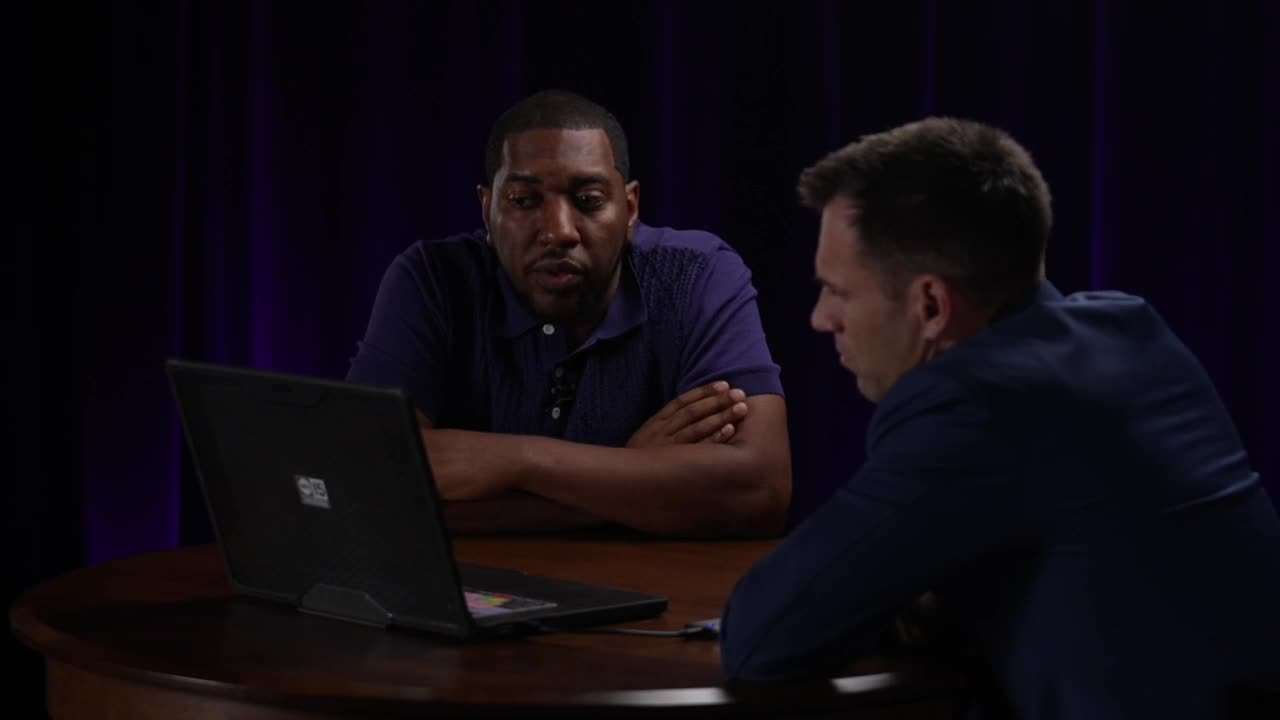


PHOENIX — A member of the Phoenix Police Department's Critical Incident Review Board says the board is flawed, exists mostly for show, and is stacked in favor of law enforcement.
Thomas Claiborn IV, a public member of the Critical Incident Review Board for the past eight years, also said an ABC15 investigation into a controversial shooting showed more video and information than the city presented.
"Watching all the information that you all had provided was a completely different angle than we would even be presented with," Claiborn said.
Claiborn IV, who is also a member of an ABC15 community advisory committee, sat down to discuss broader concerns about the board and how it reviewed the case of Dr. Kris Johnson, a Phoenix trauma surgeon shot by police near his home in June 2022.
Phoenix police officials have declined to comment on the Johnson shooting because a criminal case against the Valley trauma surgeon is ongoing.
According to Phoenix's website, the seven-member board is made up of a rotation of four police officials and three public members.
Its purpose is to review officer-involved shootings and other serious injuries or deaths to determine and recommend to the police chief whether the actions of officers were appropriate or violated any policies.
But Claiborn IV said the board has no real authority and is mostly shown what the police department determines is necessary.
He believes the public’s perception of the board and its authority is misunderstood and can be used in a misleading way by the city.
"I think it's misleading,” Claiborn IV said. “Because again, the critical review board, there's no authority to it. You're reviewing it, you're giving a perspective that if it's within or out of policy.”
He said the police chief can choose to disregard the recommendation if they want to.
He also said the board is limited to police policies and procedures, and it’s difficult to find officers out of policy because he believes some are written and designed to protect them.
“If you have bad policies, then there's no mechanism to challenge that,” Claiborn IV said.
In the Johnson shooting, the Critical Incident Review Board found officers acted within policy.
RELATED: Outside expert raises concern about police shooting
Here’s a quick breakdown of Johnson’s case: On June 30, 2022, at 11 p.m., a strange man showed up at Johnson's front door. His wife, working late, believed the man was looking for a way inside and called 911. Johnson went outside to make sure the man was not trying to enter through the back or side of the house. Down the block, Johnson saw two vehicles and several people silhouetted by bright white floodlights. He did not know they were Phoenix police officers. Johnson says he fired a warning shot straight into the air. Officers never identified themselves as police before shooting 11 shots at Johnson. As the doctor sprinted away in a panic, he was shot in the leg from behind.
Only six board members heard the Johnson case — not the usual seven, according to the city.
The four police members were Assistant Chief Charmane Osborn, Commander Charles Consolian, Officer Kaye Wagstaff, and Det. Dominick Roestenberg.
The two public members were Claiborn IV and Michael Apostolos, who declined to comment.
ABC15 also discovered the board, which state law requires to include more police officials than public members, deliberates in secret and doesn’t take votes.
Instead, members privately reach a “consensus.”
"There's been legislation that's been put in force that never allows the citizens to have more (members) than what the police force is," Claiborn IV said.

ABC15 is committed to finding the answers you need and holding those accountable.
Submit your news tip to Investigators@abc15.com
Claiborn said the dynamic inside the room creates pressure for the police officials that makes objectivity difficult.
“We're not in there wearing a mask or anything. So, (they’re) in there with a space of (their) peers. There's the automatic peer pressure that you know you can't fully look at it objectively," Claiborn IV said.
At board meetings, the department presents its findings, and officers and their unions also speak to the board. Claiborn said people from the other side of a case are not brought in.
Claiborn said the doctor's case was presented to the board in a way that framed Johnson as a potential suspect.
"When I was able to see what you all have already put together, it also gave me a larger perspective than the lens by which we get presented from our angle,” he said. “Again, as a review board, we're only looking at it through the lens of the body cams from the police officers, and we're responding to what they're responding to from their opinion and their perspective.”
He added, “So it was definitely like a more holistic story when I saw the evidence, the information that you all had presented."
This digital article was produced with the assistance of AI and converted to this platform based on the broadcast story written and reported by ABC15 Chief Investigator Dave Biscobing. Our editorial team verifies all reporting on all platforms for fairness and accuracy.
