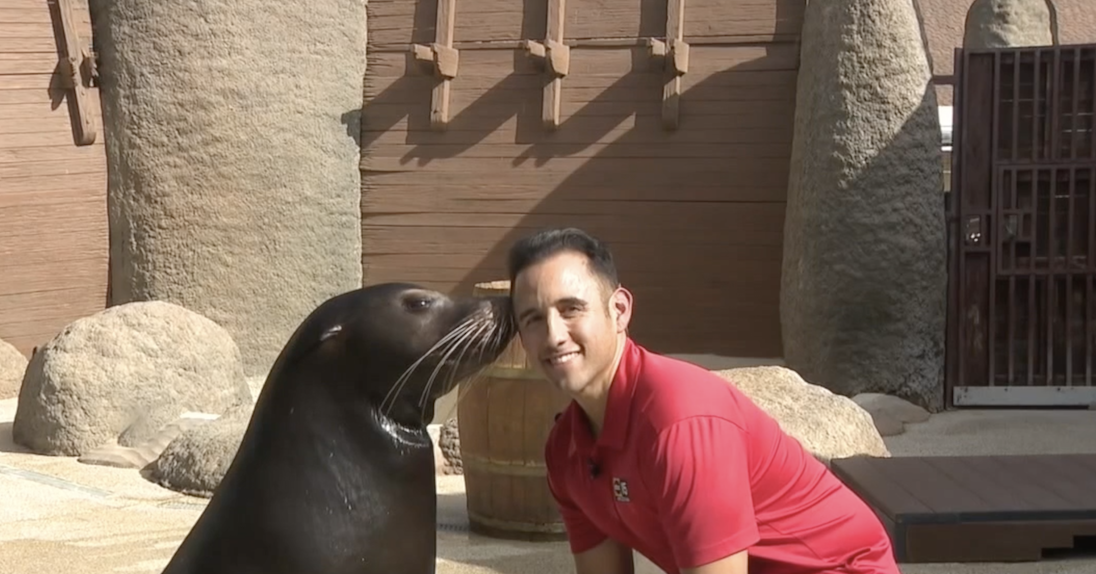


LITCHFIELD PARK, AZ — At the Wildlife World Zoo, keeping the sea lions safe during monsoon season comes down to one whistle.
The command is called a recall. One whistle means stop and come inside. Trainers practice it year-round, storm or no storm, so that when a real one hits, the animals do not hesitate.
"That's super important because when monsoon season comes around, if there is a dust storm, we can recall them inside so they're not getting that long exposure to dust and debris," said Delaney Sevchik, a marine mammal trainer at the zoo.
That training was put to use during recent dust storms in the Valley. When the alerts went out, staff were ready to respond quickly. The zoo's director lives just minutes away. So does Sevchik.
"The biggest thing is just being exposed to the dust and debris, just like us humans. We don't really want to have that long exposure to it," Sevchik said.
The zoo has built its own dust storm playbook, developed independently from academic research on the same storms. Down the road, researchers at Arizona State University are studying those storms through a project called DUSTIE-AIM. Sevchik says the two efforts are separate but not disconnected.
"It is independent. However, the research that they are doing through ASU will provide us with the knowledge to be able to apply it to what we do here," she said.

Do you have a concern in your community or a news tip? We want to hear from you!
Connect with us: share@abc15.com
One of the sea lions who knows the recall best is Crockett. He arrived from SeaWorld San Antonio and is now the largest of six sea lions at the zoo, eating 30 pounds of fish a day. His size comes with a matching temperament.
"He's our biggest cuddle bug. He is a gentle giant. If I were to compare him to a dog breed, he'd probably be the Great Dane," Sevchik said.
Sevchik is studying too. She grew up in Arizona, far from any coastline, but fell in love with the ocean. She is now pursuing a master's degree through ASU's online Ocean Futures program. This summer, that degree took her to Bermuda for three weeks of coral reef research.
"There are no limits when it comes to the ocean. You can study the ocean, you can study marine biology, even in a landlocked state," she said.
She brings that knowledge back to a pool in the desert, keeping watch over sea lions who have never seen a wave they did not make themselves.
"I absolutely love that I can inspire the public and connect people to the ocean here in Arizona. You don't get to see sea lions in Arizona. It's not common," Sevchik said.
Want more news in your community? Add ABC15 as a preferred source on Google below: