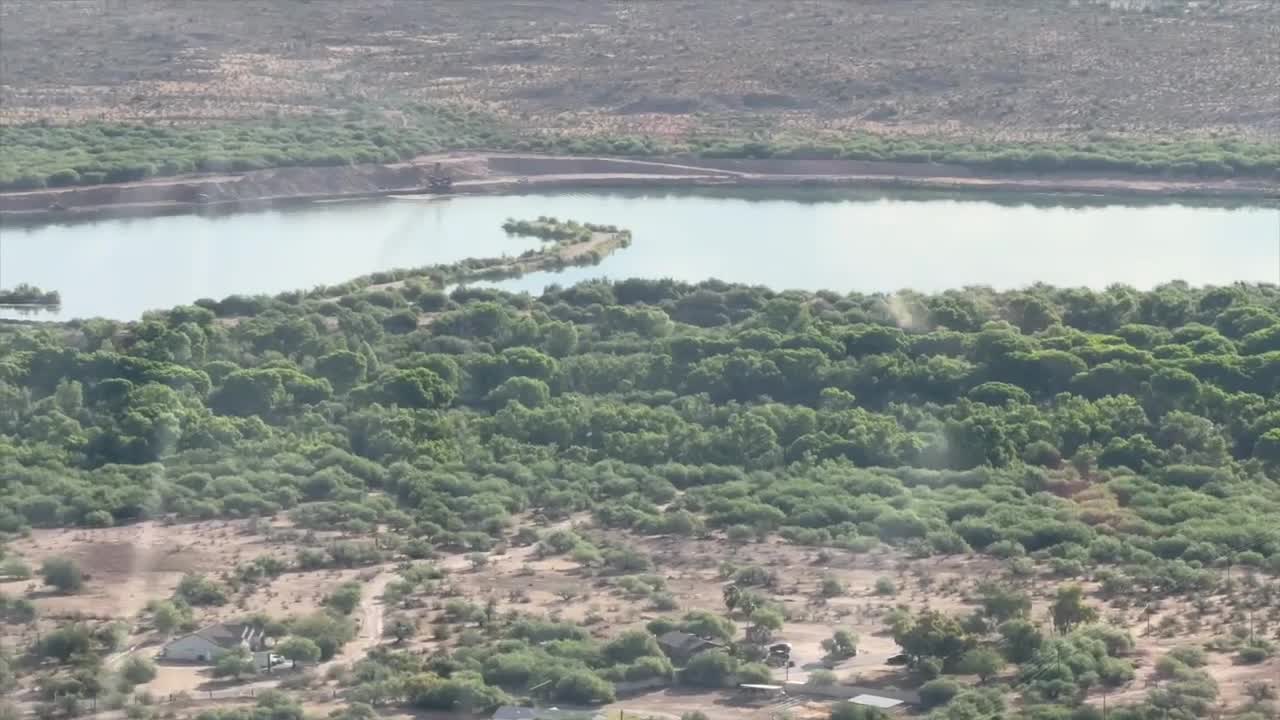


ROOSEVELT LAKE, AZ — A dry winter across Arizona is taking a visible toll on the Salt River Project’s reservoir system and forcing water managers to adjust how they supply the Valley.
From the air, the signs are hard to miss. Along the edges of Roosevelt Lake, the largest reservoir in the SRP system, a clear “bathtub ring” marks where water levels used to be. The lake is now sitting just below 50% capacity after consecutive dry years.
SRP manages a system of dams and reservoirs that delivers water to more than 2.5 million people in metro Phoenix. But with below-average snowfall this winter, less water is flowing into those reservoirs.


“The winter was below average, below normal for precipitation,” said SRP hydrologist Jacob Richardson.
That snowpack is critical. It melts in the spring and feeds rivers that ultimately fill reservoirs like Roosevelt. But with less water coming in, SRP says it has to make adjustments, similar to balancing a budget.
“If you were spending more money than you were getting, you’d probably want to make some adjustments to what you do,” Richardson said.

Do you have a concern in your community or a news tip? We want to hear from you!
Connect with us: share@abc15.com
One of those adjustments involves tapping into water stored underground. SRP says it evaluates how much surface water is available each year and then determines if groundwater is needed to make up the difference and meet demand.
“We look at what our surface water resources are… and then how much groundwater we’ll need to make sure we are still meeting demands,” Richardson said.
Despite the lower levels, SRP says the system is designed to handle dry periods like this. The Valley has seen dry cycles before, and SRP says the system has proven resilient over time.
“Dry hydrology is not new. It’s not the first time we have had this with the SRP system,” Richardson said. “What we’ve proven is despite several dry years in a row, the system is resilient.”
SRP says final spring runoff numbers will be available by the end of May. Those numbers will help determine how the system is managed moving forward — including operations at its dams in 2026 and 2027.
Want more news in your community? Add ABC15 as a preferred source on Google below: