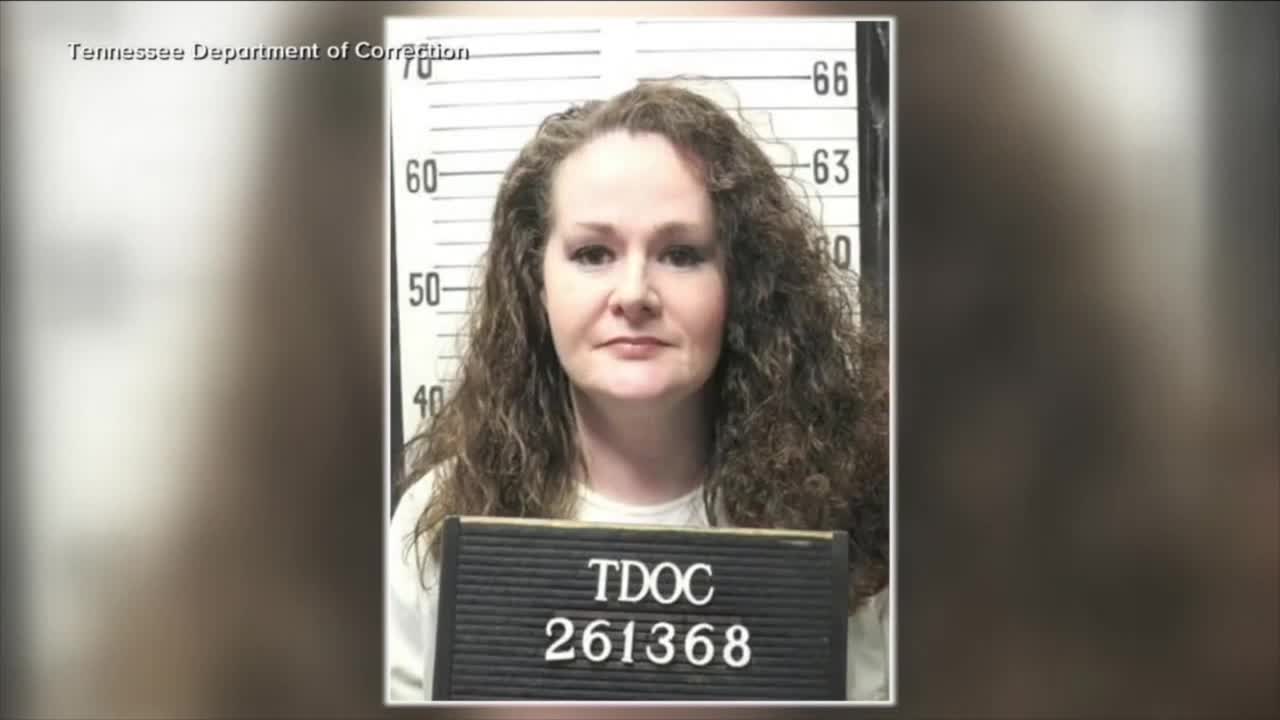



PHOENIX — A failed execution in Tennessee that left a death row inmate alive and hospitalized in critical condition is drawing renewed scrutiny of Arizona’s own history with lethal injection and the corrections official who connects the two states.
Christa Pike, Tennessee’s only woman on death row, remains alive after the state attempted to execute her Wednesday. Pike’s attorneys said Thursday she was in critical condition and receiving lifesaving medical care. Media witnesses said Pike continued breathing after receiving two lethal doses.
“When they told us to leave at 8:53, Christa Pike was still breathing,” Catherine Sweeney, a WPLN reporter, said. “They did two separate rounds of pentobarbital, which I've never seen before.”
The Death Penalty Information Center said it has documented seven people who survived failed execution attempts when execution teams were unable to establish IV lines. The organization said Pike is the first person it has documented surviving after lethal doses of execution drugs were administered.
Pike was sentenced to death for the 1995 murder of a classmate, 19-year-old Colleen Slemmer.
Tennessee Governor Bill Lee has now paused executions and ordered an independent investigation into what went wrong.
The case also has a direct connection to Arizona. Tennessee Department of Correction Commissioner Frank Strada previously served as deputy director of the Arizona Department of Corrections, Rehabilitation and Reentry. Strada was serving in that position when Arizona carried out three executions in 2022. Two were prolonged by difficulties establishing IV access.
When Lee was questioned Thursday about his decision to hire and retain Strada, the governor said the investigation is still in its early stages.
“As far as we know, the Department of Correction followed all protocol that was outlined and vetted and approved by the Attorney General's Office,” Lee said.
Michael Kiefer, an Arizona Mirror reporter who has covered the death penalty in Arizona for roughly two decades, has witnessed seven executions in the state.
“This question about IVs, difficulty in putting in IVs, has been endemic to executions, not just in Arizona, but everywhere,” Kiefer said.
Kiefer also witnessed the 2014 execution of Joseph Wood, which took nearly two hours.
“We sat there and watched as his body just sort of, you know, he was gasping like a fish out of water,” Kiefer said. “We found out afterwards that he had been injected 15 times.”
Arizona did not conduct another execution for eight years. When executions resumed in 2022, problems establishing IV access emerged again.
As Gov. Katie Hobbs took office in 2023, she ordered an independent review of the state’s execution procedures. Separately, ADCRR Director Ryan Thornell began an internal department review.
In a letter to Hobbs, Thornell said the department had reviewed previous execution files and procedures, toured execution areas, met with staff and stakeholders and observed procedures in other states. Thornell said ADCRR revised its execution policies and made a series of changes, including expanding its medical team, requiring additional training, adding a phlebotomist, and changing procedures surrounding IV access.
Kiefer has since witnessed two Arizona executions conducted under the newer procedures.
“What I saw was very strict attention to detail,” Kiefer said.
At the same time ADCRR was conducting its internal review, Hobbs had appointed retired U.S. Magistrate Judge David Duncan to conduct an independent examination of Arizona’s execution process. But Hobbs terminated Duncan’s work before he completed his final report.
Duncan told ABC15 an internal review by the agency responsible for executions cannot substitute for independent scrutiny.
“Inside-the-tent reviews are no good,” Duncan said. “Because people shouldn't grade their own papers. You need to have other people who are removed from the process saying, ‘Is what you're doing right?'”
Duncan said he was not permitted to observe execution-team walkthroughs or interview the doctors involved in Arizona executions.
After spending nearly two years examining the process, Duncan said his concerns extended beyond oversight to the viability of lethal injection itself.
“In the arena of lethal injection, we can't get the drugs that work well, and we can't get the people who can do it well,” Duncan said. “So we should stay out of that arena.”
Duncan said his research ultimately led him to oppose capital punishment.
“It takes so much money and because it gets it wrong so many times,” Duncan said. “I just don't see that we should be in this flawed business of killing people.”
ABC15 asked Hobbs’ office about her decision to terminate Duncan’s independent review and whether the failed Tennessee execution raises new concerns about Arizona’s current process. Her office declined to comment.
The Arizona Attorney General’s Office also declined to comment.
ABC15 also reached out to ADCRR and has not yet received a response.
Arizona has since resumed executions.
Kiefer said the executions he has witnessed under the current process have appeared markedly different from some he witnessed in the past. But he said questions remain about precisely what is happening behind the scenes.
“They're doing something differently,” Kiefer said. “I don't know what it is. I have asked. I haven't been told.”

Do you have a concern in your community or a news tip? We want to hear from you!
Connect with us: share@abc15.com
Want more news in your community? Add ABC15 as a preferred source on Google below: