

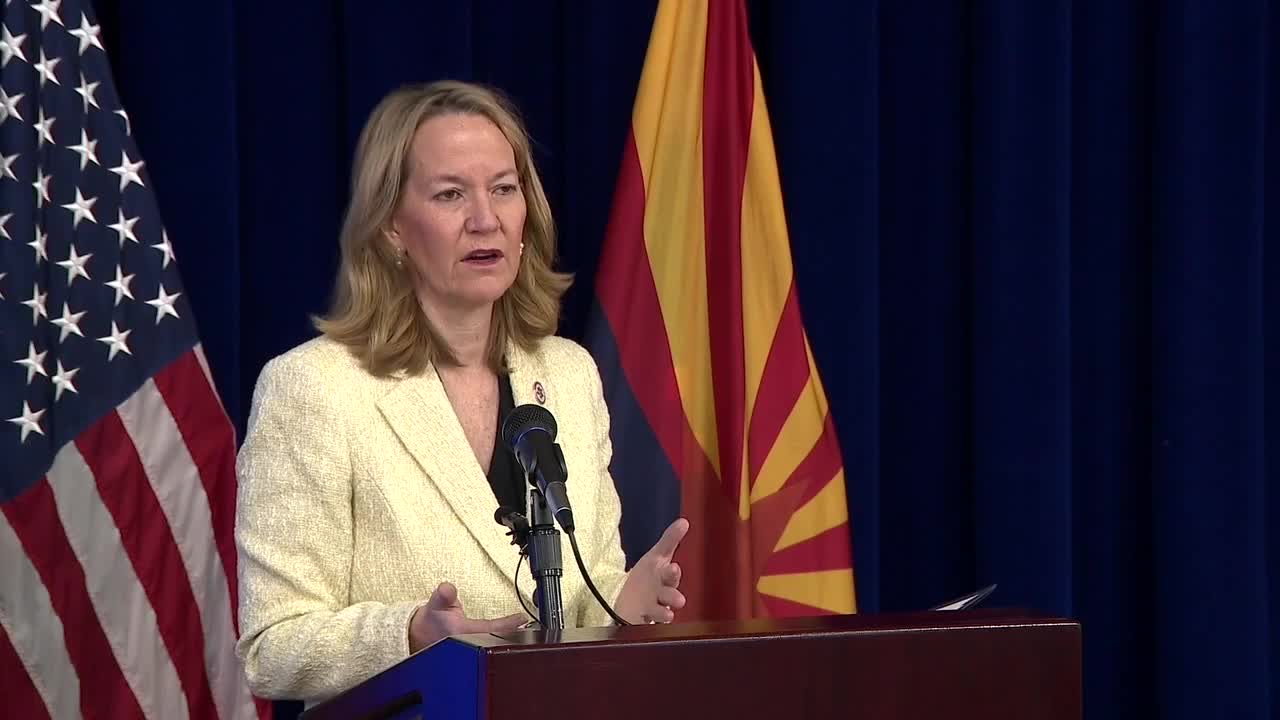


Meta has agreed to pay $17 billion and add child-safety measures to its Facebook and Instagram platforms to end a landmark trial over teen social-media addiction and settle claims filed by 47 states, state attorneys general announced Wednesday.
"This is the most important thing I think I will ever do as attorney general," Arizona Attorney General Kris Mayes said.
Arizona's share of settlement adds up to about $223 million over 10 years, with the first payment arriving in 30 days.
"I want a significant amount of this money to go to our public schools for mental-health counseling, and to help our kids who already are addicted to social media, and to help our kids come up with strategies and approaches to not become addicted to social media," Mayes said.
Arizona, California, Colorado, Kentucky and New Jersey were among 29 states that sued the tech giant in 2023, but the deal cuts short the trial, which was expected to see CEO Mark Zuckerberg take the stand before a jury in federal court in California.
"I woke up this morning, and I said a prayer, and I said, 'Thank you, God, for the fact that we won this settlement,'" Mayes said.
She compared the deal, one of the biggest state consumer protection settlements in history, to the agreements ending the Big Tobacco lawsuits in the 1990s.
"It's not the parents' fault," she said. "It's the fault of these social-media companies, who knew. They knew how addictive this product was."
Nearly every state — 48 — and several U.S. territories are covered by the settlement. Mayes hailed it as the historic win for bipartisanship, noting that Republican and Democratic attorneys general worked together on the case.
"And I sincerely hope this is the beginning of a new era where we refuse to let billionaire bottom lines and shareholder profits take precedent and priority over our shared responsibility to protect young people from the harms of technology," she said.
The agreement is worth $353 million in Virginia alone, Attorney General Jay Jones said in a statement.
“For years, Meta intentionally deceived the public about the addictive and harmful design features that have wreaked havoc on youth mental health," Jones said. The settlement "will put an end to these dangerous practices and deliver meaningful relief that will protect children from online harm.”
Meta said it was pleased with the settlement, but also called out its competitors.
"Because teens move fluidly across dozens of apps, we need an industry-wide solution," said Meta Chief Legal Officer CJ Mahoney. "We therefore call on our industry peers, TikTok and YouTube, to implement this new framework, right away."
Mayes said the state would get additional money if YouTube and TikTok implement similar safety features.
IN CASE YOU MISSED IT | Court orders Meta to pay $567 million to address kids' mental health and safety on its platforms
The lawsuit accused Meta of contributing to the youth mental health crisis by deliberately designing features that addict children to its platforms and hiding them from the public. It also argued that Meta violated federal laws by routinely collecting data on children under 13 without their parents’ consent.
The trial kicked off last week in Oakland, California, with U.S. District Judge Yvonne Gonzalez Rogers overseeing the proceedings. Adam Mosseri, the head of Instagram, began his testimony late Tuesday and defended Meta’s record and progress on child safety and privacy.
The cases in other states had been expected to go to trial later. In addition, nine attorneys general filed lawsuits in their respective states.
Meta still faces lawsuits from school districts in Arizona and around the nation.
Mayes called on other platforms, including YouTube and TikTok, to implement child-safety measures. But she called this settlement an important first step.
"Lives will be saved, suicides will be prevented," she said.
What the settlement does
Under the proposed settlement, Meta agreed to adopt a series of safety features, including a “hard cap” on daily time limits and pauses for children using Instagram and Facebook.
It will eliminate push notifications during weekday school hours and bring in “robust” age assurance measures and “age-appropriate” content controls to prevent bullying and harmful material about eating disorders and self-harm.
There will be stronger and more user-friendly parental controls and limits on social comparison features such as “like” counts.
"One day, we will look back on today as the beginning of the end of the bad old days when children had unfettered access to products designed to addict them and expose them to serious mental harm," Mayes said.
The federal lawsuit was the result of an investigation led by a bipartisan coalition of attorneys general from California, Florida, Kentucky, Massachusetts, Nebraska, New Jersey, Tennessee, and Vermont. It followed newspaper reports, first by The Wall Street Journal in 2021, that found that the company knew about the harm Instagram can cause teenagers — especially teen girls — when it comes to mental health and body image issues.
Meta has since added a host of safety features to Instagram, including separate accounts for teenagers with stronger protections around messaging and privacy, along with content restrictions.
But child safety experts, along with some former Meta employees, have long contended that the features are little more than window dressing.
Arturo Béjar, a former Meta engineering director, said during his testimony last week that Meta consistently prioritized profits over safety in designing its products, focusing on how often and for how long people used them, even if it was detrimental to their mental well-being.
“If you step away from the product, they are not going to make any money,” he said.
While the four states in the Oakland trial did not officially say how much they had been seeking, Meta said in a court filing that financial penalties in the case could amount to as much as $1.4 trillion — a figure legal experts said was unlikely, if not impossible.
