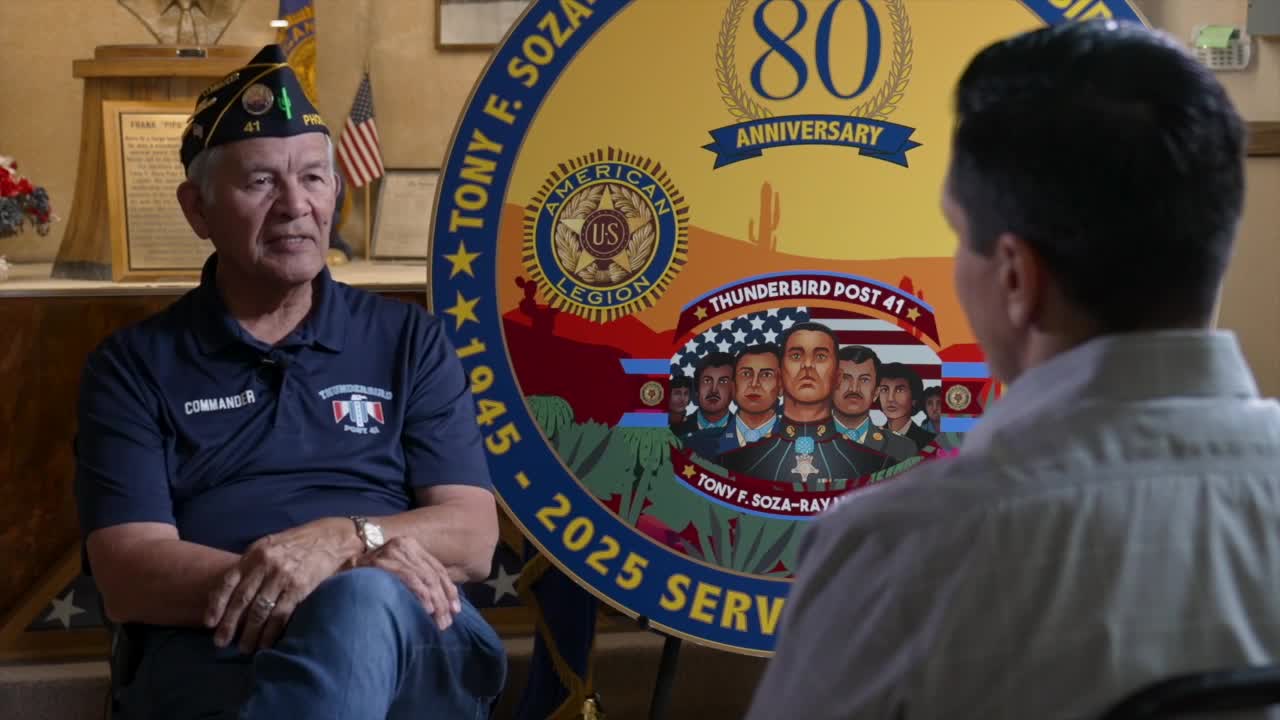


PHOENIX — For eight decades, American Legion Post 41 has stood as a pillar in south Phoenix, serving veterans and the community with unwavering dedication.
"We serve this community. We do events for kids, we do Halloween, we do Christmas, we do Easter, we raise food and clothing for veterans who are homeless," said Commander Loui Olivas.
Post 41 was born out of adversity in 1945 after two Mexican American veterans, Tony Soza and Ray Martinez, returned home from World War II and faced discrimination at other legion posts. Rather than accept rejection, they decided to create their own inclusive space.
"They grew up here and not being able to do what you want to do because of who you were, being a Mexican back then, wow," Olivas said.
The discrimination these founding veterans experienced shaped the post's core mission of acceptance and service.
"The rejection that happened back then, I just can't fathom what they went through. And yet, psychologically, it didn't break them down. It made them stronger, why they needed a post, why we needed to continue to serve in our community," Olivas said.
Eighty years later, Post 41 welcomes every veteran regardless of background.
"They don't look at your color, they don't look at your nationality, they don't judge you. It doesn't matter who you are, you're welcome," President of the Unit 41 Auxiliary, Tess Esperago said.
Esperago helped spearhead a celebration to honor the post's eight decades of community contributions. The event brought together veterans from different generations to share stories and memories.
"There was so many of the old timers here that were talking about years gone by, what it was like, and how it was. It was especially nice to hear from people who have been here for so long, and they don't come around as much because they're much older," Esperago said.
As Post 41 continues to honor its older generation of veterans, the organization is also embracing and supporting newer veterans, strengthening its mission of shaping the future while preserving its enduring legacy.
Reflecting on the post's rich history, Olivas wondered what stories the building's walls would tell if they could speak.
"The arguments they must have had as leaders, challenging one another, not doing enough for veterans, and so forth, the celebrations they witnessed with their kids growing up, having birthday parties here, having wedding receptions for their sons, their daughters, and so forth. And the laughter. You get these veterans going, and they try to one-up one another on stories and histories and who was better at boxing and who was better in sports," Olivas said.