

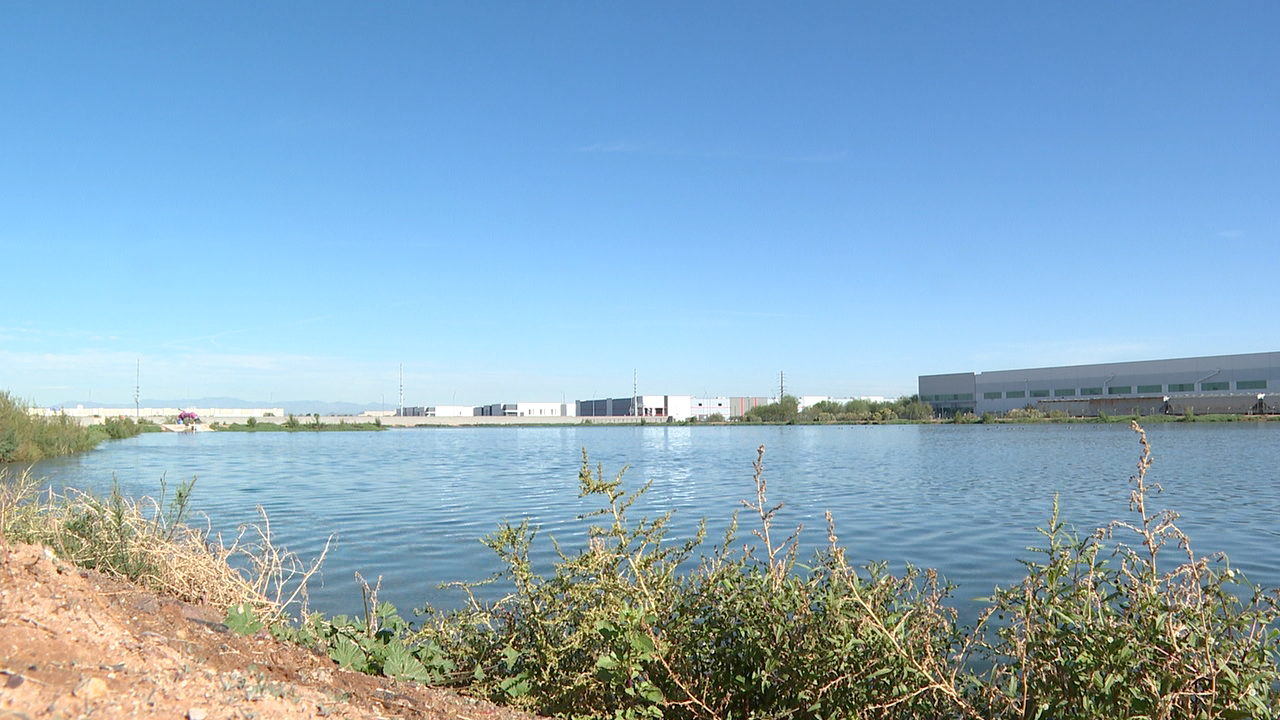



SURPRISE, AZ — As Arizona prepares for another round of Colorado River water cuts, the City of Surprise says it has enough water to accommodate thousands of new homes over the next decade. However, a proposed drought management plan could allow the city to temporarily halt new development if water supplies become threatened.
The proposal comes as communities across the Valley prepare for reductions in Colorado River allocations while continuing to accommodate rapid population growth.
Surprise Water Department Director Michael Boule said the city remains in a strong position despite the uncertainty.
"We're currently only utilizing 40 percent of our water portfolio," Boule said. "So that is a big shock absorber to either A, absorb reductions or B, grow. But, you know, we have to make sure again that both of those things are very calibrated."
According to city projections, Surprise has more than twice the annual water supply needed to meet anticipated demand in 2027.
Officials estimate the city's existing water portfolio could also accommodate nearly 22,000 additional dwelling units over the next 14 years, providing room for continued residential development across the growing community.
Still, the outlook is complicated by worsening conditions along the Colorado River.
Arizona is facing approximately 760,000 acre-feet in Colorado River water reductions next year, with Surprise anticipating a 15% reduction in its allocation.
Boule said the cuts represent a significant development for municipal water providers.
"We've never had our municipal and industrial subcontracts shorted, ever," Boule said. "And so it is a pretty big deal."
The potential reductions are also raising concerns among agricultural users, even those who do not directly rely on Colorado River water.
Selwyn Justice, a farmer with Justice Brothers Ranch, said shortages can have broader economic consequences as water becomes more expensive and resources are redistributed.
"Those economic factors are going to determine the gross water supply for farming, even though we're not looking at a direct impact," Justice said.
New drought plan could restrict development and outdoor water use
Despite the city's available water resources, Surprise officials are preparing for the possibility of more severe shortages.
A proposed drought management plan would give the city the option to temporarily freeze new development if water supplies become insufficient to support additional demand.
The plan also outlines potential restrictions on outdoor water use during severe drought conditions.
Those measures could include tighter rules for lawn watering, vehicle washing, and landscaping.
The restrictions would depend on the severity of the shortage and would be intended to preserve water for essential uses.
For a city experiencing significant residential growth, the possibility of limiting new development represents a major step in long-term water planning.
Thousands of homes are already planned or under construction across northwest Surprise, where new subdivisions continue to expand into previously undeveloped areas.
While city officials say current supplies are sufficient to accommodate that growth, the proposed drought plan would provide another tool if conditions deteriorate.
Recycled wastewater plays a role in Surprise's water strategy
One way Surprise is working to stretch its available water resources is through wastewater treatment and aquifer recharge.
At the city's South Water Reclamation Facility, wastewater collected from homes and businesses is treated and reused as part of the city's broader water management strategy.
"So we use that water resource, effluent water, as a means of recharging our aquifer," Boule said.
Aquifer recharge allows treated wastewater to replenish underground water supplies, helping the city manage its groundwater resources as demand increases.
The process is particularly important in growing communities, where additional homes create both greater water demand and more wastewater that can potentially be treated and reused.
City says current customers remain the priority
Although Surprise officials are planning for additional residential development, Boule said the city's first responsibility is ensuring existing customers have reliable access to water.
He identified the long-term health of the Colorado River as the greatest threat to Surprise's water security.
However, Boule said the city's diversified water portfolio provides protection against potential shortages.
"Even if the Colorado River were to go to zero in Surprise for our water customers, our portfolio is solid enough where we could sustain current customers," he said.
For now, city officials say Surprise has enough water to support its existing population and accommodate significant growth.
But with Colorado River supplies facing continued uncertainty, the proposed drought management plan underscores a reality for one of the West Valley's fastest-growing cities: Future development may increasingly depend on how much water is available to support it.
This story was reported on-air by a journalist and has been converted to this platform with the assistance of AI. Our editorial team verifies all reporting on all platforms for fairness and accuracy.
